

Aluminium Extrusion Manufacturer Audit Checklist
- By:Naview
- Date:2026-08-03
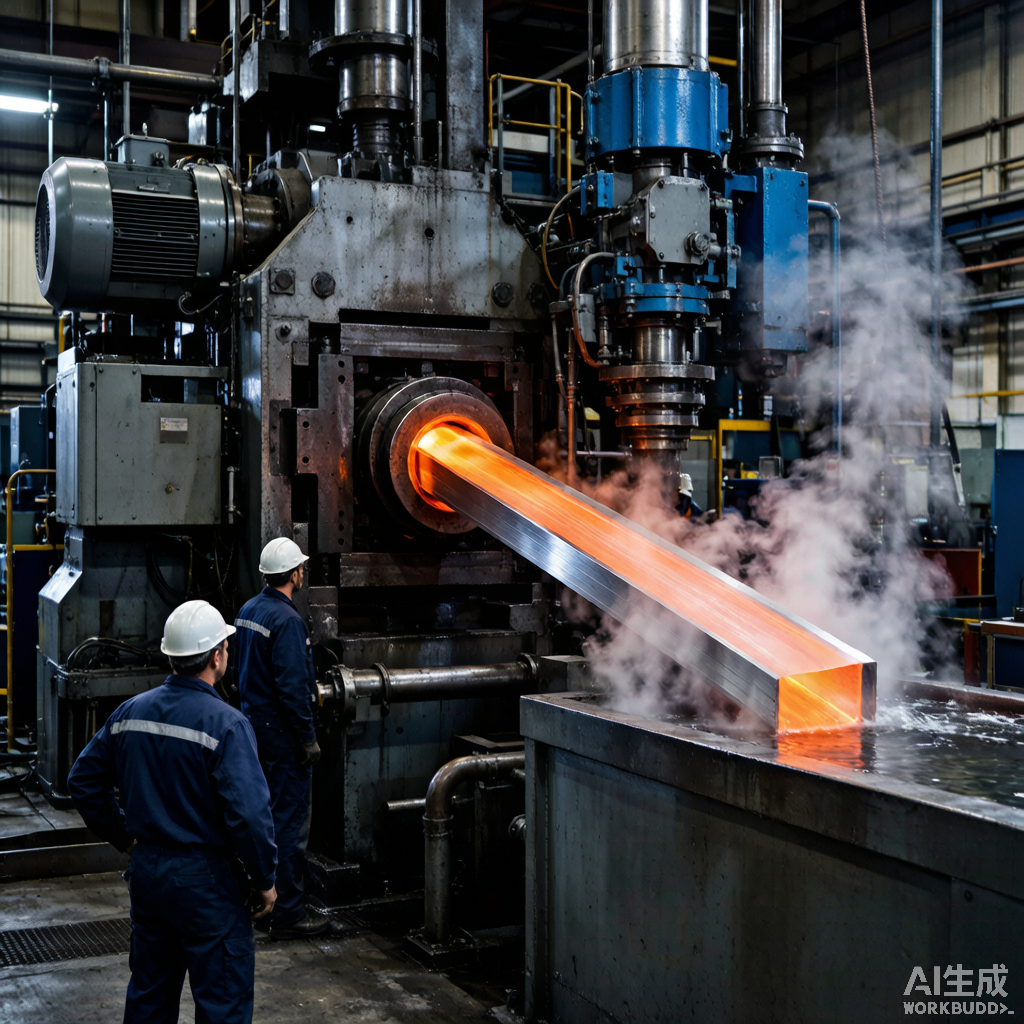
Auditing an aluminium extrusion manufacturer is not about collecting business cards and brochures. It is about verifying whether the factory can actually produce what their quotation promises. After 11 years of hosting buyer visits at our Foshan facility and conducting supplier audits ourselves for secondary processes, we know exactly what separates a capable extrusion plant from one that will under-deliver.
This audit checklist is structured around what happens on the factory floor — not what appears in the marketing presentation. Use it whether you are visiting in person or conducting a live video tour. Every question below should produce an observable answer.
For buyers evaluating Chinese aluminium extrusion suppliers, a structured audit is the single most effective risk-reduction step you can take before committing to a purchase order.
1. Extrusion Press Audit: The Heart of Production
Start your tour at the extrusion press bay. The condition of the presses tells you more about a factory than any certificate on an office wall. Here is what to look for:
- Press tonnage and age — check the nameplate on each press for manufacturer, tonnage rating, and year of manufacture. Presses older than 20 years typically have worn container liners and inconsistent billet temperature control unless they have been rebuilt. A press manufactured by Ube, SMS, or Yuantong with a build date within the last 15 years is a positive signal.
- Number of operational presses — a minimum of 4 presses in the 600T to 2,500T range indicates the factory can handle your order volume without scheduling conflicts. Factories running only 1-2 presses may push your order back when a larger client books capacity.
- Billet heating furnace — look for a gas-fired or induction furnace with digital temperature control. The billet must reach 430-500°C evenly before extrusion. Uneven heating causes inconsistent profile dimensions and surface defects. Ask to see the temperature log for today’s production shift.
- Container and stem alignment — watch a press cycle. The ram should move smoothly without vibration. Misalignment wears dies prematurely and produces profiles with uneven wall thickness.
- Output tracking — ask to see the shift production report. A well-managed extrusion line tracks kg per hour, scrap rate, and downtime reasons for each press. If the factory cannot produce these records, they are guessing about their own efficiency.
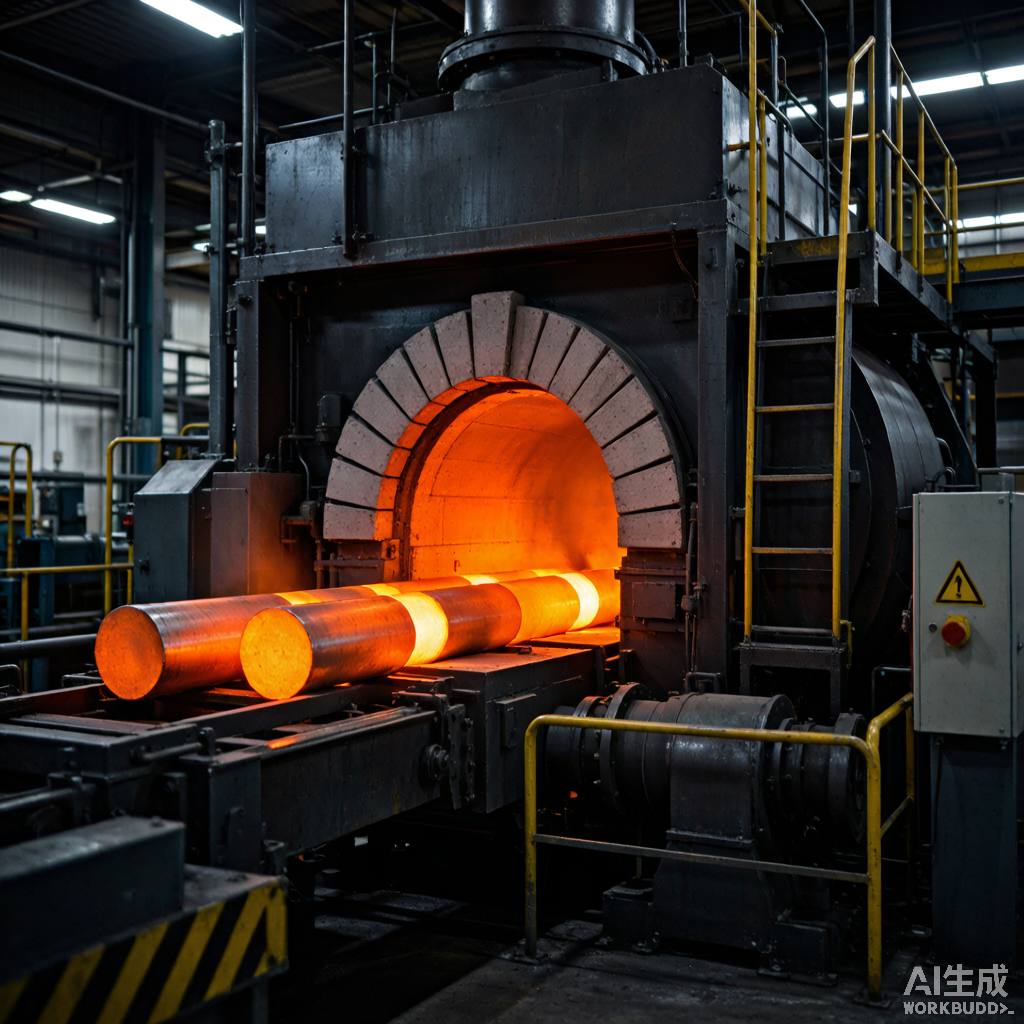
NA-VIEW operates 6 presses across a single 60,000 m² facility. Our production logs are available for buyer review during audits because we track data, not anecdotes. The same aluminium extrusion process that produces curtain wall profiles for European projects also runs our industrial and architectural lines — same presses, same quality system.
2. Billet Storage and Alloy Traceability
The aluminium billet feeding the extrusion press determines the mechanical properties of your profile. A factory that cannot trace a finished profile back to a specific billet heat number cannot guarantee alloy consistency:
- Billet storage area — billets should be stored indoors, organised by alloy grade, with clearly visible tags showing heat number, alloy composition, and supplier. Outdoor storage exposes billets to moisture and contamination.
- Primary vs. secondary billet ratio — ask what percentage of their billet is primary (from virgin aluminium ingot) vs. secondary (recycled). For structural and architectural applications, specify primary billet or request alloy verification for each batch.
- Spectrometer verification — walk into the quality lab and ask the technician to run a spectrometer test on a random billet. The result should match the tagged composition on the billet within the alloy standard range. If the spectrometer is dusty, unplugged, or the operator needs 10 minutes to find a sample, the factory is not testing every heat.
- Heat number traceability — every extrusion batch should carry a heat number that links back to the billet lot and spectrometer result. Ask to trace a finished profile from today’s production back to its billet certificate.
3. Die Shop: Where Quality Begins
A factory with an in-house die shop controls the most critical variable in extrusion quality. Outsourced die making adds 3-5 days of lead time and creates a blame loop when profiles do not meet specification:
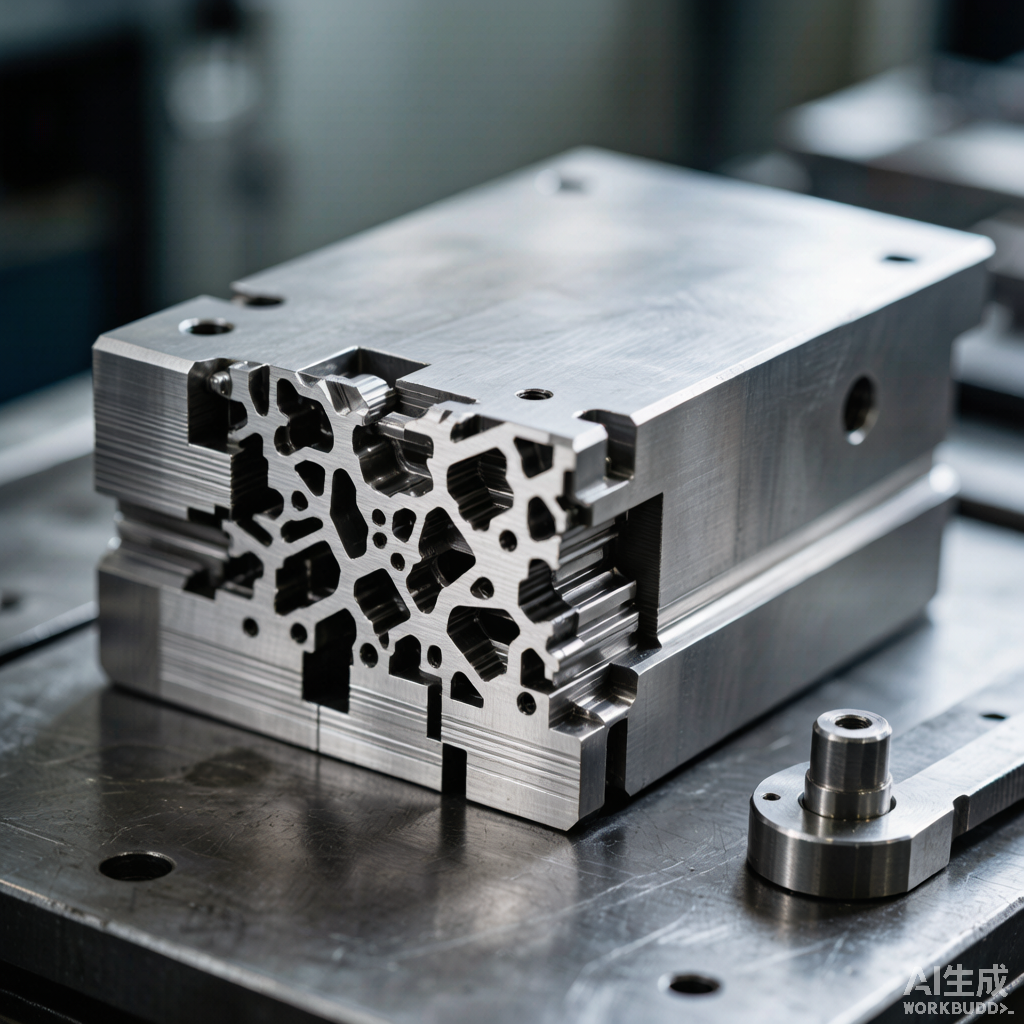
- Die manufacturing equipment — look for CNC EDM (electrical discharge machining) and wire-cut machines. Manual die making cannot achieve the precision required for complex hollow profiles or tight tolerance sections.
- Die correction and maintenance — dies wear with every extrusion cycle. A proper die shop has a correction bench, polishing tools, and a nitriding furnace to extend die life. Ask how many extrusion cycles a typical architectural profile die lasts before requiring correction.
- Die tryout and first-article inspection — every new die should go through a trial extrusion run with full dimensional inspection before entering production. Request to see a recent first-article report; it should include cross-section measurements at 5+ points against the drawing. We deliver die drawings within 7 working days and produce trial samples in 3 days.
- Die inventory management — walk through the die storage area. A factory with 3,000+ stored dies across architectural, industrial, and custom profiles has deep experience. Organised storage with computerised retrieval indicates a systematic operation.
4. Quality Lab: Prove It With Data
The quality lab is where a manufacturer’s claims meet measurement. A complete extrusion quality lab should have these instruments — and they should be warm from recent use, not covered in dust:
| Equipment | What It Verifies | What to Ask |
|---|---|---|
| Optical Emission Spectrometer | Alloy composition (Si, Mg, Fe, Cu, Mn, Zn, Ti percentages) | Request a live test of a billet sample; ask for the most recent calibration certificate |
| Universal Testing Machine | Tensile strength, yield strength, elongation | Ask to see today’s test results; verify values match the alloy standard (e.g., 6063-T5 ≥ 160 MPa UTS) |
| Vickers or Webster Hardness Tester | Surface hardness after heat treatment | Confirm that every T5/T6 temper batch undergoes hardness testing |
| Profile Projector or CMM | Cross-section dimensions and angles | Ask for a measurement report of a complex profile against its drawing tolerances |
| Film Thickness Gauge | Anodising and powder coating thickness | Verify that coating thickness is measured on multiple points per profile, not just one |
| Salt Spray Chamber | Corrosion resistance of surface treatment | Ask for the most recent salt spray test report; 1,000+ hours for architectural anodising is standard |
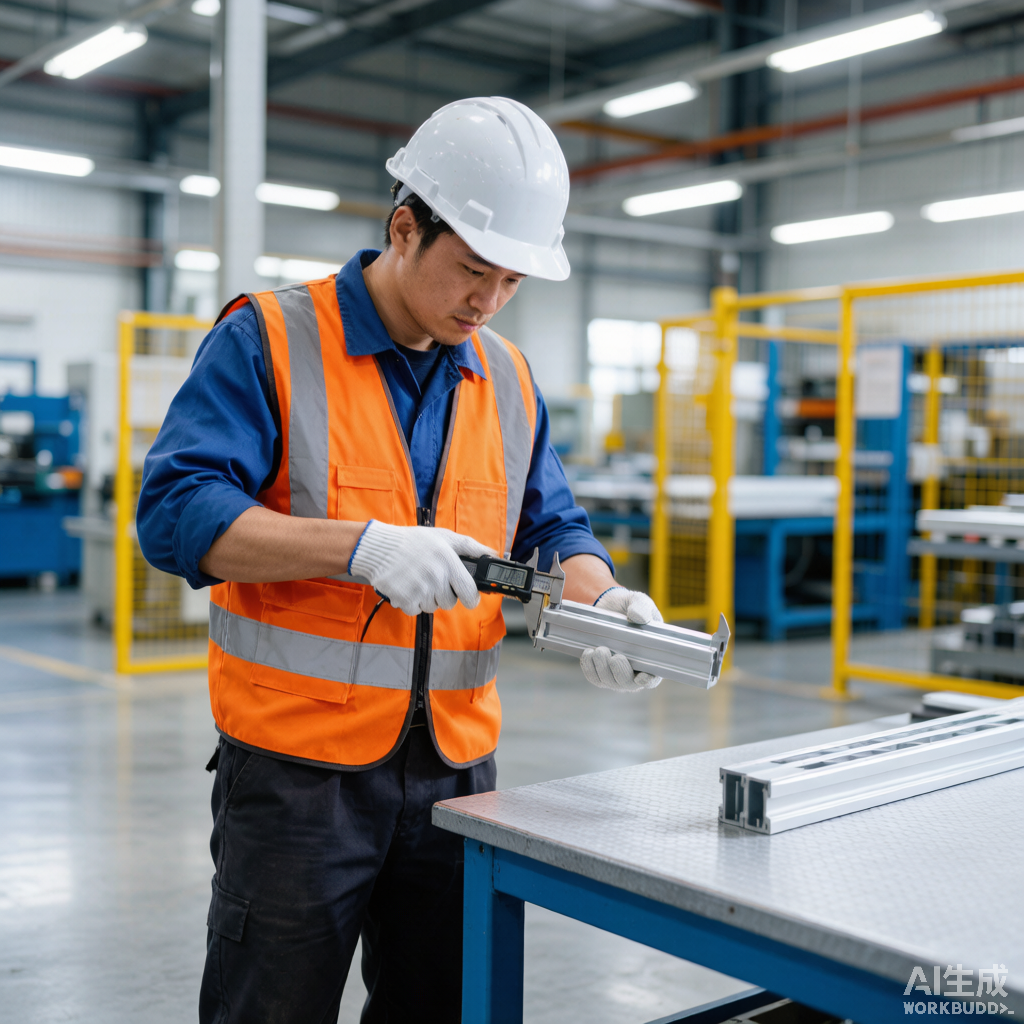
Our quality lab runs the full suite daily. For every export order, we provide a mill test certificate covering alloy composition, tensile properties, hardness, and surface treatment thickness — all traceable to the billet heat number and production batch.
5. Surface Treatment: In-House or Outsource Risk
Surface treatment quality separates premium extrusion manufacturers from commodity producers. Look for these treatment lines under the same roof:
- Anodising line — check the number of tanks (minimum 12-15 for a full process including degreasing, etching, neutralising, anodising, colouring, and sealing). Verify the rectifier capacity; undersized rectifiers produce inconsistent film thickness. Ask about their standard film thickness range (AA10 to AA25 for architectural applications).
- Powder coating line — a vertical line handles longer profiles and produces more uniform coating than a horizontal line. Check the curing oven temperature control and ask whether they use electrostatic spray guns from a recognised brand (Gema, Wagner, Nordson). RAL colour matching with a spectrophotometer is standard; manual colour matching is not reliable.
- Electrophoresis and wood grain — these premium finishes require dedicated equipment. If the factory subcontracts these processes, ask to visit the subcontractor’s facility and review their quality records for recent orders.
- Wastewater treatment — surface treatment generates chemical waste. Check that the factory has a functioning wastewater treatment system, not just a pipe going into the ground. ISO 14001 certification requires this, but visual verification is better.
For aluminium curtain wall profiles and architectural applications, surface finish consistency across production batches is as important as dimensional accuracy. A factory that can show you colour measurement data from the past 6 months is managing this systematically.
6. Packing, Logistics, and Export Readiness
A great extrusion run is worthless if the profiles arrive dented, scratched, or with seawater corrosion. Audit the packing area as thoroughly as the production line:
- Profile protection — each profile should be wrapped in protective film (PE or PVC), separated with interleaving paper for anodised surfaces. Corner protectors and edge guards prevent transit damage at the most vulnerable points.
- Crating standards — export crates should be fumigated solid wood or plywood with metal banding. Ask to see a packed crate ready for shipment. Loose, under-banded crates will not survive ocean freight handling.
- Container loading — if possible, watch a container being loaded. Profiles should be secured to prevent movement during transit. The factory should provide a loading plan and photos for each shipment.
- Export documentation capability — ask to see a sample set of export documents: commercial invoice, packing list, bill of lading, certificate of origin, and mill test certificate. Errors in these documents cause customs delays that are 100% preventable.
Our standard export packing uses protective film, interleaving paper, corner protectors, and fumigated plywood crates. We ship FOB, CIF, and DDP to 30+ countries with dedicated export documentation staff handling every shipment. Payment by T/T (30/70), L/C at sight, and PayPal for sample orders. Production lead time is 25-35 days after deposit and die confirmation.
Factory Audit Scorecard
| Audit Area | Weight | Key Indicator |
|---|---|---|
| Press capability | 25% | 4+ presses, digital temperature control, production logs available |
| Billet traceability | 15% | Spectrometer tested, heat number system, indoor storage |
| Die shop | 15% | CNC EDM, in-house tryout, organised inventory |
| Quality lab | 20% | Spectrometer + UTM + CMM, live demonstration available |
| Surface treatment | 15% | In-house anodising and powder coating, RAL matching |
| Export readiness | 10% | Professional packing, export docs, FOB/CIF/DDP capability |
A factory scoring below 70% on this audit has gaps that will affect your order. Below 50%, find another supplier.
Need a reliable aluminium extrusion manufacturer? NA-VIEW has passed buyer audits from European, Australian, and North American clients over 11 years of export operations. Contact our team to schedule a video factory tour or submit your profile drawings for a detailed quotation with alloy and tolerance recommendations.
Frequently Asked Questions
What is the minimum order quantity (MOQ) for aluminium extrusion?
The typical MOQ for custom aluminium extrusion is 500 kg. For standard profiles in stock, smaller quantities may be available. Contact NA-VIEW for specific MOQ details on your project.
What payment terms do you accept for aluminium extrusion orders?
We accept T/T (telegraphic transfer), L/C (letter of credit), and PayPal. Standard terms are 30% deposit with order and 70% balance before shipment.
What is the typical lead time for aluminium extrusion production?
Standard production lead time is 25-35 days after deposit and drawing confirmation. Prototyping takes 3-5 days, and sampling 7 days.
How are aluminium extrusion products packaged for shipping?
Products are packaged using wooden pallets with interlayer kraft paper or pearl cotton for surface protection. Sea-worthy packaging ensures safe international shipping.
CONTACT US


Foshan Naview New Building Materials Co., Ltd.
We are always here offering customers our reliable products and service.
If you want to liaise with us now, please click contact us