

Choosing a China Aluminium Extrusion Supplier
- By:Naview
- Date:2026-08-03
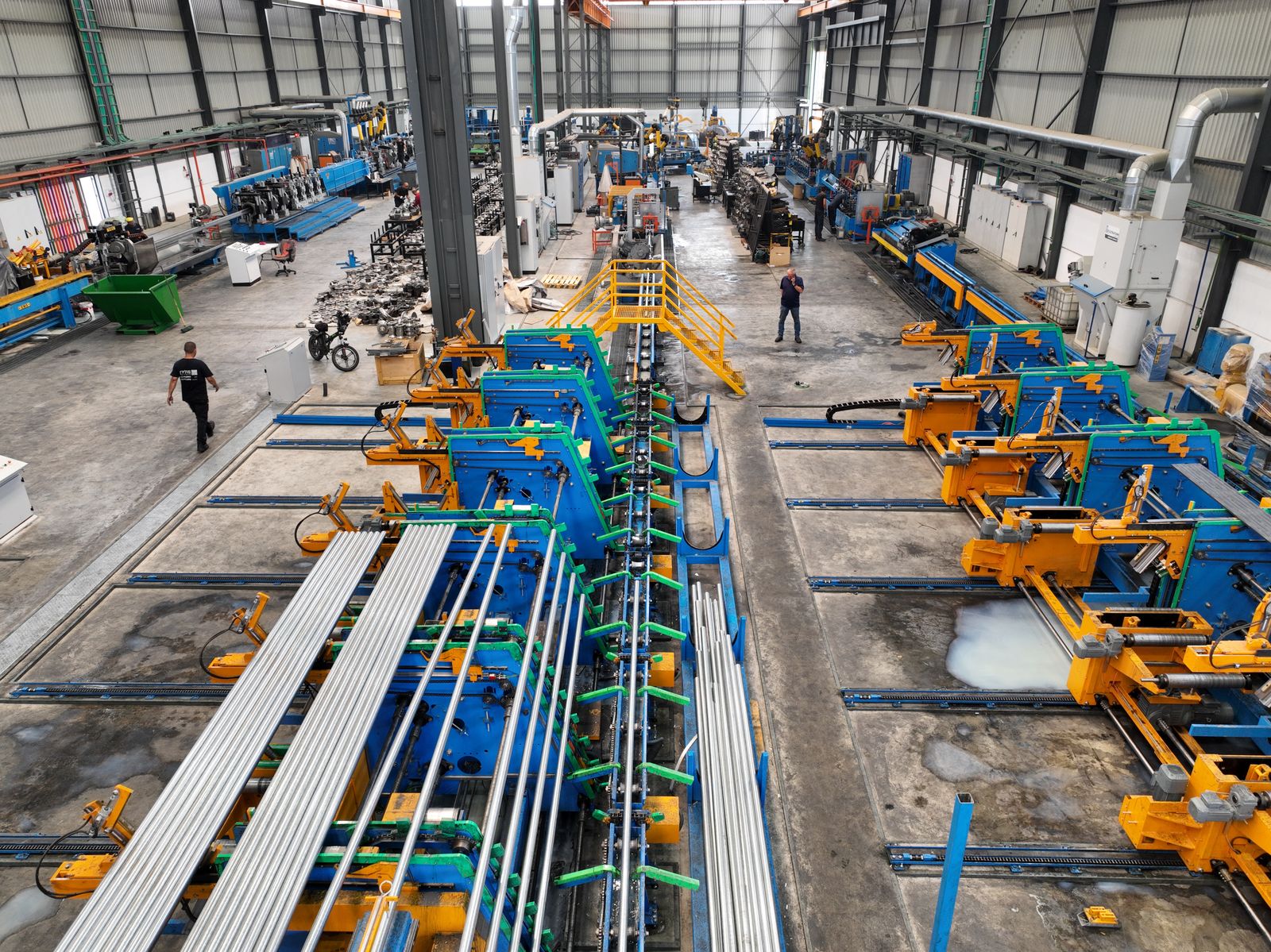
Finding a reliable aluminium extrusion supplier in China is not complicated, but it does require a systematic approach. Over 11 years of exporting aluminium profiles to 30+ countries, we have seen what separates a dependable factory from one that causes delays, quality disputes, and hidden costs.
More than 60% of the world’s aluminium extrusion output comes from Chinese manufacturers, primarily clustered in Guangdong province. The sheer number of factories — from small workshops with one press to large industrial operations — means buyers face a wide quality spectrum. The right aluminium extrusion supplier saves you 15-25% on landed costs and months of headache.
This guide covers the 8 criteria we recommend every international buyer evaluate before signing a purchase order with a Chinese aluminium profile manufacturer.
1. Factory Scale and Production Capacity
Factory size directly determines whether a supplier can handle your volume consistently. Look for these indicators rather than taking the supplier’s word:
- Number of extrusion presses and tonnage range — a serious supplier runs at least 4-6 presses ranging from 600 to 2,500 tonnes. This allows them to produce profiles from small decorative trims to large structural sections without outsourcing.
- Annual output capacity — factories producing under 50,000 tonnes per year typically struggle with large commercial orders above 100 tonnes. Ask for capacity utilization rates as an honesty check.
- Factory floor area and workforce — 50,000+ m² and 200+ workers indicate an established operation, not a trading company front.
- In-house value-add services — does the factory do its own die making, surface treatment, and fabrication? Every outsourced step adds cost, lead time, and quality risk.
NA-VIEW operates 6 extrusion lines across a 60,000 m² facility with 300+ staff. Many buyers sourcing aluminium guardrail systems and architectural profiles choose us because we handle the full process — from billet casting to precision cutting and anodising — under one roof.
2. Certifications and Quality Systems
Certificates on a wall mean nothing unless backed by functioning quality systems. Ask for these and verify them:
- ISO 9001:2015 — the baseline for any export-grade factory. Verify the certificate number with the issuing body rather than accepting a scanned copy.
- ISO 14001 — environmental management certification increasingly required by European and Australian buyers.
- Product-specific certifications — AS/NZS 1866 for Australia, EN 755 for Europe, AAMA for North America. These indicate the factory has passed third-party product testing.
- Spectrometer and mechanical testing lab — ask to see the quality lab during a factory video tour. A spectrometer for alloy composition verification and a universal testing machine for tensile strength are non-negotiable.
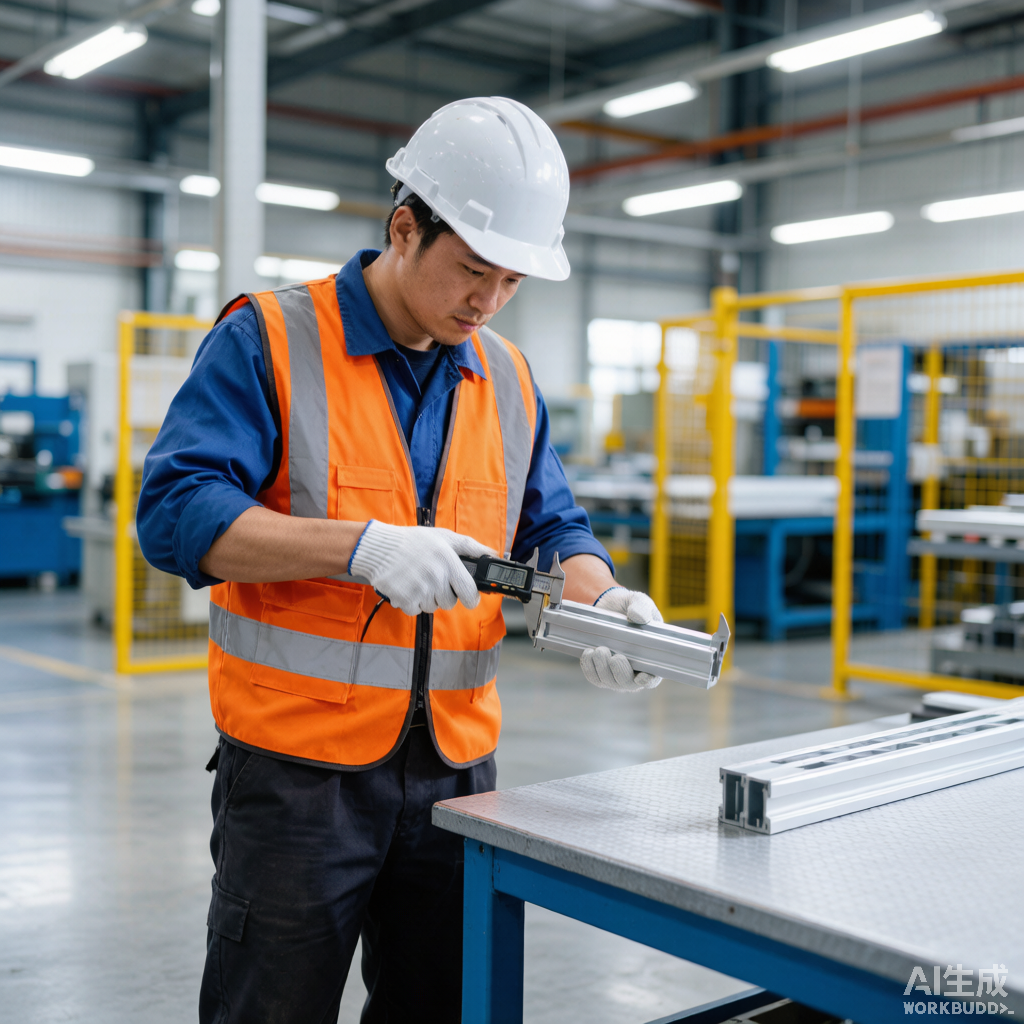
Our factory maintains ISO 9001 certification and runs an in-house testing lab with spectrometer, tensile tester, and dimensional measurement systems. Every batch ships with a mill test certificate showing alloy composition and mechanical properties.
3. Die Design and Tooling Capability
The die is where quality starts. A poorly designed or manufactured die produces profiles with inconsistent wall thickness, surface defects, and dimensional drift. Evaluate a supplier’s tooling capability by asking these questions:
- In-house or outsourced die making? In-house die shops give the factory direct control over lead time and quality. Outsourced dies add 3-5 days and create finger-pointing when things go wrong.
- Die tryout process — does the factory run trial extrusions and verify dimensions before production? A proper first-article inspection report should accompany every new die.
- Die maintenance and storage — how many dies are in active inventory? A factory with 5,000+ stored dies has significant experience across profile types.
- Typical die lead time — 7-10 days for standard profiles, 10-14 days for complex multi-cavity dies. Faster is not always better; rushed dies wear out quicker.
We deliver die drawings within 7 working days and produce trial samples within 3 days for standard profiles. Our die shop supports profiles up to 300 mm cross-section width with tolerances held to ±0.5 mm.
4. Surface Treatment Options In-House
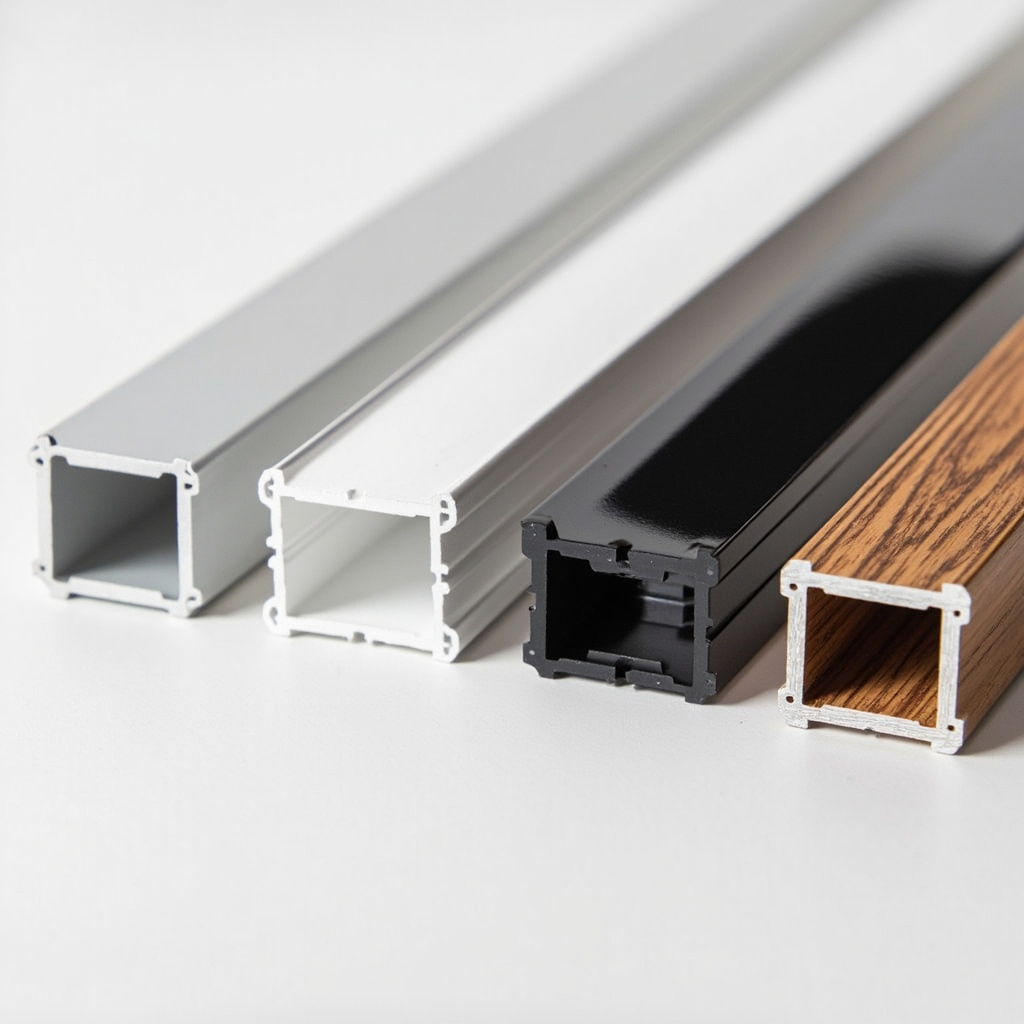
A supplier who subcontracts surface treatment loses quality control and adds transit damage risk. Verify that the following processes are done under the same roof:
- Anodising — silver, bronze, black, champagne, and custom colours. Check film thickness capability (AA10 to AA25 for architectural use).
- Powder coating — RAL colour matching, minimum 60 μm thickness. Ask whether they use a vertical or horizontal line; vertical lines handle longer profiles and produce more consistent coating.
- Electrophoresis — for high-gloss, corrosion-resistant finishes preferred in humid or coastal environments.
- Wood grain transfer and PVDF — premium architectural finishes for curtain wall profiles and visible interior applications.
5. Minimum Order Quantity and Pricing Structure
MOQ and pricing transparency separate trading companies from manufacturers. A real factory gives you MOQ by weight per profile design, not by container. Here is how to read the numbers:
- MOQ per profile — 500-1,000 kg per die is standard. Below 300 kg, expect a surcharge or refusal. Trading companies quote per-container MOQs because they consolidate orders from multiple factories.
- Pricing breakdown — the per-kg price should include billet cost + extrusion fee + surface treatment fee + packing. Request a breakdown so you can track aluminium ingot price fluctuations separately from processing costs.
- Billet premium for primary aluminium — some factories use secondary (recycled) billet to cut costs. Specify primary aluminium billet (99.7% purity) in your PO if your application requires consistent mechanical properties.
- Sample policy — legitimate factories offer free samples for standard profiles and charge only die cost for custom profiles. If a factory refuses to provide samples before order commitment, walk away.
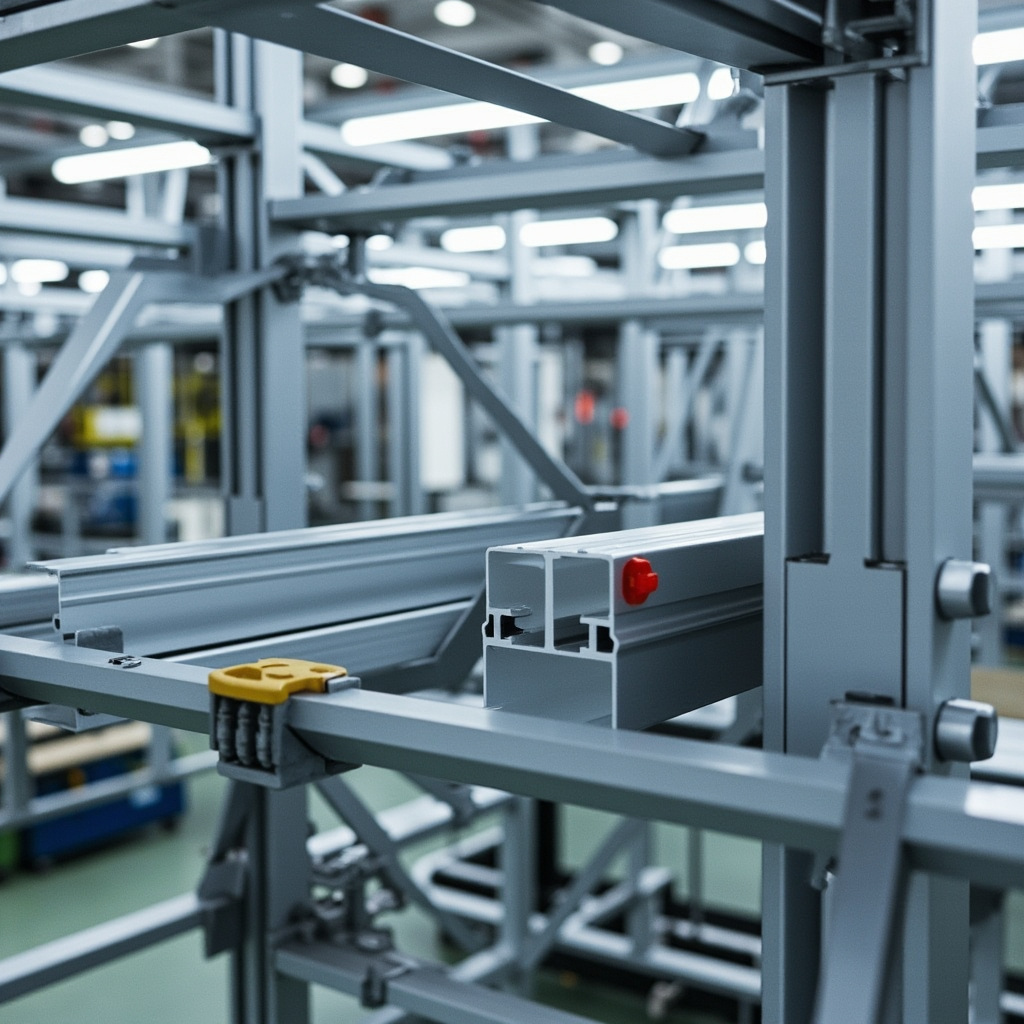
We ship free samples for standard profiles. Custom profile samples are produced within 3 working days of die completion. Our MOQ starts at 500 kg per profile, with flexible terms for first-time trial orders.
6. Production Lead Time and Shipping
Lead time in aluminium extrusion breaks down into three phases. A supplier who only quotes “30 days” without specifying what that includes is hiding something:
- Die production — 7-14 days from drawing approval to finished die.
- Extrusion and surface treatment — 15-25 days depending on order complexity and factory schedule.
- Packing and inland transport to port — 2-3 days.
Shipping terms matter as much as production time. FOB (Free on Board) puts the freight responsibility on you once the container leaves the port. CIF (Cost, Insurance, Freight) means the supplier arranges ocean freight to your destination port. For thermal break window profiles and high-value orders, some buyers prefer DDP (Delivered Duty Paid) where the supplier handles everything door-to-door including customs clearance.
We accept T/T (30% deposit, 70% before shipment), L/C at sight, and PayPal for sample orders. FOB, CIF, and DDP shipping terms are available to all 30+ countries we export to. Standard packaging uses protective film, corner protectors, and wooden crates for sea freight.
7. Communication and English Capability
Poor communication causes more sourcing failures than poor product quality. Before committing to a supplier, test their communication with these steps:
- Send a detailed RFQ with technical drawings — how long does it take to get a complete quote? A quality supplier responds within 24-48 hours with a line-by-line quotation, not a one-line price.
- Ask technical questions about alloy selection or tolerance capability — does the sales contact know the answer, or do they need to check with engineering? Direct access to technical staff indicates an export-ready operation.
- Request a video call showing the factory floor — a legitimate manufacturer can arrange this within a few days. Avoid suppliers who only send pre-recorded videos or stock photos.
- Check whether they have dedicated export documentation staff — correct commercial invoices, packing lists, and certificates of origin prevent customs delays.
8. Track Record and Client References
The most reliable quality signal is a supplier who has been exporting to your region consistently. Ask for:
- 3-5 client references in your country or region — and actually contact them. Ask about on-time delivery rate, quality consistency, and how the supplier handled any problems.
- Export history and major markets — a factory exporting to 20+ countries with repeat customers has passed multiple rounds of buyer scrutiny.
- Case studies or project references — what buildings, products, or infrastructure used their profiles? This demonstrates real-world performance, not just lab test results.
- Years in operation — factories with 10+ years of export history have survived multiple market cycles and buyer audits. They are not going to disappear mid-order.
NA-VIEW has been manufacturing and exporting aluminium profiles since 2015. Our profiles are used in commercial buildings, transportation systems, solar mounting structures, and industrial equipment across 30+ countries. The same 6 production lines and quality team that serve our European and Australian clients handle every order — there is no “export grade” and “domestic grade” separation in our factory.
Red Flags to Watch For
After working with buyers who came to us after bad experiences, here are the warning signs we hear most often:
- Price 20%+ below market average — usually means secondary billet, thinner walls than specified, or skipping surface treatment steps.
- Refuses factory visit or video tour — the supplier may be a trading company with no manufacturing capability.
- Cannot provide a mill test certificate for the specific alloy — they are likely shipping whatever billet is available, not what you ordered.
- Quotes delivery in under 15 days for custom profiles — physically impossible for die making plus extrusion plus treatment. They are cutting corners or lying about the timeline.
- No dedicated QC staff or lab equipment — quality claims without measurement capability are just marketing.
Sourcing Aluminium Profiles from NA-VIEW
We run a 6-line extrusion facility in Foshan, Guangdong — the centre of China’s aluminium industry. Our 11 years of export experience means we understand what international buyers need: consistent alloy composition, dimensional accuracy, predictable lead times, and clear communication.
What we deliver:
- 6 extrusion presses from 600T to 2,500T, producing 500+ profile designs daily
- In-house anodising, powder coating, electrophoresis, and wood grain transfer
- ISO 9001 certified quality system with spectrometer and mechanical testing lab
- Die drawings in 7 days, samples in 3 days, production in 25-35 days
- Free samples for standard profiles; MOQ from 500 kg with flexible trial terms
- Export documentation handled by dedicated staff — no customs delays
Ready to discuss your profile requirements? Send your drawings or specifications to our engineering team. We respond with a detailed quotation including alloy recommendation, tolerance analysis, and lead time estimate — typically within 24 hours.
Frequently Asked Questions
What is the minimum order quantity (MOQ) for aluminium extrusion?
The typical MOQ for custom aluminium extrusion is 500 kg. For standard profiles in stock, smaller quantities may be available. Contact NA-VIEW for specific MOQ details on your project.
What payment terms do you accept for aluminium extrusion orders?
We accept T/T (telegraphic transfer), L/C (letter of credit), and PayPal. Standard terms are 30% deposit with order and 70% balance before shipment.
What is the typical lead time for aluminium extrusion production?
Standard production lead time is 25-35 days after deposit and drawing confirmation. Prototyping takes 3-5 days, and sampling 7 days.
How are aluminium extrusion products packaged for shipping?
Products are packaged using wooden pallets with interlayer kraft paper or pearl cotton for surface protection. Sea-worthy packaging ensures safe international shipping.
CONTACT US


Foshan Naview New Building Materials Co., Ltd.
We are always here offering customers our reliable products and service.
If you want to liaise with us now, please click contact us