

Aluminium Tilt and Turn Windows: Buyer’s Guide
- By:Naview
- Date:2026-10-06
Aluminium Tilt and Turn Windows: Buyer’s Guide
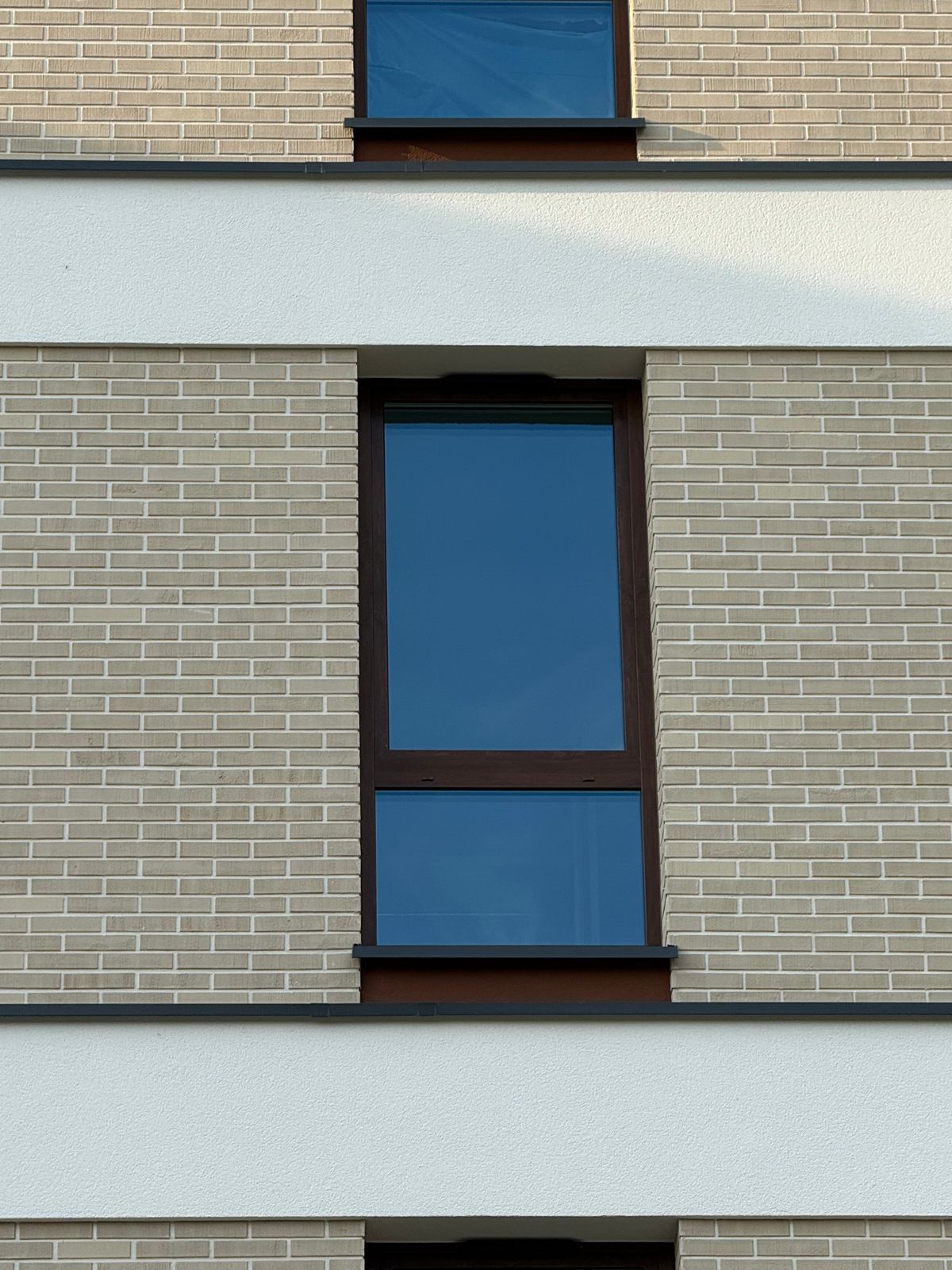
Walk through any new apartment block in Germany, Poland or the Gulf, and you will almost certainly find aluminium tilt and turn windows behind the balconies. One sash gives you two opening modes. A secure top vent handles daily airflow, while a full side swing covers cleaning and escape. Because of that dual function, the system has spread from Central Europe into almost every export market we ship to. This article explains how the mechanism works, which hardware matters, and what thermal performance to demand. It also shows how to order the right specification from a factory.
NA-VIEW extrudes and fabricates aluminium tilt and turn windows on six production lines with a daily capacity above 500 profiles. Over the past 11 years, our team has supplied these systems to more than 30 countries, alongside the aluminium casement windows and sliding systems covered in earlier guides. Therefore, everything below comes from factory floors and site feedback, not from a rewritten catalogue. Buyers comparing aluminium tilt and turn windows across suppliers can use the same checklist here.
What Are Aluminium Tilt and Turn Windows?
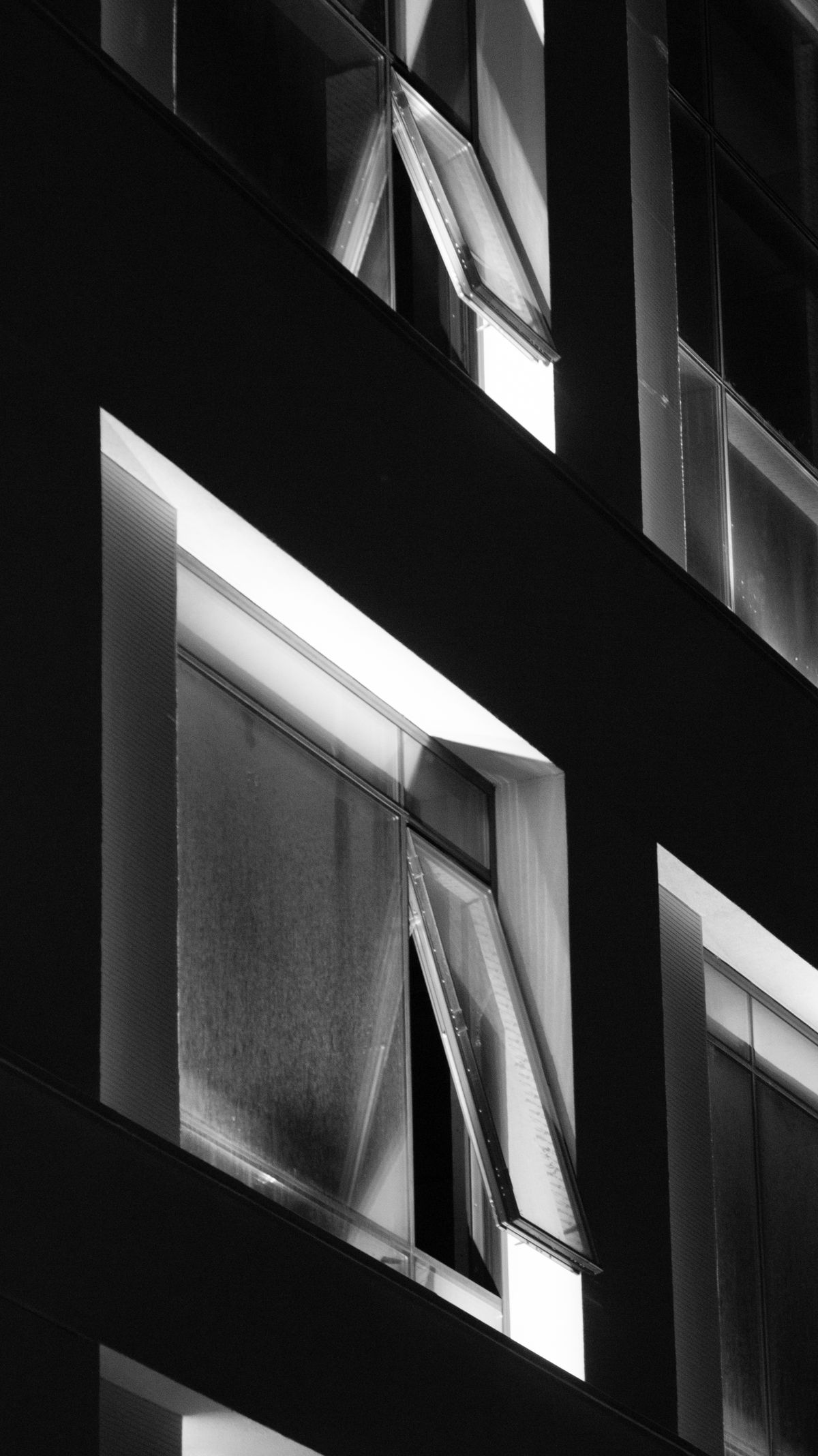
Aluminium tilt and turn windows use an inward-opening sash with two modes from one handle. Turn the handle 90 degrees and the sash swings open on side hinges, like a door. Return it to the tilt position and the sash leans inward a few degrees at the top. This leaves a narrow slot for ventilation while the bottom stays locked. Because one sash does both jobs, the system replaces two separate products: the everyday vent window and the fully openable cleaning window.
Two Opening Modes, One Sash
The tilt mode is the workhorse of daily use. Specifically, the top of the sash opens roughly 10 degrees, creating an airflow channel without any fall risk. Meanwhile, the turn mode opens the sash to 90 degrees or more, which gives three practical benefits:
- Safe cleaning from inside the room, which matters greatly on high-rise apartments.
- Emergency escape meeting the clear-opening rules in many building codes.
- Full ventilation during furniture moves, painting or hot weather.
Aluminium tilt and turn windows also handle night ventilation safely, because the tilt slot admits air while the locks stay engaged. Most European projects specify them precisely because cleaners never lean out of upper floors. In fact, several of our hotel clients in the Middle East treat inside-sash cleaning as the main reason for choosing this type over outward casements.
Where the Design Comes From
The hardware concept matured in Germany during the 1960s and 1970s. Post-war apartment blocks needed safe ventilation, plus easy maintenance from inside. Consequently, the window became the default across Central Europe, and the test standards grew around it. EN 14351-1 marks the product for CE purposes, while EN 12207, EN 12208 and EN 12210 grade its air, water and wind performance. As a result, buyers who source from China can compare quotations against the same numeric grades used in Frankfurt or Warsaw. This removes most of the guesswork from cross-border procurement. Since then, aluminium tilt and turn windows have replaced timber in most European renovation programmes.
How the Hardware in Aluminium Tilt and Turn Windows Works
Hardware is the heart of the system, and it is where cheap quotations hide their shortcuts. A complete set includes a corner drive, locking points around the sash, tilt hinges, scissor arms and a handle. All of these parts must work in a fixed sequence every time the handle turns. For that reason, we treat hardware selection as an engineering decision, not a cost line. Good hardware is what separates durable aluminium tilt and turn windows from short-lived ones.
Multi-Point Locking
A tilt and turn sash locks at several points along its perimeter. Typically, a mid-range set carries 8 to 12 locking points, driven by one handle through a corner drive gearbox. Moreover, mushroom-shaped cam locks drop into keep plates on the frame. As they engage, they pull the sash square against the gasket. This even compression is what earns EN 12207 class 4 air tightness on a good profile, because the seal is pressed around the whole opening rather than only at the handle side. Consequently, aluminium tilt and turn windows seal more reliably than sliders, whose brushes cannot compress.
Security follows the same logic. The more locking points, the harder it is to pry the sash. Therefore, we offer RC2-compatible hardware sets with reinforced keeps for ground-floor and accessible openings. These sets follow the intrusion-resistance classes defined in EN 1627.
Hinges That Carry Real Weight
Unlike a casement, the sash hangs on special bottom hinges and a scissor mechanism at the side. These components must carry the sash weight in two different load positions. For example, a 1.2 m by 1.5 m sash with triple glazing can weigh 45 kg or more. Consequently, we specify hardware tested to 25,000 cycles or higher. We also match hinge load ratings to sash weight with a margin of at least 20%.
Sag is the failure mode to watch. If the hinge chain is undersized, the turn side of the sash drops over time. The locking cams then misalign, and the handle becomes stiff within two winters. Therefore, our QC checks sash drop with a dial gauge after cycle testing. Meanwhile, we reject any hardware brand that cannot document its cycle testing under load.
Handle Options and Child Safety
Handles come in three practical variants. A standard handle suits most rooms, while a locking handle adds a key for ground floors and schools. Meanwhile, a push-turn child-safe handle needs two motions to open, which protects young children. Additionally, we fit restrictor stays on high-rise and hospitality projects so the turn opening stops at 100 mm unless released. These small options cost little at the factory stage. However, they prevent expensive retrofits after the building inspector visits.
Frame Design and Thermal Performance
Aluminium conducts heat roughly 1,600 times faster than glass fiber insulation. Because of this, an unbroken aluminium frame loses heat freely through the metal. Serious aluminium tilt and turn windows therefore use a thermal break: a polyamide barrier cast or threaded between the inner and outer aluminium skins. EN 14024 defines how that barrier is tested, and we follow it on every thermally broken system we extrude. Without a break, aluminium tilt and turn windows act as radiators in winter and heat collectors in summer.
Why the Thermal Break Width Matters
Frame depth and break width set the thermal ceiling of the system. Specifically, a 55 mm frame with a 14.8 mm polyamide barrier typically reaches a frame U-value near 3.3 W/(m²K). Meanwhile, an 80 mm platform with a 24 mm or 34 mm barrier can reach 1.8 W/(m²K) or lower at frame level. Consequently, glazing choice alone cannot rescue a thermally poor frame. Therefore, energy-efficient aluminium tilt and turn windows always start with the right frame depth. Buyers should ask suppliers for whole-window U-values calculated to EN ISO 10077-2, not just glass numbers.
Our approach pairs the frame with the correct glass rather than selling one configuration everywhere. A 24 mm double-glazed unit with a low-E coating and argon fill suits temperate climates. Meanwhile, for cold climates or Passive-House-leaning projects, we move to an 80 mm platform with triple glazing and warm-edge spacers. Overall, the target is the lowest cost per saved watt, not the lowest price per square metre.
Technical Parameters of Aluminium Tilt and Turn Windows
The table below lists the standard ranges we fabricate for export projects. Moreover, every figure is a real production value, checked against EN 12020-2 profile tolerances and documented with EN 10204 Type 3.1 material certificates.
| Parameter | Standard Range | Note |
|---|---|---|
| Profile alloy | 6063-T5 / 6063-T6 | See our 6063 vs 6061 comparison |
| Frame depth | 55 / 60 / 70 / 80 mm | Deeper frames allow wider break widths |
| Wall thickness | 1.4 – 2.0 mm | 1.4 mm minimum per EN 12020-2 practice |
| Thermal break | 14.8 – 34 mm polyamide | Cast or threaded, per EN 14024 |
| Sash weight limit | Up to 130 kg | Depends on hardware brand and hinge set |
| Max sash size | 1,500 × 2,400 mm | Larger sizes need load calculations |
| Glazing thickness | 24 – 52 mm | Double or triple, warm-edge spacer |
| Whole-window U-value | 1.1 – 2.8 W/(m²K) | EN ISO 10077-2 calculation |
| Air tightness | Class 4 (EN 12207) | With 2-gasket design and correct keeps |
| Water tightness | Class 9A (EN 12208) | Higher classes need drainage mods |
| Wind load resistance | Class C3 – C5 (EN 12210) | Set by project height and terrain |
| Finish | Powder coat / anodised | Qualicoat-class powder, 60 µm minimum |
Two numbers deserve special attention when you compare quotations. First, the sash weight limit decides whether triple glazing is even possible on large sashes. Second, the wind load class must match the building height. A C3-rated window on a 25-storey tower will flex until the gaskets leak. Therefore, send us your building height and opening schedule early, and we will return a rated specification instead of a generic price. Above all, remember that aluminium tilt and turn windows are engineered systems, not collections of parts.
Aluminium Tilt and Turn Windows vs Other Opening Types
Buyers often compare this system against casements and sliders before finalising a schedule. The table below summarises where each type wins. Furthermore, the honest answer from our fabrication floor is that most projects mix types. Broadly, aluminium tilt and turn windows win on sealing, while sliders win on opening width. Tilt and turn suits bedrooms and living areas, sliders cover terraces, and fixed lights frame the views.
| Criterion | Tilt and Turn | Casement | Sliding |
|---|---|---|---|
| Opening direction | Inward, two modes | Outward or inward | Horizontal |
| Cleaning from inside | Excellent | Poor on out-swing | Good with lift-out sashes |
| Air tightness potential | Class 4 | Class 4 | Class 2 – 3 typically |
| Sash weight capacity | Up to 130 kg | Up to 80 kg | Up to 400 kg panels |
| Seal compression | Even, multi-point | Even, multi-point | Brush or fin, no compression |
| Screen fit-out | Outside, needs bracket | Outside | Inside or outside |
| Best use | High-rise, hotels, cold climates | Houses, mid-rise, rainy zones | Terraces, wide openings |
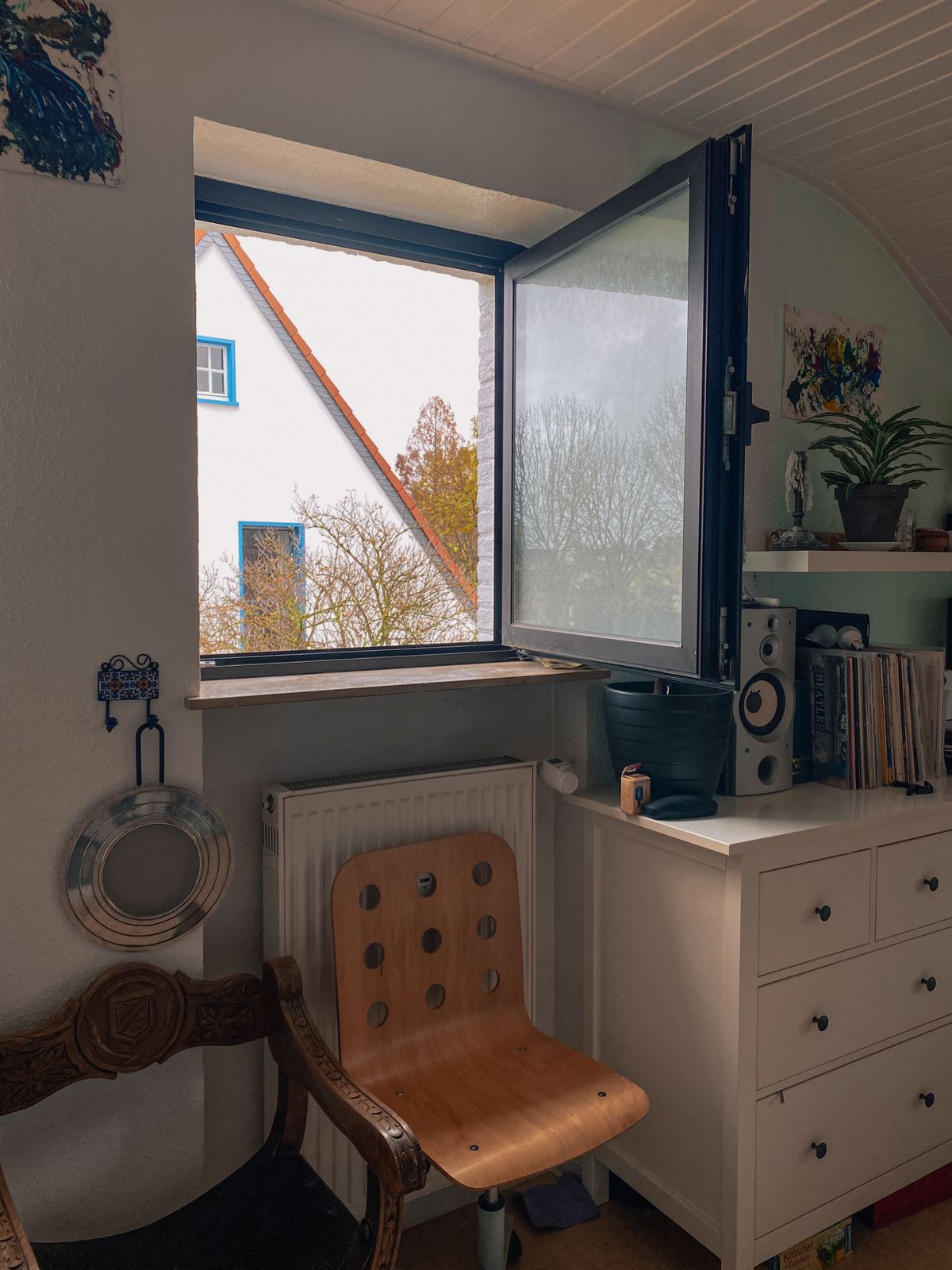
One caution applies to markets accustomed to out-swing casements. Tilt and turn sashes open inward, so curtains, blinds and furniture must leave clearance for the swing arc. Therefore, architects should coordinate interior layouts before the window schedule is frozen. Notably, this single step prevents most of the complaints we hear from first-time buyers.
Glazing Options for Different Climates
Glazing drives both the energy performance and the cost of aluminium tilt and turn windows, so it pays to match it to the project climate instead of defaulting to one spec. Our standard build uses a 24 mm double unit with argon fill, low-E coating and a warm-edge spacer per EN 1279. Meanwhile, cold-climate projects step up to 44 mm triple units, and hot-climate projects prioritise solar control coatings over U-values. Four combinations cover most of the projects we ship:
- Temperate zones: double low-E argon, around 1.9 W/(m²K) whole window.
- Cold regions: triple glazing with warm edge, 1.1 to 1.3 W/(m²K).
- Hot and sunny climates: double glazing with high solar-control coatings, plus external shading.
- Noisy sites: asymmetric glass and thicker panes for Rw ratings above 38 dB.
Acoustic performance deserves a short note. Because the sash compresses two continuous gaskets, a well-made aluminium tilt and turn window with asymmetric glazing reaches Rw 40 dB or better. Consequently, several of our hotel projects near ring roads specify this window purely for its acoustic sealing. In addition, the tilt position damps noise differently than a wide-open casement, which guests often mention in reviews. Consequently, many hotel developers now shortlist aluminium tilt and turn windows on acoustics alone.
How Aluminium Tilt and Turn Windows Are Manufactured
Understanding the production flow helps buyers judge quotations. Aluminium tilt and turn windows demand tighter tolerances than simple sliders, because the hardware needs a square sash to function. Our process runs through six controlled steps:
- Extrusion: billets are heated and pressed through tooling, then aged to T5 or T6 temper on the six lines.
- Precision cutting: profile ends are cut at 45 or 90 degrees within ±0.5 mm, so corners close perfectly.
- Machining: hardware pockets, drainage slots and handle bores are milled on CNC centres.
- Thermal break assembly: polyamide strips are knurled, inserted and crimped, then shear-tested per EN 14024.
- Finishing: powder coating or anodising is applied before glazing, with film thickness verified by gauge.
- Assembly and test: every tenth window from each batch is cycle-tested and water-sprayed before packing.
Corner joints deserve a mention here. Because the sash twists slightly between tilt and turn positions, weak corners open hairline gaps within a year. Therefore, we crimp and pin every corner, then seal the joint internally. Meanwhile, weld corners used on PVC frames have no equivalent here, so aluminium quality shows up in the crimping discipline. Indeed, a factory visit usually reveals this within minutes on the assembly line. In short, consistent aluminium tilt and turn windows come from factories that control all six steps under one roof.
Standards and Testing: What to Ask For
A quotation without test documents is only a price, not a guarantee. Therefore, we recommend buyers request the following evidence before awarding an order. We provide all of it as standard with every export quotation:
- EN 14351-1 conformity for CE-marked destinations, with declared performance values, as listed in the CEN-CENELEC catalogue.
- EN 12207 / 12208 / 12210 test reports for air, water and wind, from an accredited laboratory.
- GB/T 8478-2020 reports for Chinese-standard projects, covering airtightness, watertightness and wind pressure grades.
- EN ISO 10077-2 U-value calculation for the actual frame and glass combination ordered.
- Polyamide breaks verified by shear-bending test to EN 14024.
- Qualicoat / Qualanod finish certificates, or AAMA 2604 / AAMA 2605 equivalents for North American specifications.
- ISO 9001 factory certification, plus EN 10204 Type 3.1 mill certificates for every alloy batch.
During audits, we encourage buyers to witness cycle testing and water spray tests in person. Indeed, several of our European partners visit the factory annually for exactly this reason. Moreover, a supplier who welcomes audits has usually already fixed the problems a hidden supplier hides.
Where Aluminium Tilt and Turn Windows Deliver Most Value
Some building types gain more from this system than others. Aluminium tilt and turn windows serve four of them exceptionally well. Based on 11 years of project data, four applications stand out. First, high-rise residential towers, because inward sashes make facade cleaning safe and tilt mode provides secure night ventilation. Second, hotels and serviced apartments, where guests expect quiet rooms and staff need controlled airflow between services.
Third, energy-targeted buildings such as low-energy housing and school retrofits benefit greatly. The compressed twin gaskets support airtightness strategies aligned with Passive House principles. Fourth, coastal projects choose this window for durability, since powder-coated aluminium resists salt spray far better than timber or basic PVC. Specifically, we supply many beachfront projects in Southeast Asia with marine-grade coating and stainless hardware. The frames still look new after five monsoon seasons.
On the other hand, two situations call for different systems. Very wide terrace openings belong to lift-and-slide or bifold doors, as covered in our aluminium bifold doors guide. Similarly, projects with deep reveals and outward-opening traditions may prefer casements to keep interior clearances free. Overall, the correct answer starts from the opening schedule, not from the product a factory happens to push.
Maintaining Aluminium Tilt and Turn Windows
Maintenance needs are modest, which is part of the appeal. Still, a few routines keep aluminium tilt and turn windows working like new for decades. Gaskets should be wiped with soapy water twice a year, and a silicone-free care fluid keeps them flexible. Maintained this way, aluminium tilt and turn windows routinely pass 30,000 opening cycles. Meanwhile, hardware moving points need one drop of light oil annually, and drainage slots must stay clear of dust and render.
Adjustment is the task most owners miss on aluminium tilt and turn windows. Because a loaded sash settles slightly in year one, the keeps may need a half-turn correction. Most hardware brands include cam adjustment without tools. Therefore, we include a simple adjustment card in every crate, and our after-sales team answers adjustment questions by video call. Following this routine, our oldest installed systems still operate smoothly after more than ten years of coastal service.
Three Common Specification Mistakes to Avoid
Certain mistakes appear repeatedly in enquiries for aluminium tilt and turn windows from first-time buyers. Avoiding them saves both money and project delay. The three most frequent are listed below, based on real quotations we have reworked:
- Choosing glass before frame: buyers fix on triple glazing, then find the chosen frame cannot carry the sash weight.
- Ignoring swing clearance: inward sashes conflict with curtains, radiators and furniture, which surfaces only at installation.
- Copying a coastal spec inland: marine-grade packages cost more, while inland projects gain nothing from them.
Each mistake is avoidable with a short engineering review. Therefore, our quotations include a counter-proposal whenever a listed spec looks mismatched to the project. Occasionally this means we quote slightly more than a competitor who simply accepted the list. However, our clients consistently report fewer site problems, which costs far less than rework.
Ordering from a Manufacturer: A Practical Checklist
Most sourcing problems trace back to an incomplete enquiry. Therefore, we ask buyers to prepare these items before requesting a quotation for aluminium tilt and turn windows. Our engineers then return feedback within 24 hours of receiving them:
- Opening schedule with widths, heights, opening types and quantities per floor.
- Building height and location, so wind load class and finish system can be rated correctly.
- Climate target, stated as a U-value or as the local energy code reference.
- Finish preference, including RAL code or anodising tone, plus any dual-colour need.
- Hardware brand preference, because European-brand hardware changes the price band.
After the schedule is agreed, our normal flow is 7 days for shop drawings, 3 days for a physical sample on request, and 25 to 35 days for full production. Free profile samples are available, and full window samples are quoted separately but credited against bulk orders. Because packing matters as much as production, glazed units ship in steel-reinforced wooden crates with EPE foam interlayers. Our freight forwarders confirm this keeps breakage below 0.3% across recent seasons.
Frequently Asked Questions
What is the difference between tilt mode and turn mode?
Tilt mode opens the top of the sash inward by about 10 degrees, which ventilates the room without a fall risk or direct rain entry. Meanwhile, turn mode swings the whole sash open on side hinges for cleaning, escape or full airflow. One handle controls both positions through a sequential gearbox.
Are aluminium tilt and turn windows energy efficient?
Yes, when the frame is thermally broken and the glazing matches the climate. Specifically, our 70 mm system with double low-E argon glazing reaches about 1.9 W/(m²K) whole-window U-value. The 80 mm triple-glazed build reaches 1.1 to 1.3 W/(m²K), calculated per EN ISO 10077-2.
Do aluminium tilt and turn windows cost more than casements?
Usually yes, by roughly 15 to 25% per window, because the hardware set is more complex. However, the gap narrows on high-rise projects, where casements need extra safety fittings to achieve the same cleaning access. Overall life-cycle cost often favours tilt and turn.
Which hardware brands do you offer?
We fabricate with established European hardware platforms and certified Asian equivalents. Importantly, all sets are cycle-tested under load, because hardware decides how long aluminium tilt and turn windows stay smooth to operate. We document the brand, cycle rating and load class in the quotation, so buyers can compare like with like.
Can tilt and turn sashes be made large?
Yes, within structural limits. Our standard maximum is 1,500 × 2,400 mm per sash, with hardware rated to 130 kg. However, larger openings are usually solved with a fixed light beside the opening sash. This approach costs less than oversizing the hardware.
What payment terms and Incoterms do you support?
Standard terms are 30% T/T deposit with balance against the bill of lading copy. L/C at sight is available for established buyers, and PayPal works for sample payments. Additionally, we ship FOB, CIF or DDP as required, and our logistics team prepares full export documentation for each destination.
How are the windows packed for shipping?
Each glazed sash is separated with EPE foam, and complete windows travel in steel-reinforced wooden crates with moisture absorbers. Therefore, breakage across our recent export seasons has stayed below 0.3%. Any transit damage is replaced under our packing warranty.
What is the lead time and MOQ?
Production lead time is 25 to 35 days after drawing approval. Our MOQ starts from 20 square metres or one 20-foot container load, whichever suits the project better. Sample windows take about 10 working days. Meanwhile, urgent phased projects can be split into multiple shipments to match site programmes.
Request a Specification-First Quotation
Send us your opening schedule and building height, and our engineers will reply within 24 hours with a rated specification, a whole-window U-value calculation and a firm quotation for aluminium tilt and turn windows. Free profile samples and fast prototype sashes are ready on request, so you can test the hardware before committing to the full order.
CONTACT US


Foshan Naview New Building Materials Co., Ltd.
We are always here offering customers our reliable products and service.
If you want to liaise with us now, please click contact us