

Aluminium T5 vs T6 Temper: Complete Comparison Guide
- By:Naview
- Date:2026-11-24
Two buyers can send us the same drawing and ask for two different tempers, and both can be right. The T5 vs T6 aluminium choice changes the price, the delivery schedule and how the profile behaves in your hands. Yet most quotations treat the temper as a footnote. That habit causes expensive surprises. A frame ordered in the wrong condition bends during assembly. Meanwhile, a machined boss can move 0.3 mm after a week on the shelf. I run the heat-treatment side of an extrusion plant, so this article explains T5 vs T6 the way we actually make them. You will see real furnace numbers, typical mill properties and the cost difference nobody quotes openly. There is also a decision table you can apply to your own drawings. Read it as a field guide to T5 vs T6, written from the furnace side. By the end, you will know which temper to write on the purchase order, and why.
What a Temper Designation Actually Tells You
The letter T is not a grade of metal. It is a recipe of thermal treatments. Both EN 515 and the Chinese GB/T 5237.1 system use the same logic. Therefore, a buyer in Hamburg and a buyer in Dubai read the code the same way. The digit after the T describes the route the metal took on its way to your warehouse. For extruded profiles, the practical T5 vs T6 split sits in two of those routes.
T5 means the profile left the press hot and was cooled on the run-out table. After that, one artificial ageing cycle in a furnace finishes the job. No separate solution treatment happens. The extrusion temperature itself does the solutionising work. Billets enter the press at 450–500 °C, and the section exits at 480–520 °C. That is above the Mg₂Si solution temperature for 6063. Consequently, the whole T5 journey can finish inside one shift.
T6 goes further. After cooling, the metal receives a full solution treatment followed by a controlled quench and a second ageing cycle. On 6063 this can happen on a fast press with an intensive water-quench. For 6061 and most structural alloys, the solution treatment moves off-line. There, a roller-hearth furnace holds the metal at 525–540 °C before a water quench. So when you compare T5 vs T6, you are really comparing two manufacturing routes. The difference is bigger than two numbers on a certificate.
Why the route matters more than the label
Every step of that route leaves a fingerprint. Quench speed sets how much Mg₂Si stays dissolved. Ageing time and temperature decide which precipitates grow, and how big they get. Bigger, coarser precipitates cut strength, while fine, evenly spread ones raise it. In the T5 vs T6 comparison, quench speed is the pivot. Meanwhile, severe quenches also lock residual stress into the section. Therefore, a T6 profile can arrive harder, stronger, and slightly less straight than the same shape in T5. Neither condition is better in general. Each one wins in specific situations.
How We Actually Make T5 Profiles on a Working Press
Watch a T5 shift on our floor and the sequence looks calm. Billets are preheated to roughly 480 °C. The press pushes the section through the die at 15–25 metres per minute. As the profile exits, it crosses the run-out table under a bank of air and mist quench fans. Those fans pull the section down through the critical 400–250 °C window. The pull is fast enough to keep most of the magnesium and silicon dissolved. Meanwhile, it stays gentle enough that the profile leaves the table straight. This is where the T5 vs T6 split physically happens.
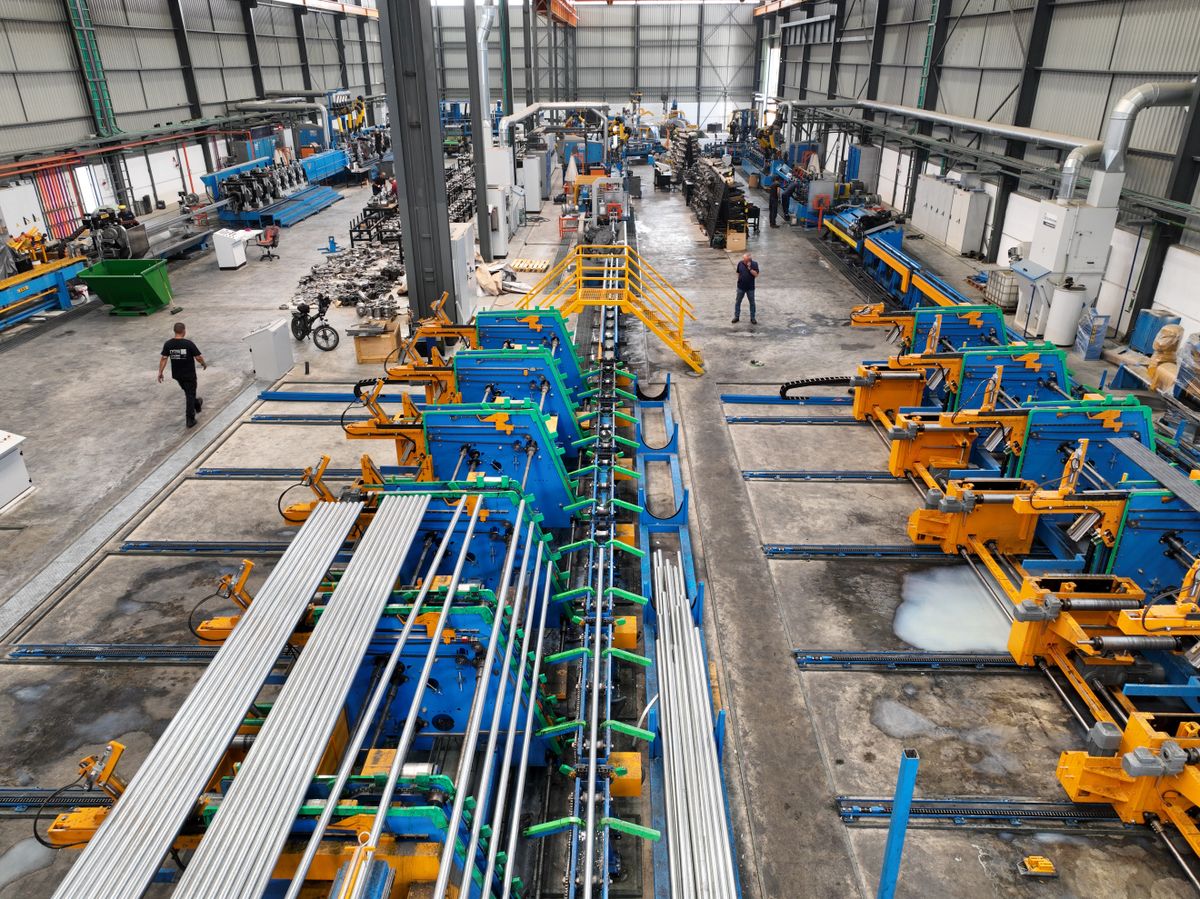
From the table, the profiles are stretched 1–2% to remove bow and twist, then cut to length. After that, they rest in racks until the ageing furnace has a full basket. Ageing for 6063-T5 typically runs 185–200 °C for 4–6 hours. The furnace timer matters more than buyers expect. Under-ageing leaves the metal soft, and over-ageing costs strength without saving time. Want the full press-side picture? Our aluminium extrusion process guide walks through the billet-to-bar journey step by step.
What the operator controls during a T5 run
Three dials decide whether the batch meets specification. First, exit temperature, which our pyrometers track every few metres. Second, quench intensity, set by fan speed and mist volume for the wall thickness involved. Third, ageing temperature, checked against calibrated thermocouples. A thin decorative section quenches easily, so air alone is enough. Thick 6 mm walls cool slowly. Then we raise the mist volume, or accept that the batch must be re-rated. So the T5 vs T6 choice also depends on section size. This is why an honest supplier asks about wall thickness before promising T5. Thick sections cannot always reach full T5 properties on the press, and pretending otherwise produces weak parts.
How T6 Differs on the Same Line
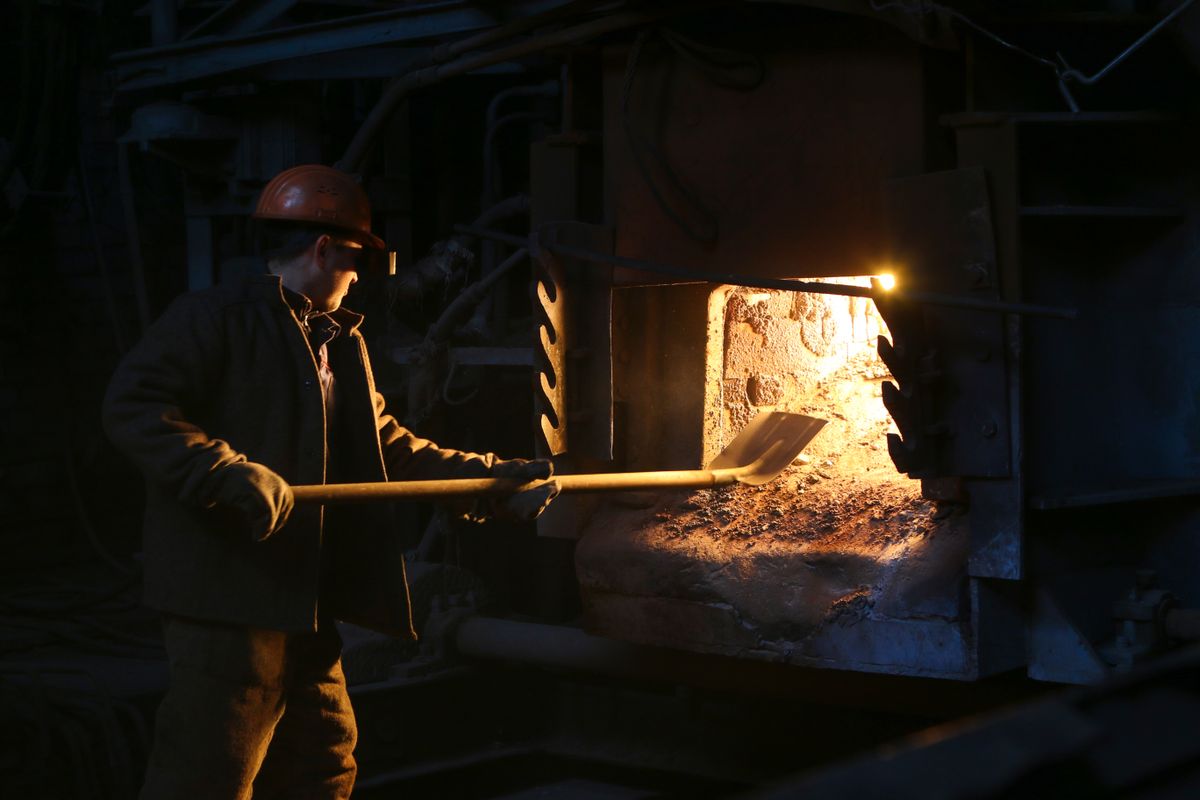
For 6063, T6 starts the same way but ends colder and slower. The quench switches to intensive water spray, which drops the section through the critical window in seconds. Faster cooling keeps more solute in solution. Therefore, the later ageing cycle can build a denser precipitate structure and higher strength. The T5 vs T6 gap is really a quench-speed decision. Ageing itself usually runs 175–185 °C for 6–8 hours, a touch longer than the T5 cycle. Below, the furnace image shows where that second controlled cycle happens.
For 6061-T6, the story changes again. In fact, the T5 vs T6 decision rarely exists for that alloy, because 6061 defaults to T6. A press quench is simply not fast enough for it. So bars and sections travel to an off-line solution furnace first. There they soak at about 530 °C before dropping into a water tank. Only after drying do they enter the ageing oven, usually at 160–175 °C for 8–12 hours. The extra handling adds cost and lead time, which is one reason 6061-T6 always prices above 6063-T5. Our 6063 versus 6061 comparison covers the alloy side of that decision in detail.
The hidden cost of a hard quench
Water quenching solves one problem and creates two. Distortion comes first. Sections cool unevenly, so thin walls shrink before thick ones and the bar bows. We correct it by stretching and straightening, but tight tolerance work costs more correction passes. Second comes residual stress. Locked-in stress waits for machining to release it, and then a pocket or a slot moves a few hundredths of a millimetre overnight. That T5 vs T6 contrast shows up most clearly on thick-walled machined parts. Buyers who machine deep pockets learn to order stress-relieved tempers or to rough-machine before finishing. Both answers cost money, so it pays to decide early.
T5 vs T6 Mechanical Properties Compared
Numbers settle most of this argument, so here they are. The T5 vs T6 table below comes straight from our sales engineers’ binder. It shows typical mill values from production batches, not marketing figures. Guaranteed minima on certificates sit slightly below those numbers. Exact minima depend on the standard you name and the section thickness. Therefore, always confirm against EN 755-2, EN 12020-2 or GB/T 5237.1 for your specific profile.
| Property (typical mill values) | 6063-T5 | 6063-T6 | 6061-T6 |
|---|---|---|---|
| Tensile strength, Rm | 170–205 MPa | 205–245 MPa | 290–310 MPa |
| Yield strength, Rp0.2 | 120–160 MPa | 170–210 MPa | 250–275 MPa |
| Elongation, A50 | 8–14% | 8–14% | 10–12% |
| Brinell hardness | ≈ 55–65 HB | ≈ 70–80 HB | ≈ 90–95 HB |
| Quench route | Air/mist on press | Water spray on press | Off-line water quench |
| Ageing cycle | 185–200 °C, 4–6 h | 175–185 °C, 6–8 h | 160–175 °C, 8–12 h |
| Residual stress risk | Low | Moderate | High without stretch |
Read the yield row twice, because it drives design. Yield strength decides when a mullion bends permanently under wind load. It also decides when a machined boss deforms under a bolt. Moving from 6063-T5 to 6063-T6 buys you roughly 30–40% more yield strength in the same section. That is the whole T5 vs T6 trade in one number. Jumping to 6061-T6 buys nearly double. Unsure which alloy should carry the load? The alloy guide above settles the chemistry side. Our profile weight calculation guide then tells you whether the section or the temper should carry the next increment.
What the certificate should actually promise
Typical values are for planning. Contract values come from the standard. Getting the T5 vs T6 line right on paper protects both sides. Under EN 755-2, 6063-T5 carries a guaranteed minimum tensile of about 160 MPa and yield of about 110 MPa. The T6 condition lifts those minima to roughly 190 and 150 MPa. Today, the catalogue of CEN standards, including EN 755-2 and EN 12020-2, lives in the CEN-CENELEC standards database. It is free to search. Chinese GB/T 5237.1 minima land in the same neighbourhood. So a drawing that says 6063-T6 means the same thing in most markets. Still, name the standard and temper explicitly on the purchase order. A quote that just says 6063 is a quote for whatever the mill had warm that day.
T5 vs T6 in Bending, Machining and Assembly
Strength is only half the story. How the metal behaves in your workshop decides the rest. Three shop-floor behaviours separate the two tempers, and each one shows up on a different machine.
Bending and forming
Bending is where T5 vs T6 feels most different in the workshop. T5 bends friendlier. Its lower yield strength means the metal flows before it fights back. Curved mullions, arched top rails and rolled tubes form with less force and less springback. For example, a curved 6063-T5 transom usually forms in one pass. The same shape in T6 needs an overbend allowance. However, T6 holds its shape better after forming, because the higher yield resists relaxation under load. So curved architectural parts favour T5, while formed brackets that must stay stiff under a bolt favour T6. Bend radii follow the alloy data in EN 755-2. Our shop practice is also simple: sample every new bend in the temper you actually ordered, not in whatever was on the rack.
Machining
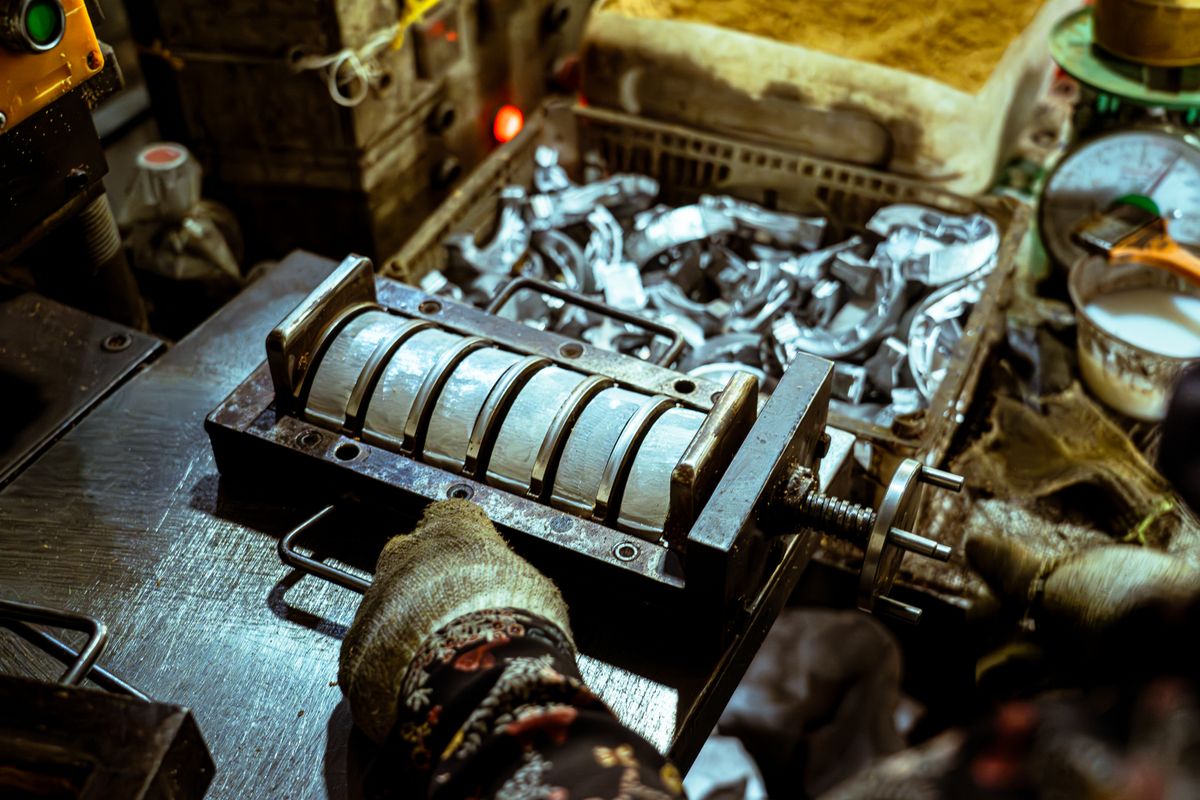
In the T5 vs T6 debate, machining usually favours T6. The harder, more aged structure cuts with a better chip. It also holds a sharper edge finish and grips a thread more firmly. Consequently, machined housings, valve bodies and motor mounts almost always specify T6. The trade-off is movement. Residual stress from the harder quench can release during heavy machining. Therefore, deep-pocket parts should be rough-machined, stress-relieved or both. T5, by contrast, machines slightly gummier but barely moves at all. That makes it the safer choice for long thin decorative parts that get light trimming only.
Assembly and fastening
For fasteners, the T5 vs T6 choice follows the joint, not the alloy. Screw ports, clip features and snap-fit joints care about yield and creep. A T5 screw port deforms a little when a screw seats, which actually helps gasket compression in window assemblies. Meanwhile, a T6 port resists that deformation, so the joint keeps its preload better under vibration. Curtain wall and industrial framing buyers therefore lean T6 for load-bearing screw ports. Window sash and frame sections stay T5. This split mirrors the wider difference between industrial and architectural sections. Our industrial versus architectural profiles guide describes it in depth.
T5 vs T6 Cost, Lead Time and Production Reality
Nobody quotes the temper premium honestly, so here is our actual cost picture. For 6063, the T5 vs T6 gap on the same die is modest. Both routes in the T5 vs T6 pair share the press, the stretcher and the saw. The differences come from quench intensity, ageing furnace hours and the correction work after a hard quench. For 6061, the off-line solution treatment adds a real step, and the price gap widens accordingly.
| Factor | T5 route | T6 route (6063) | T6 route (6061) |
|---|---|---|---|
| Extra process steps | None beyond standard | Water quench + longer ageing | Off-line solution + water quench + ageing |
| Typical price impact | Baseline | +3–8% on the same section | +12–20% over 6063-T5 |
| Lead time impact | None | Same day, fuller furnace loads | +2–5 days on batch flow |
| Distortion risk | Low | Moderate, extra straightening | High, stretching mandatory |
| Machining movement risk | Very low | Low to moderate | Needs stress relief for deep cuts |
Two practical notes follow from that table. First, T6 batches on 6063 age slower per cycle. Furnace slots fill faster, and a busy month can stretch delivery by a day or two. Second, freight multiplies every premium. Kilograms drive shipping, and a T6 route does not change the weight of the same section. So the T5 vs T6 price question needs your annual volume on the table. Before you lock a profile, run the mass numbers in our weight calculation guide. Then decide whether the strength gain justifies the extra tonnes across a full year of orders.
Which Temper Should You Order: T5 vs T6 in Practice
Most buyers never need to think about this again once they see their own application in a table. When a drawing arrives without a temper note, our T5 vs T6 mapping below is what we apply. It matches what our own window line, our industrial customers and our curtain wall engineers specify every week. That is T5 vs T6 distilled into seven rows.
| Application | Usual temper | Why |
|---|---|---|
| Window and door frames, 6063 | T5 | Ample strength for GB/T 8478-2020 grades, best bendability, lowest cost |
| Curtain wall mullions, tall spans | T6 | Higher yield resists deflection under wind load, stiffer screw ports |
| Thermal break assemblies | T5 or T6 per span | EN 14024 shear strength tests govern the assembled strip |
| Heat sinks and LED profiles | T5 | Conductivity and flatness matter more than yield |
| Machine frames, T-slot builds | 6063-T6 or 6061-T6 | Better thread holding and machined flatness |
| Solar mounting rails | 6063-T6 | Long spans on thin walls need the extra yield |
| Curved architectural features | T5 | Forms in one pass, less springback |
Treat the T5 vs T6 table as a starting point, then confirm with our engineers. One caution sits on the curtain wall row. The thermal break strip itself is tested as an assembly under EN 14024. So the profile temper cannot be chosen in isolation from the polyamide strip and the crimping geometry. Here the T5 vs T6 answer belongs to the whole assembly. Our curtain wall systems guide explains how that testing flows through a façade project. Likewise, window frames in China are graded as finished assemblies under GB/T 8478-2020. The temper only has to be strong enough for the grade you promise the developer. Extra strength beyond that grade is cost with no certificate to show for it.
How We Test and Certify Temper on Real Batches
A temper claim is only worth the testing behind it. On our floor, every press run gets a Webster hardness check at the saw, on a fixed sampling pattern. Webster hardness gives the first T5 vs T6 readout at the saw. Baskets leaving the ageing furnace get sampled again, and the readings are logged against the batch number. Beyond hardness, we pull tensile coupons per EN 755-2 sampling rules. Those coupons run on our in-house tensile machine. As a result, the yield and elongation on the certificate come from our own laboratory, not from a datasheet.
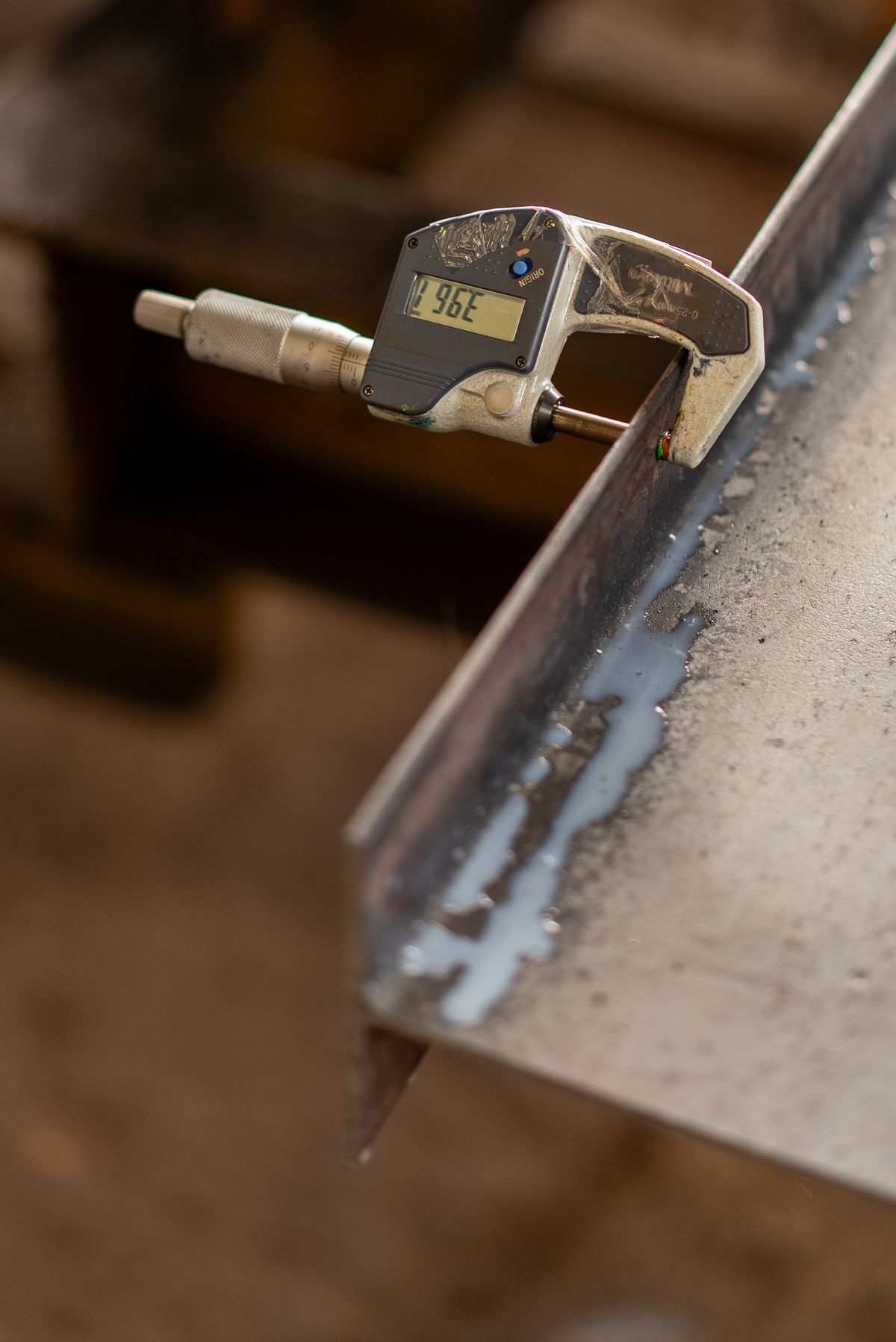
Dimensional compliance is verified separately against EN 755-9 and EN 12020-2 tolerance classes. Straightening never pushes a section outside those limits just to fake a better hardness number. Shipments leave with EN 10204 Type 3.1 certification under our ISO 9001 quality system. The melting batch, the press run and the ageing cycle all trace back to your order. Does your project need a specific tolerance class or a stricter sampling plan? Our extrusion tolerances guide shows how to write it into the drawing, so nothing gets negotiated twice.
Finishing interacts with temper more than buyers expect
Finishing is where T5 vs T6 differences become visible. Most profiles travel onward to anodising, powder coating or PVDF systems. Each reacts slightly differently to the two tempers, because ageing changes the secondary phase distribution at the surface. In practice the visual difference is small. However, colour matching between a T5 batch and a T6 batch can drift on dark bronze anodising across one façade. For that reason we prefer to finish whole elevations from one temper route. Our surface treatment comparison guide explains which finish systems pair best with each route. Finishing standards such as AAMA 2604 set the durability bar those systems must clear. The American Architectural Manufacturers Association publishes that framework.
What Eleven Years of Mill Records Teach About Temper Choice
Our factory has pressed profiles for eleven years, across six production lines and more than 500 profile shapes per day. Dimensional accuracy holds at ±0.5 mm under an ISO 9001 system, and shipments reach over 30 countries. Eleven years of T5 vs T6 records sit in our furnace logs. Those records taught us one humility: the temper that looks right on paper is sometimes wrong in the customer’s hands. A robot builder in Poland once specified 6061-T6 for everything. Then he discovered his T-slot covers no longer clipped in, because the ports were too hard. The fix was a two-temper drawing, T6 for the beam and T5 for the cover. That kind of outcome costs one email to avoid and one tooling change to fix later.
So use our engineering support before you freeze the T5 vs T6 decision. We deliver 2D drawings within 7 days, samples within 3 days of tooling trials, and free samples for qualified projects. Whether your decision lands on T5 vs T6, the inputs stay the same: loads, machining plan and budget. Meanwhile, our engineers flag any wall thickness that cannot reach full properties in the temper you asked for. That flag arrives before the die is cut, not after.
Frequently Asked Questions About T5 vs T6 Aluminium
Is T6 always stronger than T5?
For the same alloy and section, yes, typically by 30–40% on yield for 6063. However, strength also depends on wall thickness, quench access and ageing control. A thick, slow-cooled section in nominally T6 can test close to a thin T5 one. That is why the T5 vs T6 comparison always ends with the certificate. Ask for typical mill values rather than assuming the label tells the whole story.
T5 vs T6: which one costs more?
In short, T6 costs more, but the size of the premium depends on the alloy. On 6063, the same die in T6 usually adds 3–8% for the harder quench and longer furnace cycle. For 6061, the off-line solution treatment pushes the premium into double digits. Freight, machining and rejection rates all feed the final number, so compare tempers on landed cost, not just on the per-kilogram quote.
Can I order one profile in both tempers?
You can, and mixed-temper programs are common. The die is shared, so the extra cost per batch is mostly quench intensity, furnace hours and straightening. We mark the bundles by temper and keep the certificates separate, which prevents mixing on the assembly line.
Which temper is right for window and door profiles?
Most 6063 architectural sections run T5. After all, GB/T 8478-2020 grades and EN 14351-1 declarations test the finished window, not the bare bar. T5 meets those grades comfortably and bends better during fabrication. Tall mullions with heavy wind spans are the main exception, and those go T6.
Does temper affect anodising and powder coating?
Slightly. Ageing changes the surface microstructure, so large colour matches across different tempers can drift on dark bronze anodising. Powder coating is more forgiving. We keep whole elevations on one temper route to keep the colour aligned.
What is the minimum order quantity for a specific temper?
For stock dies, the MOQ is typically 300–500 kg per profile, and the temper rides along at no extra MOQ. Custom dies follow the same rule after sampling. Small trial quantities can run either temper, though furnace loads prefer full baskets.
Which payment terms do you accept?
We accept T/T at 30% deposit and 70% against copy of documents. L/C at sight works for orders above USD 20,000, and PayPal covers sample fees. Verified buyers with a trade history can discuss adjusted terms per project.
How do you ship T5 and T6 orders internationally?
Standard terms are FOB Foshan or FOB Nansha, with CIF and DDP available under Incoterms 2020. Profiles are packed in EPE foam inside steel-reinforced wooden crates, with transit breakage kept below 0.2%. Documents include the packing list, EN 10204 Type 3.1 certificates and, where needed, the ageing records.
What is the lead time from order to shipment?
Production and delivery typically take 25–35 days: tooling and sampling up front, then extrusion, ageing, finishing and packing. Repeat orders on existing dies usually shorten that window. Air freight is available for urgent sample quantities.
Can a supplier skip the ageing cycle to save time?
Sadly yes, and the metal will still look correct on the rack. Under-aged profiles test soft, often by 20–30% on yield, and the shortfall appears months later as sag or bolt creep. This is why T5 vs T6 paperwork matters as much as the metal. Buy against EN 10204 Type 3.1, and keep the certificate from every batch.
Ready to Fix the Temper on Your Drawing?
Send us your profile drawing and tell us the loads, the machining plan and the finish. Our engineers will confirm the right temper within 24 hours and quote it with honest cost differences. You also get free samples, so you can bend, machine and assemble the real metal before you commit. The T5 vs T6 question ends with a sample, not a datasheet. Drawings come back within 7 days, and samples ship within 3 days of tooling trials.
CONTACT US


Foshan Naview New Building Materials Co., Ltd.
We are always here offering customers our reliable products and service.
If you want to liaise with us now, please click contact us