

Aluminium Extrusion Process: From Billet to Profile
- By:Naview
- Date:2026-07-27

What Is Aluminium Extrusion?
Aluminium extrusion forces heated alloy billets through a shaped die opening under extreme pressure. Picture squeezing toothpaste from a tube — the paste takes the shape of the opening, and the same principle applies here. With aluminium, a 7-inch diameter billet heated to roughly 450 to 500 degrees Celsius gets pushed through a steel die at pressures reaching 15,000 tons. As a result, the process produces a continuous length of profile with a consistent cross-section.
How the Process Works at the Material Level
Specifically, heated aluminium behaves much like soft butter — malleable without melting — which lets it flow through complex die shapes while retaining its metallurgical properties. That is why most architectural and industrial profiles use 6063 or 6061 aluminium alloys. Manufacturers pick these grades for their balance of extrudability, strength, and corrosion resistance. At the same time, the alloy stays in a plastic state throughout the entire extrusion run.
Why Extrusion Matters for B2B Buyers
Importing aluminium profiles for doors, windows, curtain walls, or industrial frames means the extrusion process directly controls three factors you care about: dimensional accuracy, surface quality, and mechanical properties. A poorly controlled extrusion run produces profiles with inconsistent wall thickness, visible die lines, or weak spots — defects that may not be obvious when you inspect a handful of samples. Those defects show up later during fabrication or on-site assembly, long after you have paid for the shipment. In other words, a cheap extrusion price means nothing if the profiles fail during fabrication.
Checking a supplier’s extrusion capabilities matters just as much as checking their prices. Moreover, you need to know whether they run continuous casting or direct casting, what tonnage presses they operate, and how they handle die correction when profiles drift out of tolerance.
The Aluminium Extrusion Process: 7 Steps from Billet to Profile
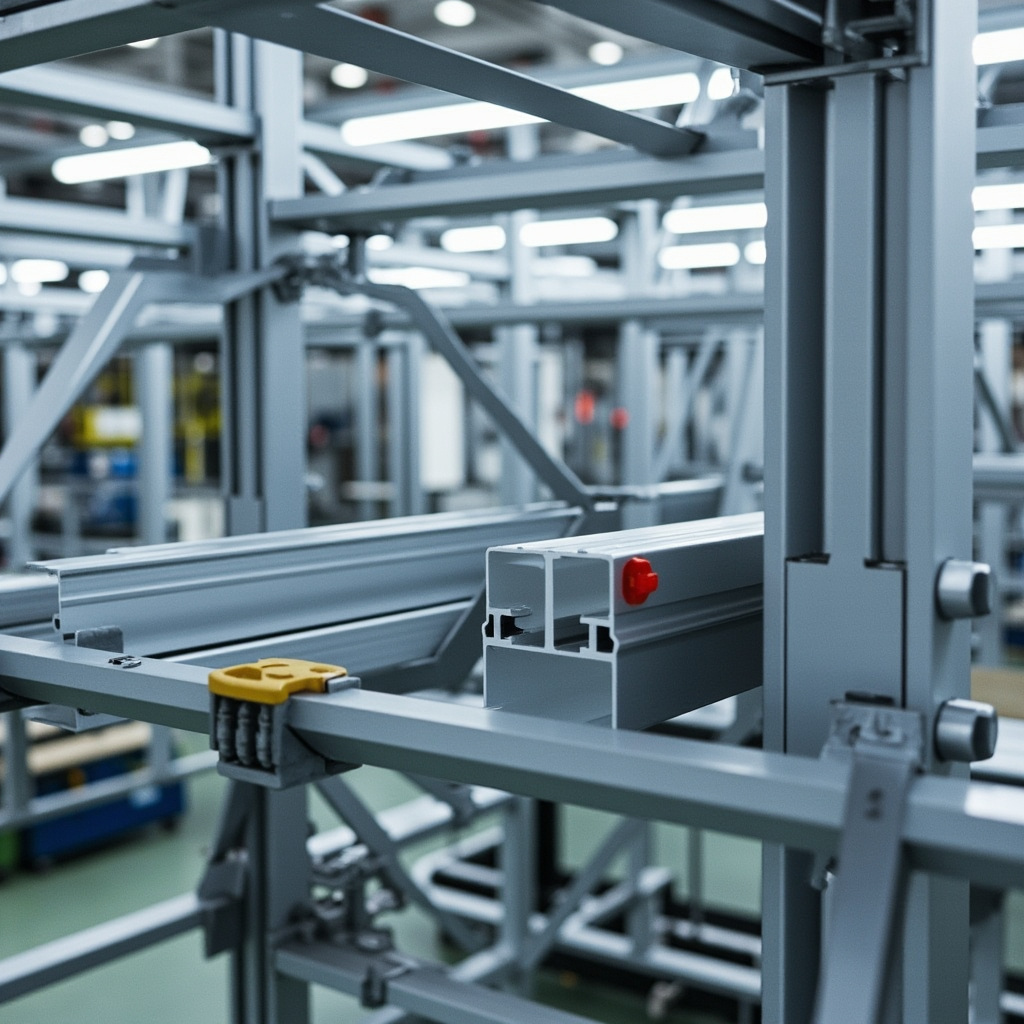
Every aluminium profile you have ever handled went through the same basic sequence. What separates suppliers is how well they control each step. Here is the full process, along with the quality checkpoints worth asking about.
Step 1: Die Design and Manufacturing
The die — a steel disc with a shaped opening that defines the profile cross-section — determines roughly 70 percent of extrusion success. A poorly designed die causes uneven metal flow, leading to twisting, warping, or wall thickness variation in the finished profile. Modern extrusion suppliers use 3D simulation software to model metal flow through the die before cutting any steel, saving both time and material.
At NA-VIEW, our tooling engineers design dies using finite element analysis to predict and correct flow imbalances before production starts. Standard die manufacturing takes 5 to 7 working days. Complex multi-cavity dies or hollow profile dies with mandrels, in contrast, take 7 to 12 days.
Die Type Selection Guide
| Die Type | Used For | Typical Lead Time | Cost Factor |
|---|---|---|---|
| Solid Die (Flat) | Solid bars, angles, channels, T-sections | 5-7 days | 1x (baseline) |
| Hollow Die (Porthole) | Tubes, hollow chambers, thermal break cavities | 7-10 days | 2-3x |
| Semi-Hollow Die | Partially enclosed sections with narrow gaps | 7-10 days | 1.5-2x |
| Multi-Cavity Die | Small profiles produced in parallel for efficiency | 8-12 days | 1.5-2x |
Step 2: Billet Casting and Preparation
Aluminium billets come from primary aluminium ingots, recycled scrap, or a blend of both. The casting method matters a great deal. Continuous casting produces billets with a finer, more uniform grain structure compared to traditional direct chill casting, which means more consistent flow during extrusion and better surface finish on the final profile.
Before extrusion, billets get cut to length — typically 600 to 1200 millimetres depending on press size — and preheated in a gas-fired or induction furnace. The target billet temperature range is 450 to 500 degrees Celsius for 6063 alloy. If the billet runs too cold, it will not flow properly, causing die wear and surface tearing. Running too hot, on the other hand, risks surface oxidation, blisters, or grain boundary melting.
How to Verify Billet Quality
A reliable supplier logs billet temperature for every extrusion run. Factories that cannot show you these records are not controlling one of the most basic quality parameters. They should also be able to tell you the billet alloy source and whether they use homogenised billets. Homogenisation — a heat treatment that evens out alloy element distribution — improves extrudability substantially, often by 20 to 30 percent.
Step 3: Extrusion Press Operation
This is the main event. First, the preheated billet loads into the extrusion press container. Next, a hydraulic ram pushes the billet against the die with force ranging from 600 to 15,000 tons depending on press size. The aluminium then flows through the die opening and emerges as a continuous profile on the other side. Watching this happen gives you a real appreciation for how much engineering goes into what looks like a simple metal bar.
Press Tonnage and Profile Size Limits
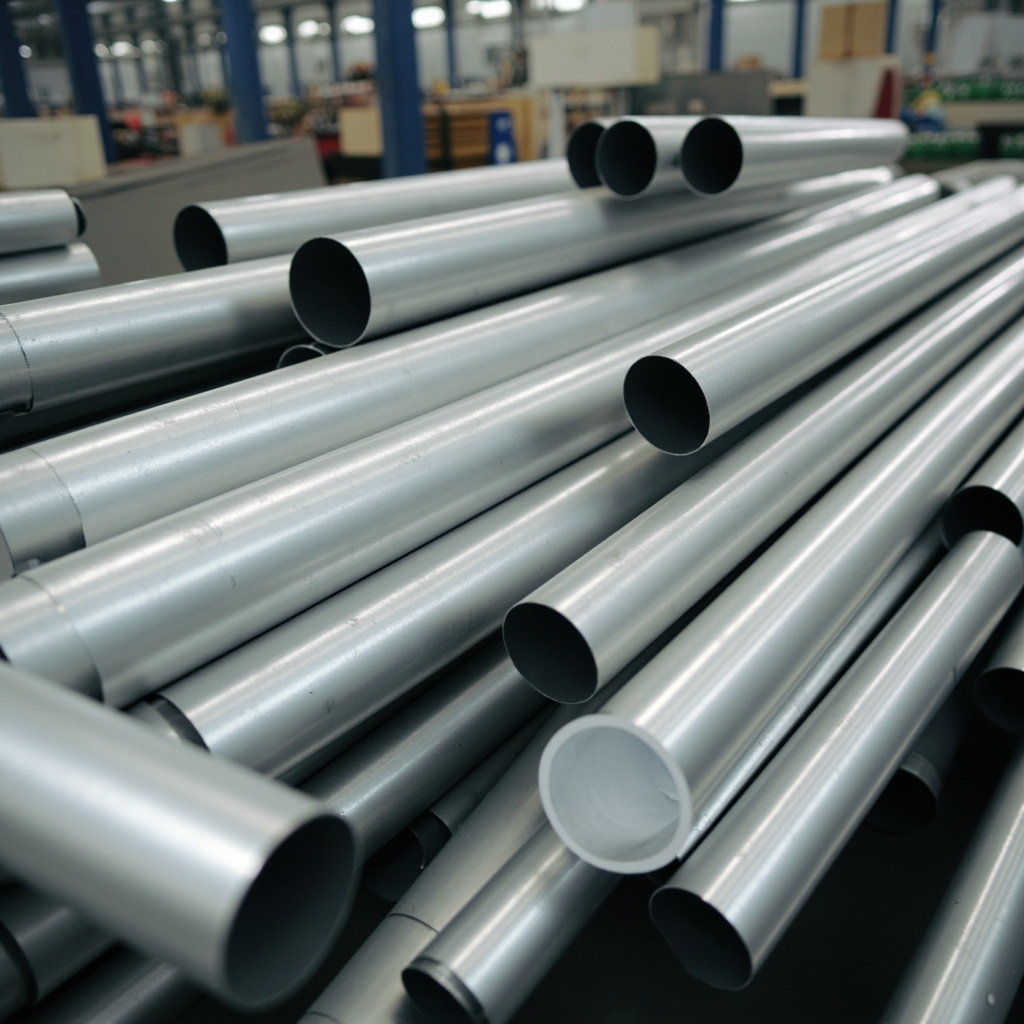
Press tonnage determines the maximum profile size a factory can produce. A 1,000-ton press handles smaller profiles like door tracks and window glazing beads. Meanwhile, a 2,500-ton press can extrude large curtain wall mullions and heavy structural sections. Projects needing profiles wider than 200 millimetres require a supplier running at least a 1,800-ton press — verify this before placing an order.
Several parameters must stay within tight ranges during extrusion. Ram speed typically runs at 5 to 50 millimetres per second, adjusted based on profile complexity. Slower speeds suit thin-walled or intricate profiles, while faster speeds work for simple solid shapes. Exit temperature — measured where the profile leaves the die — should stay between 500 and 580 degrees Celsius. Exceeding the alloy’s solidus point tears the profile. Dropping too low, conversely, hardens the metal prematurely and may cause it to stick in the die.
Step 4: Quenching and Cooling
Immediately after exiting the die, the hot profile passes through a quenching system — either air fans, water spray, or a water bath. The quench rate must be fast enough to lock in the alloy’s mechanical properties but controlled enough to prevent distortion. Rapid quenching can warp thin-walled profiles. Too slow quenching, on the other hand, allows coarse precipitates to form and reduces strength.
For 6063 alloy, the critical temperature range during quenching is 450 to 200 degrees Celsius. The profile must pass through this range at a minimum cooling rate of 1 degree Celsius per second. Most architectural profiles use forced air quenching. Industrial and structural profiles needing higher strength, in contrast, often use water spray quenching.
Why Quench System Design Matters
Ask your supplier about their quench system. Factories using a single cooling method for all profiles — regardless of wall thickness or alloy grade — are cutting corners. Different profiles need different cooling rates, and experienced extrusion operators adjust the quench accordingly. A well-designed quench system also reduces internal stress that causes post-production warping.
Step 5: Stretching and Straightening
Profiles come out of the press slightly curved from thermal stress. The stretcher grips both ends of each profile — now cooled to room temperature — and applies 0.5 to 2 percent elongation. This stretch straightens the profile, relieves internal stress, and slightly cold-works the material. For most architectural profiles, the standard stretch falls between 0.5 and 1 percent.
Getting Straightness Right
Under-stretching leaves residual stress that causes the profile to warp later — especially after cutting, machining, or welding. Over-stretching, however, can cause dimensional changes or surface defects. The best factories measure final straightness with a straight edge and feeler gauge, not just by eye. Industry standard for profile straightness is 1 millimetre deviation per metre of length, with tighter tolerances required for demanding applications like curtain wall transoms.
Step 6: Ageing and Heat Treatment
After stretching, profiles go into an ageing oven for precipitation hardening — the step that gives 6063 and 6061 alloys their final mechanical strength. During ageing, the profiles are held at 170 to 200 degrees Celsius for 4 to 8 hours, depending on the alloy and target temper. The ageing cycle must be precise because the temper directly determines how the profile performs in the field.
Alloy 6063 typically goes to T5 temper — air quenched and artificially aged — delivering tensile strength around 160 to 180 megapascals at 5 to 8 percent elongation. Alloy 6061, by comparison, goes to T6 temper — solution heat treated and artificially aged — achieving 260 to 310 megapascals. Under-ageing leaves the profile too soft. Over-ageing, conversely, reduces elongation and makes the profile brittle.
Temper Designation Reference
| Temper | Alloy | Process | Tensile Strength (MPa) | Typical Application |
|---|---|---|---|---|
| T4 | 6063 | Solution treated + naturally aged | 130-150 | Architectural shapes needing bending |
| T5 | 6063 | Cooled from extrusion + artificially aged | 160-180 | Window, door, and curtain wall profiles |
| T6 | 6061 | Solution treated + artificially aged | 260-310 | Structural, automotive, marine profiles |
| T66 | 6063 | Cooled from extrusion + special ageing | 200-220 | High-strength architectural profiles |
Step 7: Cutting, Inspection, and Packing
The final step cuts profiles to ordered lengths — typically 5.8 or 6 metres for container loading — and inspects for surface defects, dimensional accuracy, and mechanical properties. A proper inspection includes these checks:
- Visual inspection for die lines, pick-up marks, blisters, and scratches under adequate lighting
- Dimensional check using callipers, go/no-go gauges, or CMM for critical dimensions
- Hardness testing with a Webster or Vickers hardness tester to verify temper
- Tensile testing on sample coupons cut from each batch
Profiles that pass inspection are packed with protective film on visible surfaces — especially important for anodised or powder coated profiles. Wooden crates or export-grade pallets protect against handling damage during shipping. Every bundle should also carry a label with the heat number, alloy, temper, and order reference for full traceability.
Common Aluminium Extrusion Defects and How Good Suppliers Prevent Them
Every extrusion run produces some scrap. What separates a quality supplier from a budget factory is the scrap rate — and what they do about it. Here are the most common extrusion defects, along with the process controls that prevent them.
Defect Types at a Glance
| Defect | Appearance | Root Cause | Prevention |
|---|---|---|---|
| Die Lines | Longitudinal scratches or raised ridges on profile surface | Worn die bearing surface, debris in die | Regular die polishing; nitrogen or liquid nitrogen cooling |
| Pick-Up | Small particles of aluminium stuck to surface | Metal build-up on die bearing | Die nitriding; proper billet temperature control |
| Blistering | Raised bubbles on profile surface | Gas trapped in billet; billet overheated | Use degassed billets; control billet temp below 520 degrees C |
| Twisting | Profile rotates along its length | Uneven metal flow through die | Die design correction; adjust die bearing lengths |
| Wall Thickness Variation | One wall thinner than others on same profile | Die deflection under pressure; misaligned die | Reinforced die design; regular die inspection |
| Surface Cracking | Small cracks perpendicular to extrusion direction | Exit temperature too high; ram speed too fast | Reduce ram speed; lower billet temperature |
How to Spot Process Control Problems
These defects are not mysterious. A factory that properly controls billet temperature, ram speed, die condition, and quench rate produces consistent profiles with very low scrap rates — typically under 3 to 5 percent. When you evaluate a new supplier, ask about their average extrusion scrap rate. Anything above 8 percent signals poor process control, and you will eventually pay for that scrap through higher prices or quality problems in your shipments.
How to Evaluate an Aluminium Extrusion Manufacturer
Not every aluminium extrusion factory produces the same quality. Comparing suppliers — especially when sourcing from overseas — means looking beyond price per kilogram. Focus on the following questions instead.
Press Tonnage and Capacity
Ask what tonnage presses they run and how many. A factory with one 800-ton press simply cannot produce the same range of profiles as one with multiple presses from 600 to 2,500 tons. Press tonnage directly limits the maximum profile circumscribing circle — the smallest circle that contains the entire profile cross-section. The Aluminium Extruders Council provides reference tables matching press tonnage to profile size capability.
Billet Quality and Alloy Sourcing
Find out whether they use primary aluminium billets, recycled billets, or a blend. Primary billets give the most consistent properties, though recycled billets can be acceptable if the scrap is well-sorted and remelting is properly controlled. Also ask about billet homogenisation — this pre-extrusion heat treatment improves extrudability by 20 to 30 percent and delivers noticeably better surface finish.
Quality Control Documentation
A proper extrusion supplier provides mill test certificates with every shipment, showing the alloy, temper, tensile test results, and hardness values for each heat number. Walk away from any factory that hesitates to share this documentation or claims they do not do tensile testing on every batch. Dimensional inspection reports for critical dimensions carry equal weight — especially for profiles that mate with gaskets, hardware, or other components where a fraction of a millimetre makes the difference.
Why Choose NA-VIEW as Your Aluminium Extrusion Partner
NA-VIEW has been manufacturing aluminium profiles for 11 years. Our factory in Foshan, China runs 6 extrusion lines with press capacities ranging from 600 to 2,500 tons. We have the flexibility to produce everything from small glazing beads to large curtain wall mullions. Our daily output exceeds 500 profiles, all held to dimensional accuracy of plus or minus 0.5 millimetres.
ISO-Certified Quality Systems
Our quality system is ISO 9001 certified. Every production batch undergoes tensile testing, hardness verification, and full dimensional inspection before shipping. We also maintain detailed process records for every extrusion run — billet temperature, ram speed, quench rate, ageing cycle — so you can trace any profile back to its production parameters. If you need custom profiles requiring aluminium door and window profiles with specific wall thicknesses or thermal break cavities, our tooling engineers design dies in-house with a 7-day turnaround. We also provide aluminium profile surface treatment including anodising, powder coating, PVDF, and electrophoresis in our integrated finishing lines.
Global Export Experience
We export to 30+ countries including markets in the Middle East, Southeast Asia, Africa, and South America. Standard lead time for new die development is 7 days, and we deliver free profile samples in 3 days for your evaluation. For production orders, expect 25 to 35 days from deposit to container loading, depending on profile complexity and surface treatment requirements. Every shipment is packed in export-grade wooden crates with protective film on visible surfaces, and we provide full mill test certificates and dimensional inspection reports with each order.
Fast Response and Free Samples
We offer free samples for profile evaluation with no strings attached. Send us your drawings or cross-section sketches — our engineering team responds with a feasibility assessment and quotation within 24 hours. The samples ship within 3 working days so you can inspect quality before committing to a production order.
Frequently Asked Questions About the Aluminium Extrusion Process
What is the minimum wall thickness for extruded aluminium profiles?
The practical minimum wall thickness for 6063 alloy is 1.0 millimetre for small profiles and 1.5 millimetres for profiles wider than 50 millimetres. Going below this increases the risk of die breakage and profile tearing during extrusion. For 6061 alloy, the minimum is slightly thicker — typically 1.5 to 2.0 millimetres — due to higher extrusion pressure requirements.
How long does it take to produce custom aluminium extrusion dies?
Standard solid dies take 5 to 7 working days. Hollow dies and semi-hollow dies take 7 to 12 working days. Complex multi-cavity dies with tight tolerances may take up to 15 days. At NA-VIEW, we produce dies in-house and provide a 3-day sample turnaround after die completion for your approval before starting production.
What aluminium alloys are best for architectural profiles?
6063-T5 is the standard choice for most architectural applications including window frames, door frames, and curtain wall profiles. It delivers a good balance of extrudability, surface finish, corrosion resistance, and moderate strength. Alloy 6060 sees occasional use where better surface finish after anodising is critical. For structural applications requiring higher strength — load-bearing mullions and transoms in high-rise curtain walls — 6061-T6 is the go-to choice.
What surface treatments can be applied to extruded aluminium profiles?
The four main options are anodising (10 to 25 micron oxide layer, excellent corrosion resistance), powder coating (60 to 80 micron polyester or polyurethane layer, wide colour range), PVDF coating (25 to 35 micron fluoropolymer, best UV and weather resistance), and electrophoresis (transparent or coloured glossy finish over anodising). For a deeper dive, refer to our aluminium profile surface treatment comparison guide.
What is your MOQ for custom extruded aluminium profiles?
Our standard MOQ is 500 kilograms per profile design. For smaller trial orders, we can work with 300 kilograms. Die costs are amortised over the first production order. Larger projects with multiple profile designs qualify for consolidated die development and discounted tooling packages — ask our sales team for details.
What payment and shipping terms do you offer?
We accept T/T bank transfer (30 percent deposit, 70 percent before shipment), irrevocable L/C at sight, and PayPal for sample orders. Standard shipping terms are FOB Shenzhen or Guangzhou. CIF and DDP options are also available to major ports worldwide. All profiles are packed in export-grade fumigated wooden crates with protective film on finished surfaces.
How do you ensure profile tolerances across large production runs?
Dimensional inspection happens at three checkpoints: first article inspection after die setup, in-process random sampling during extrusion, and final inspection before packing. Critical dimensions are measured with calibrated callipers and go/no-go gauges. Our standard tolerance is plus or minus 0.5 millimetres for most dimensions, with tighter tolerances available for precision applications. We also monitor die wear — when a die approaches its service life limit, we refinish or replace it before it produces out-of-tolerance profiles.
Ready to Source Custom Aluminium Profiles?
Whether you need standard aluminium window and door profiles or complex custom extrusions for an industrial application, NA-VIEW has the press capacity, tooling expertise, and quality systems to deliver. Send us your profile drawings or project requirements today. Our engineering team responds with a feasibility analysis and quotation within 24 hours — and we will ship free profile samples within 3 working days so you can inspect the quality before committing to a production order.
Contact NA-VIEW Aluminium to start your extrusion project.
CONTACT US


Foshan Naview New Building Materials Co., Ltd.
We are always here offering customers our reliable products and service.
If you want to liaise with us now, please click contact us