

Custom Aluminium Extrusion: Design to Production
- By:Naview
- Date:2026-08-12
When a B2B buyer sends a technical drawing to an extrusion factory, the path from that drawing to a container of finished profiles involves eight distinct stages. Each stage has its own timeline, quality checkpoints, and cost drivers. Understanding the custom aluminium extrusion process helps buyers make informed decisions about design optimisation, timeline planning, and supplier evaluation. This guide walks through each step as it happens on our factory floor at NA-VIEW, where six extrusion lines produce over 500 profile variants daily for customers in 30+ countries.
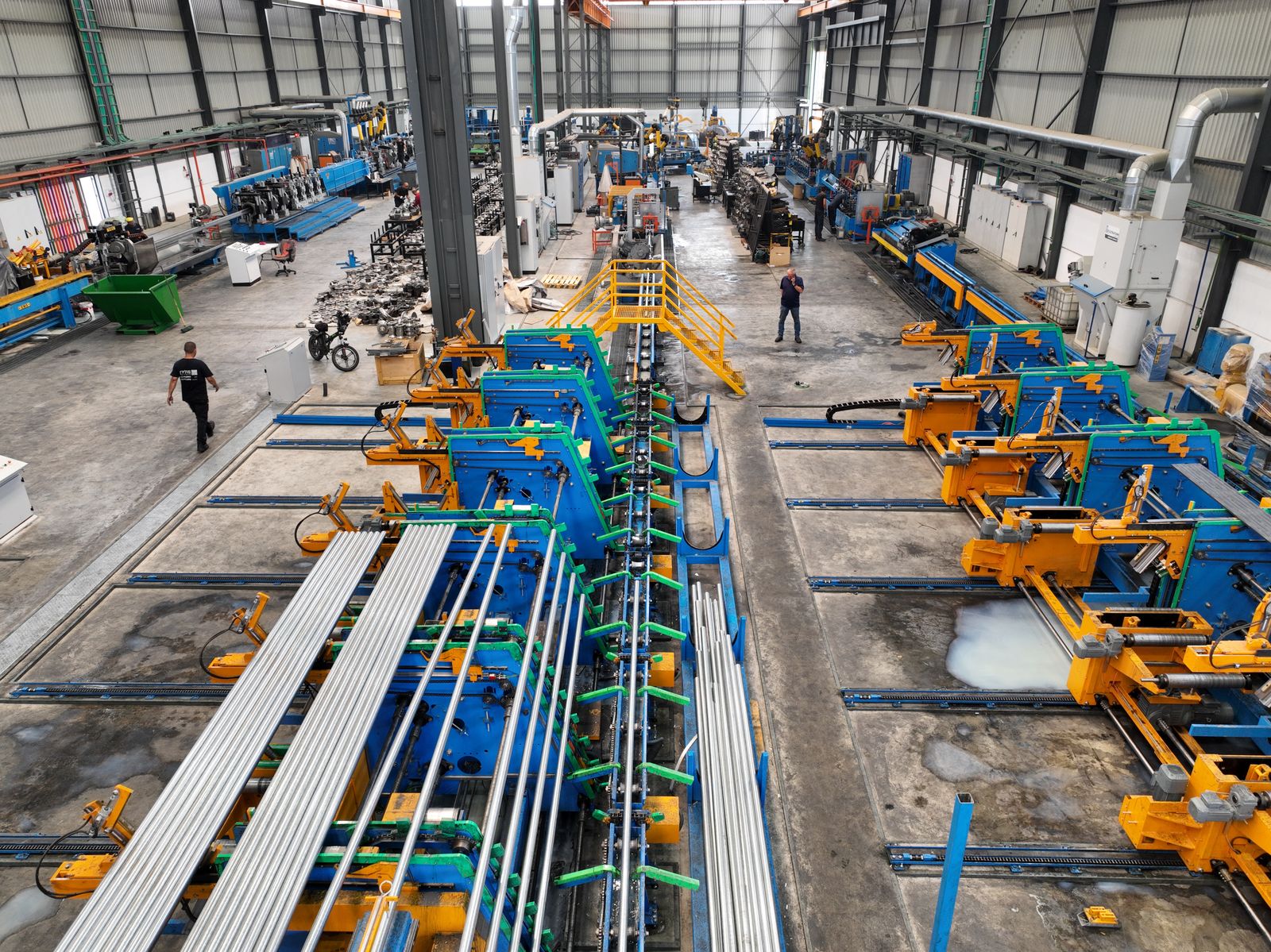
Step 1: Design Review and Engineering (7 Days)
Every custom aluminium extrusion project starts with a design review. Our engineering team examines the cross-section drawing for manufacturability — checking wall thickness ratios, symmetry, hollow cavity feasibility, and potential metal flow problems. A common issue we catch at this stage is wall thickness variation: if one section is 3.0 mm and an adjacent section is 1.0 mm, the thin section will cool faster and pull the profile out of straightness. We flag these issues and propose design modifications before committing to die manufacturing.
During this stage, we also confirm the alloy grade (typically 6063 for architectural, 6061 for structural — see our alloy comparison guide), surface treatment requirements, and tolerance specifications. The output is a revised drawing, a die design proposal, and a detailed quote — delivered within 7 days of receiving the buyer’s initial drawing.
Step 2: Die Manufacturing (7-10 Days)
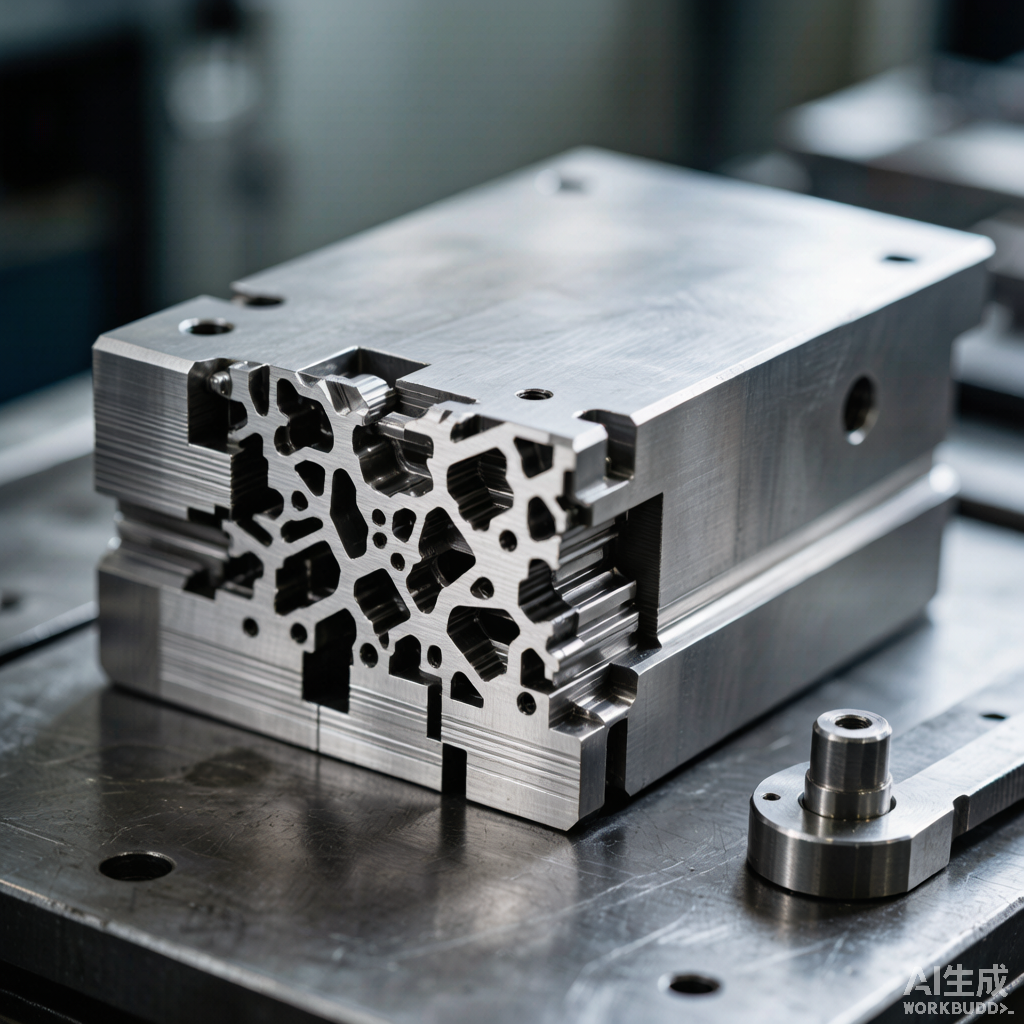
The die is a precision-machined steel disc with the profile’s cross-section cut through it. For solid profiles, a flat die suffices. For hollow profiles, we use porthole dies that split the aluminium billet and rejoin it around a mandrel — creating the internal cavity. Die steel is H13 hot-work tool steel, heat-treated to 48-52 HRC for durability.
Die manufacturing takes 7-10 days depending on complexity. A simple solid profile die can be cut in 3 days; a multi-void hollow profile die with critical tolerances may take 2 weeks. The die is then polished to reduce friction and nitrided to extend surface hardness. At NA-VIEW, we maintain an in-house die shop with CNC machining centres and wire EDM, which gives us control over lead times that factories relying on outsourced die shops cannot match. For design principles, see our extrusion design guidelines.
Step 3: Billet Preparation and Heating
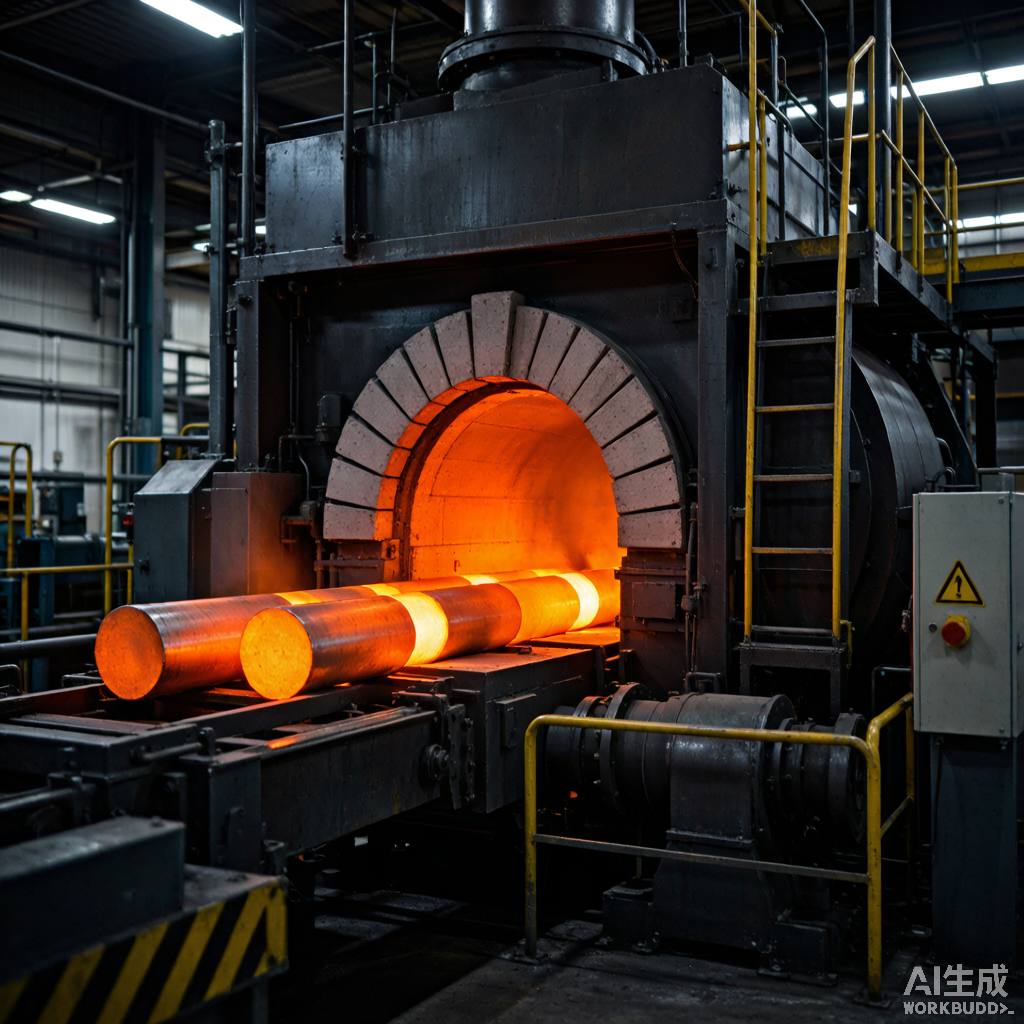
Aluminium billets are cut to length (typically 400-800 mm) from cast logs, then heated to 450-500°C in an induction furnace. Induction heating is preferred over gas furnaces because it heats the billet uniformly within ±5°C in 2-3 minutes, compared to ±15°C in 15-20 minutes for gas. Precise temperature control is critical — it affects metal flow, surface finish, and dimensional stability of the final profile.
The aluminium extrusion process also preheats the die to 400-450°C and the container to 400°C, ensuring the billet does not cool as it enters the press. This thermal equilibrium is what makes modern extrusion both fast and dimensionally consistent.
Step 4: Extrusion
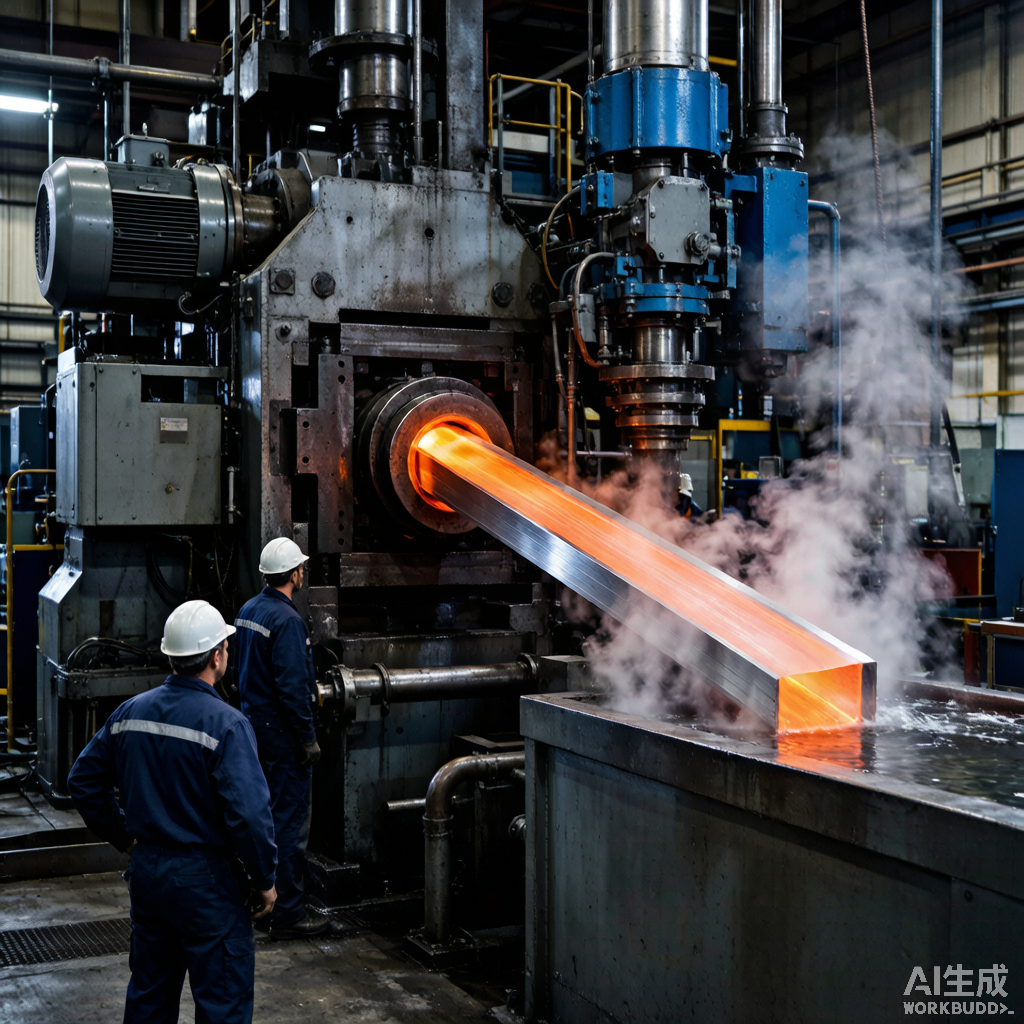
The hydraulic press pushes the heated billet through the die with 1,500-2,500 tons of force. The aluminium flows through the die opening and emerges as a continuous profile at 8-15 metres per minute. The profile travels along a run-out table where it is quenched — cooled rapidly by water spray or forced air to lock in the mechanical properties required by the T5 or T6 temper.
At NA-VIEW, our six extrusion lines range from 1,800 to 2,500 tons of pressing force, accommodating profile cross-sections from 10 mm to 350 mm in width. We extrude over 500 unique profile variants per day, with inline laser measurement on two lines for real-time tolerance monitoring.
Step 5: Cooling, Straightening, and Cutting
After quenching, the profile cools to room temperature and is stretched on a stretcher bench to correct any bow, twist, or curvature introduced during extrusion. Stretching typically elongates the profile by 1-3% and relieves internal stresses. The straightened profile is then cut to the customer’s specified length — standard cutting tolerance is ±1.5 mm, precision cutting achieves ±0.5 mm.
Step 6: Surface Treatment
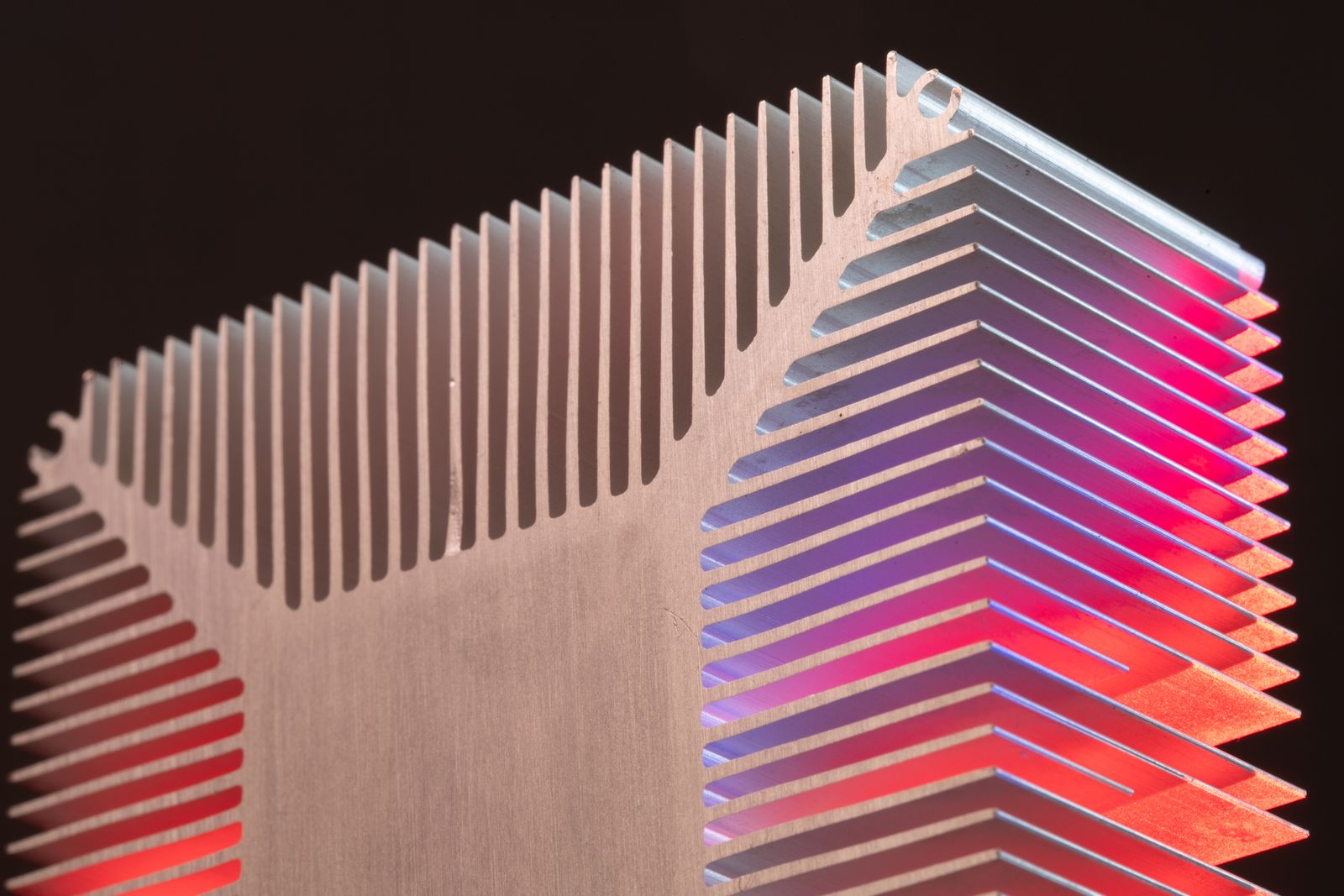
Surface treatment is applied after extrusion and cutting. The options depend on the application and aesthetic requirements:
- Mill finish — no treatment, as-extruded surface
- Anodising — electrochemical process creating a hard oxide layer (15-25 microns)
- Powder coating — electrostatic spray of polyester powder, cured at 200°C
- PVDF coating — fluoropolymer coating for premium architectural applications
- Wood grain sublimation — thermal transfer of wood-pattern film onto powder-coated surface
Surface treatment adds 2-5 days to the production timeline depending on the process and colour requirements. Profiles are hung on racks, pre-treated (chromate or chrome-free conversion coating), and processed through the appropriate finishing line.
Step 7: Quality Control and Packaging
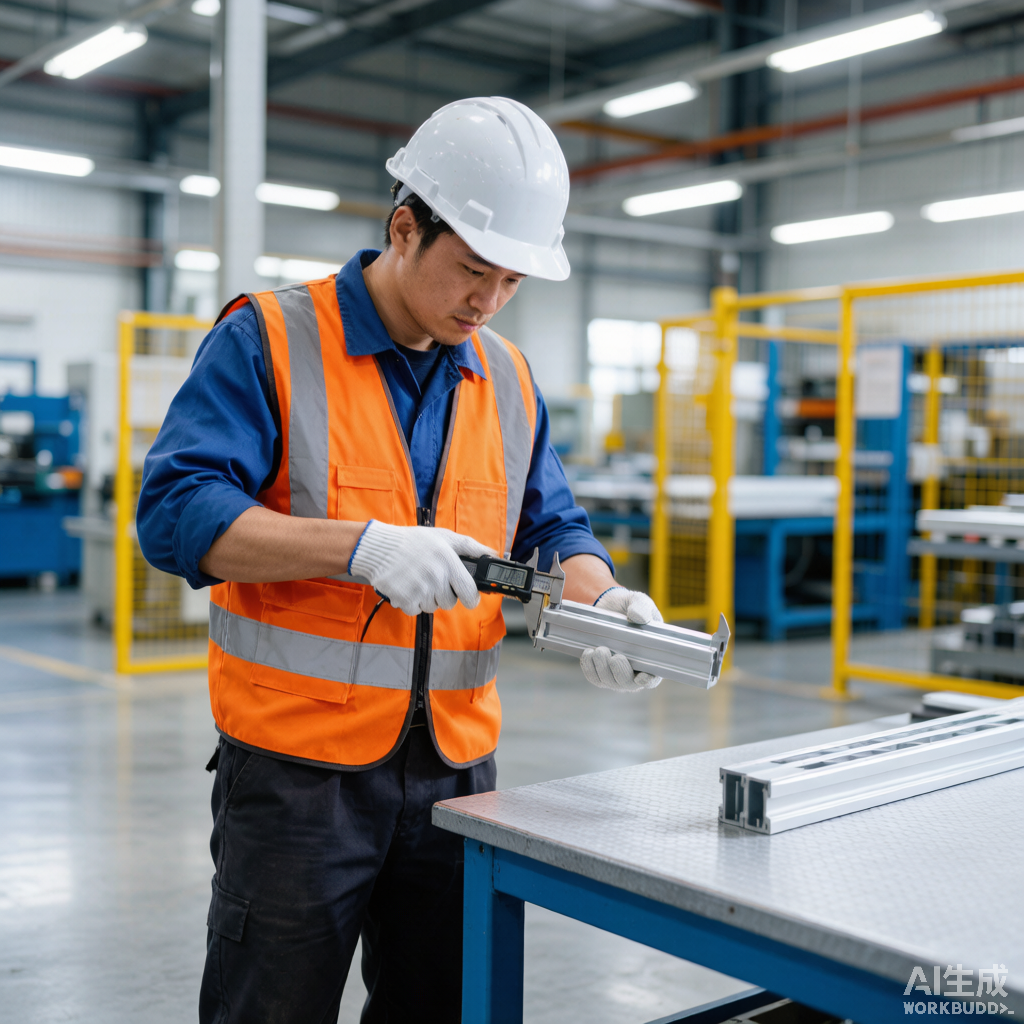
Every production batch undergoes first article inspection (FAI) and in-process quality checks. Dimensional inspection uses CMM and digital callipers to verify cross-section, wall thickness, and length against the approved drawing. Surface quality is checked visually and with a gloss meter for coated profiles. Mechanical properties are verified by hardness testing (Webster or Brinell) and, when required, tensile testing.
Packaging is tailored to the profile type and shipping method. Standard profiles are bundle-wrapped with kraft paper and strapped to timber pallets. High-finish profiles receive individual protective film sleeves. All timber packaging is ISPM-15 treated and certified for international export.
Step 8: Shipping and Delivery (25-35 Days Total)
The total timeline from drawing approval to container loading is 25-35 days for new custom aluminium extrusion profiles and 15-20 days for repeat orders. Shipping adds 7-30 days depending on destination — 7 days to Southeast Asia, 15-20 days to the Middle East, 25-30 days to Europe or South America. We offer FOB Shenzhen, CIF to major ports, and DDP for established customers in select regions. For guidance on evaluating extrusion suppliers, our supplier selection checklist covers the criteria that matter most.
Frequently Asked Questions
How much does a custom aluminium extrusion die cost?
Die costs range from USD 200 for simple solid profiles to USD 3,500 for complex multi-void hollow profiles. The die is a one-time cost — once manufactured, it is stored and reused for repeat orders. At NA-VIEW, we waive die costs for orders exceeding 5 tons.
What is the minimum order quantity for custom aluminium profiles?
Our standard MOQ is 300-500 kg per profile. For new customers evaluating our quality, we accept trial orders of 100 kg. Sample profiles (3-5 pieces) are available within 3 days for USD 150-300 depending on complexity.
What payment terms do you accept?
T/T (30% deposit, 70% before shipment) is our standard term. L/C at sight is accepted for orders above USD 30,000. PayPal is available for sample orders under USD 2,000.
Can you extrude profiles from my existing drawings?
Yes. Send us your drawing in PDF, DWG, or DXF format with alloy, tolerance, and surface treatment specified. Our engineering team reviews it for manufacturability and returns a revised drawing with quote within 7 days.
What shipping terms do you offer for export orders?
FOB Shenzhen or FOB Guangzhou is our default. CIF is available to major ports worldwide. DDP is offered for established customers in Southeast Asia, Middle East, and Africa. Packaging meets ISPM-15 export standards.
CONTACT US


Foshan Naview New Building Materials Co., Ltd.
We are always here offering customers our reliable products and service.
If you want to liaise with us now, please click contact us