

Thermal Break Aluminium Profiles: Energy Efficiency Guide
- By:Naview
- Date:2026-08-13
Thermal break aluminium profiles have become the standard for energy-efficient building envelopes. As building codes tighten and energy costs rise, architects and developers increasingly specify thermal break aluminium windows, doors, and curtain walls. Google Trends data shows search interest in thermal break aluminium profiles reaching its highest level in late 2025, reflecting growing global demand. This guide explains how thermal break technology works, what performance metrics matter, and how to select the right profiles for your project.
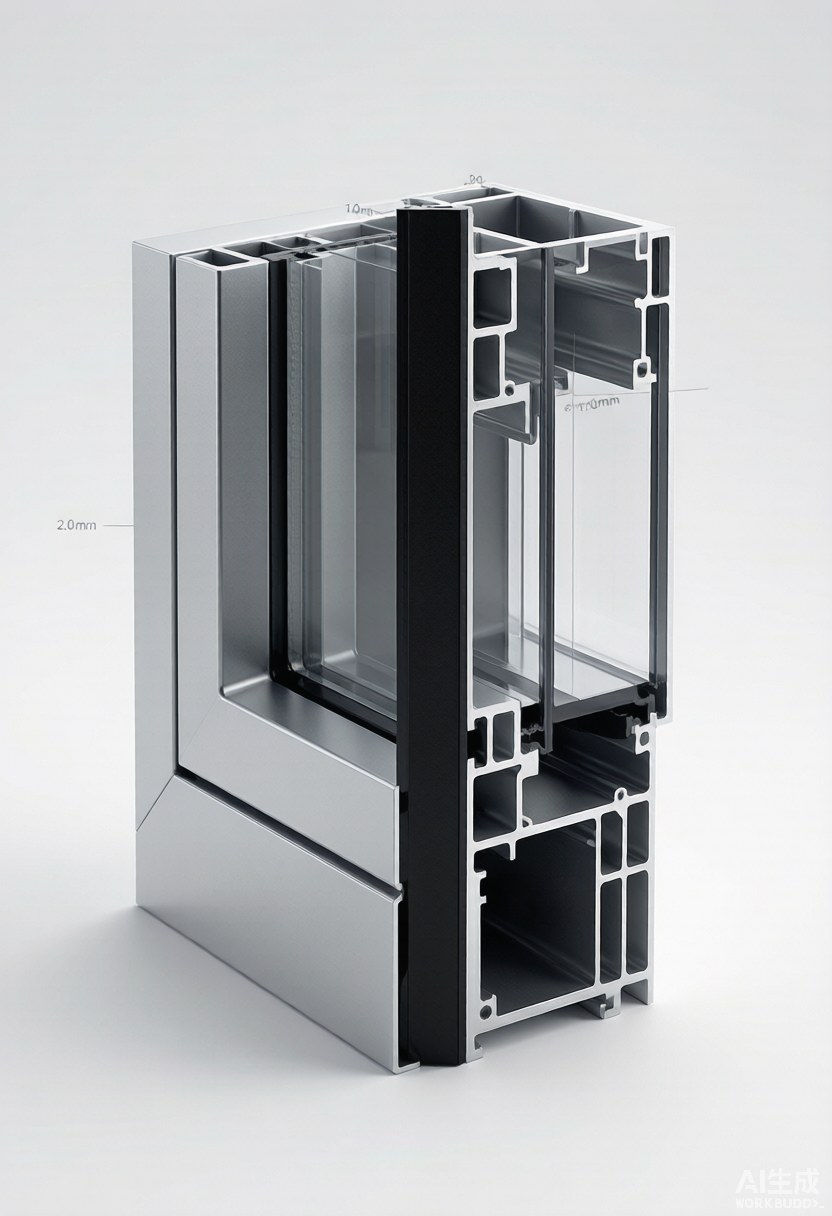
What Are Thermal Break Aluminium Profiles?
A thermal break aluminium profile is an extruded aluminium frame that has been split into two separate metal sections and rejoined with a non-metallic thermal insulator, typically a polyamide 66 (PA66) strip reinforced with 25 percent glass fibre. This insulating barrier interrupts the conductive path between the interior and exterior aluminium surfaces, dramatically reducing heat transfer through the frame.
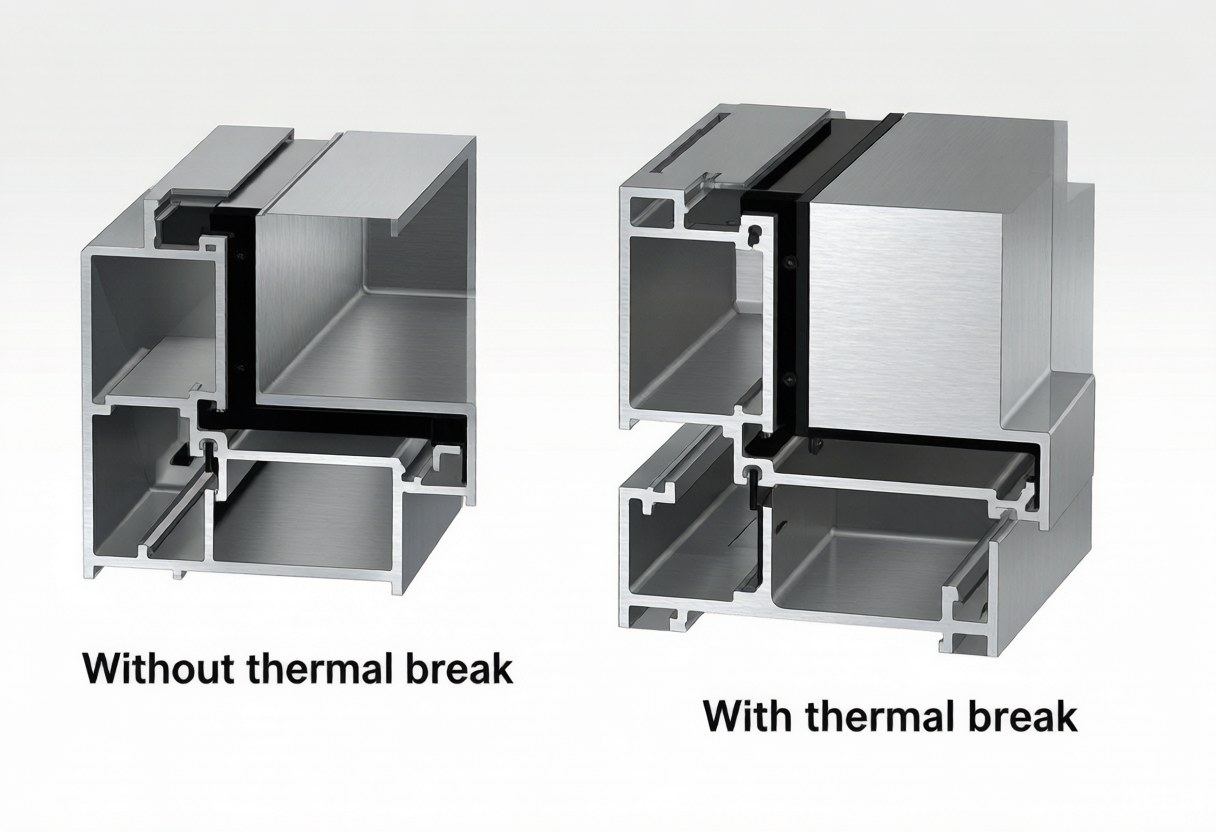
Without a thermal break, a standard aluminium window frame has a U-value of approximately 5.7 to 7.0 W per square metre Kelvin. Aluminium conducts heat about 1,000 times faster than the polyamide strip. By inserting a thermal break, the frame U-value drops to 1.4 to 2.8 W per square metre Kelvin, depending on the number of chambers and the strip width. This represents a 50 to 75 percent reduction in frame heat loss.
Why Thermal Break Aluminium Profiles Matter
Energy Code Compliance
Building energy codes worldwide now mandate minimum window and facade performance levels that effectively require thermal break technology:
- EU Energy Performance of Buildings Directive (EPBD): Requires near-zero energy buildings, with window U-values below 1.0 W per square metre Kelvin in many climate zones
- UK Building Regulations Part L: Window U-value maximum of 1.4 W per square metre Kelvin for new residential construction
- China GB 50189: Public building window U-value requirements ranging from 1.5 to 3.0 W per square metre Kelvin depending on climate zone
- ASHRAE 90.1 (USA): Window assembly U-value requirements from 0.30 to 0.55 BTU per hour per square foot per Fahrenheit depending on climate zone
Non-thermal-break aluminium profiles cannot meet these requirements. Thermal break technology is no longer optional for new commercial construction in most developed markets.
Energy Cost Savings
The financial impact of thermal break windows is measurable. A 2025 study by the International Aluminium Institute found that upgrading from non-thermal-break to thermal break aluminium windows in a typical mid-rise commercial building reduced annual HVAC energy consumption by 18 to 25 percent. In cold climate regions, the payback period for thermal break upgrades can be as short as 4 to 6 years.
Condensation Prevention
Beyond energy savings, thermal break profiles prevent condensation on interior frame surfaces. When warm moist indoor air meets a cold aluminium frame, condensation forms, leading to mould growth and material damage. Thermal break technology keeps the interior frame surface above the dew point, eliminating condensation in most conditions. This is critical for hospitals, laboratories, swimming pools, and high-humidity environments.
How Thermal Break Technology Works
The Polyamide Strip
The thermal insulator in modern thermal break aluminium profiles is a PA66 (polyamide 66) strip reinforced with 25 percent glass fibre. This material offers:
- Thermal conductivity of approximately 0.3 W per metre Kelvin, compared to aluminium at 209 W per metre Kelvin
- Tensile strength sufficient to maintain structural integrity under wind load and thermal expansion stress
- Operating temperature range from minus 40 to 120 degrees Celsius
- UV stability for long-term performance in glazed assemblies
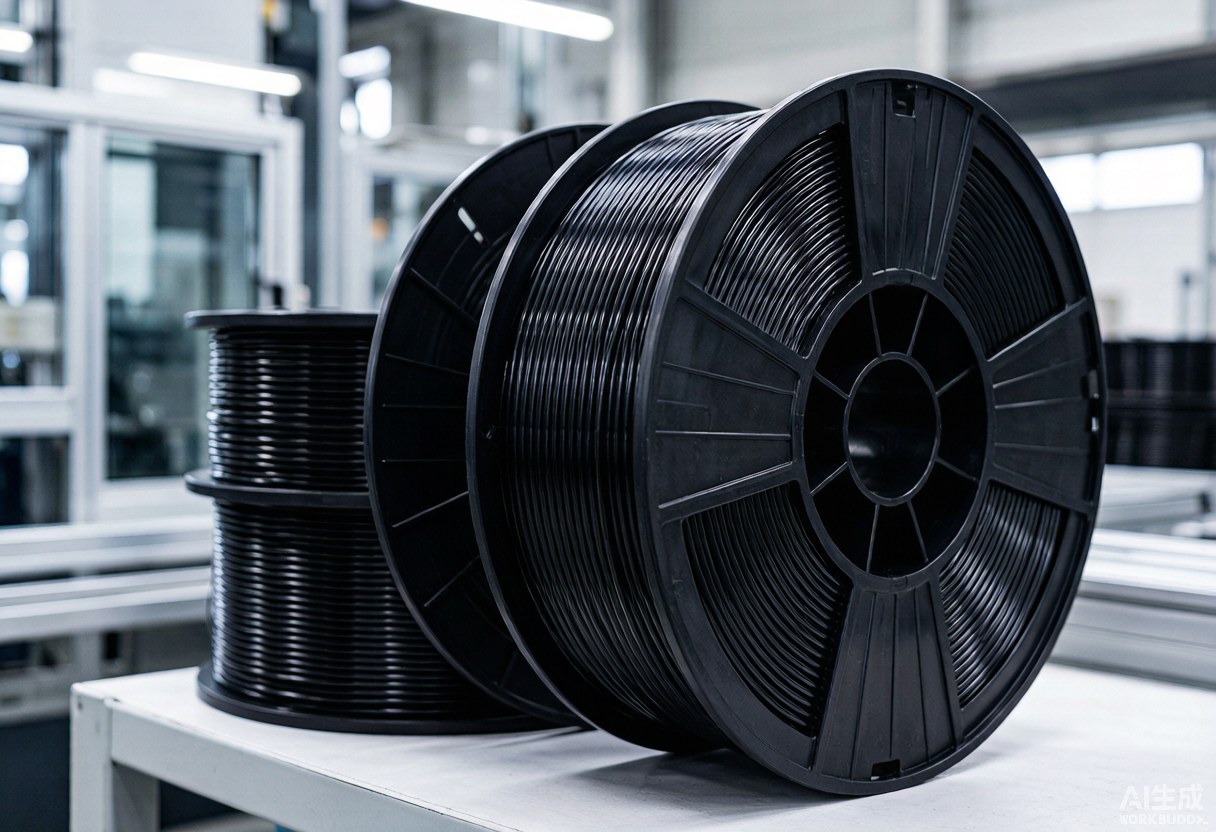
Strip widths typically range from 14 mm to 34 mm. Wider strips provide better insulation but increase the overall frame depth. The most common configurations are:
- 14 to 18 mm: Standard residential windows, Uf approximately 2.5 to 3.0
- 24 to 28 mm: Commercial windows and doors, Uf approximately 1.8 to 2.2
- 34 mm: High-performance curtain walls and passive house windows, Uf approximately 1.4 to 1.6
The Knurling and Crimping Process
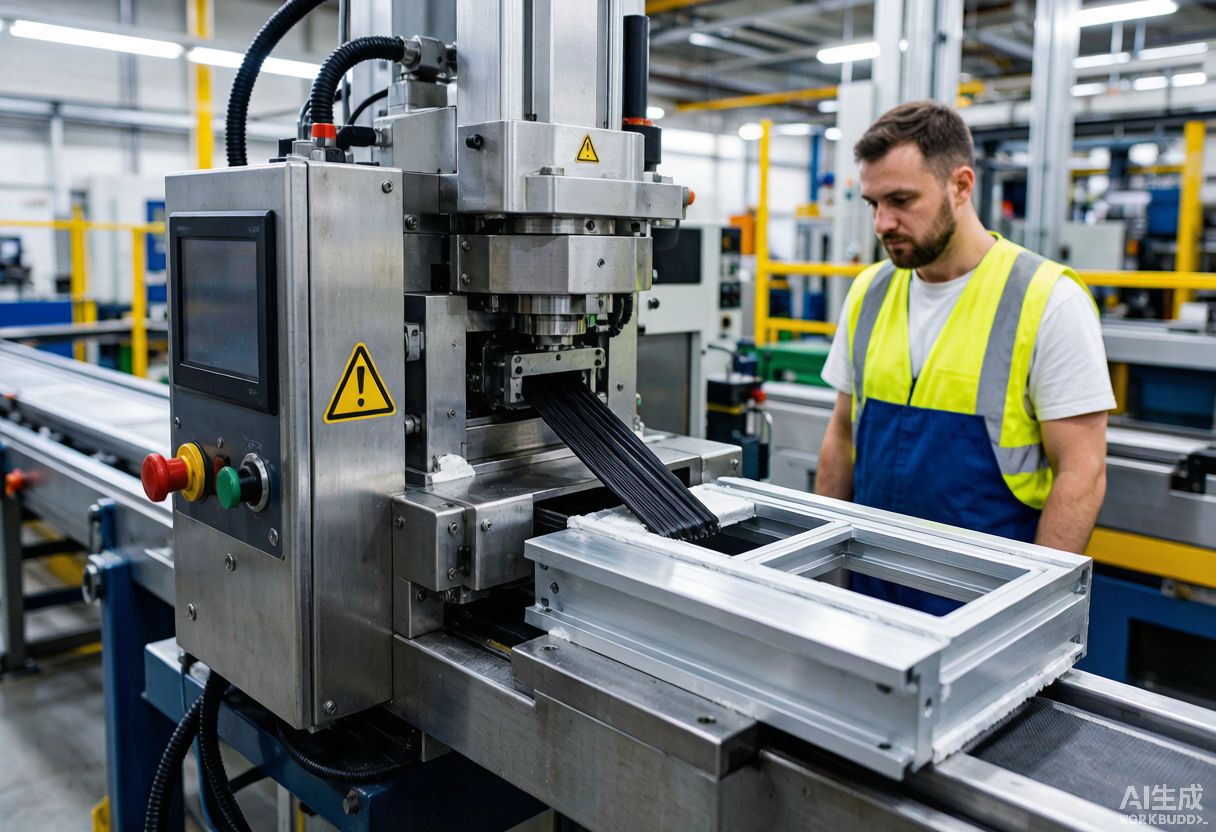
Thermal break assembly involves a precision mechanical process. The aluminium profile is first extruded with internal channels designed to accept the polyamide strip. The channel walls are knurled (mechanically textured) to create a mechanical lock. The PA66 strip is then inserted and the aluminium is crimped onto the strip using a CNC crimping machine with 72 to 120 tonnes of pressure per crimp point. This creates a structural bond that passes all international testing standards for shear strength and thermal cycling.
Multi-Chamber Design
Beyond the polyamide strip itself, advanced thermal break profiles incorporate multi-chamber cross-sections. These chambers trap still air, which is an excellent insulator, further reducing the frame U-value. A three-chamber design can achieve Uf values below 1.5, while a five-chamber design can reach below 1.2. The number of chambers is limited by the profile depth and die complexity.
Performance Metrics for Thermal Break Profiles
| Metric | Non-Thermal Break | Standard Thermal Break | High-Performance Thermal Break |
|---|---|---|---|
| Uf (W/m2K) | 5.7 to 7.0 | 2.0 to 2.8 | 1.2 to 1.6 |
| Strip Width | N/A | 14 to 18 mm | 24 to 34 mm |
| Chambers | 0 | 2 to 3 | 4 to 5 |
| Condensation Risk | High | Low | Very Low |
| Typical Application | Mild climate, non-conditioned | Residential, mild to moderate cold | Commercial, cold climate, passive house |
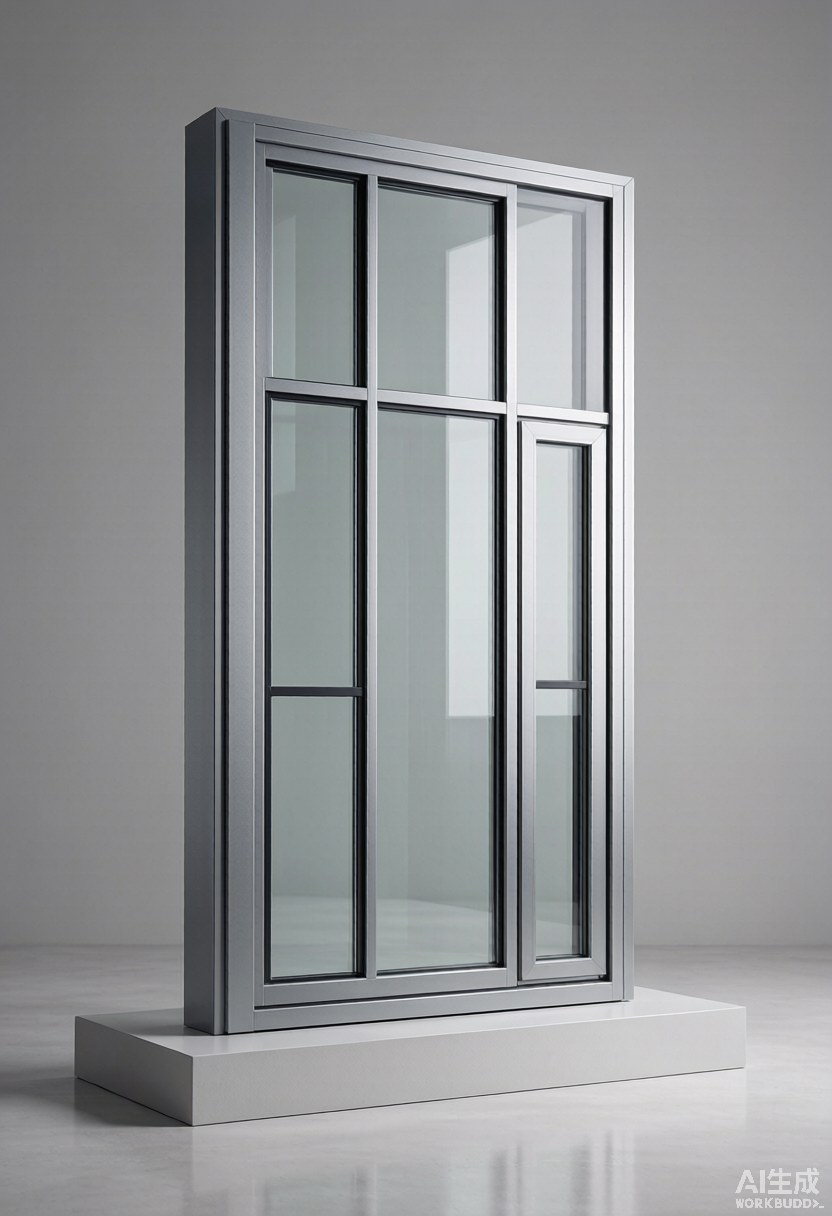
Applications for Thermal Break Aluminium Profiles
Commercial Curtain Walls
Modern commercial curtain walls in temperate and cold climates universally use thermal break mullions and transoms. The aluminium curtain wall profiles guide covers structural requirements, while thermal break technology ensures the facade meets energy code U-values. Profile depths of 70 to 120 mm with 24 to 34 mm polyamide strips are standard for mid-rise to high-rise commercial projects.
Residential Windows and Doors
Thermal break casement, tilt-and-turn, and sliding windows dominate the European residential market and are rapidly gaining share in North America and Asia. The combination of aluminium durability and thermal break performance offers the best balance of aesthetics, longevity, and energy efficiency.
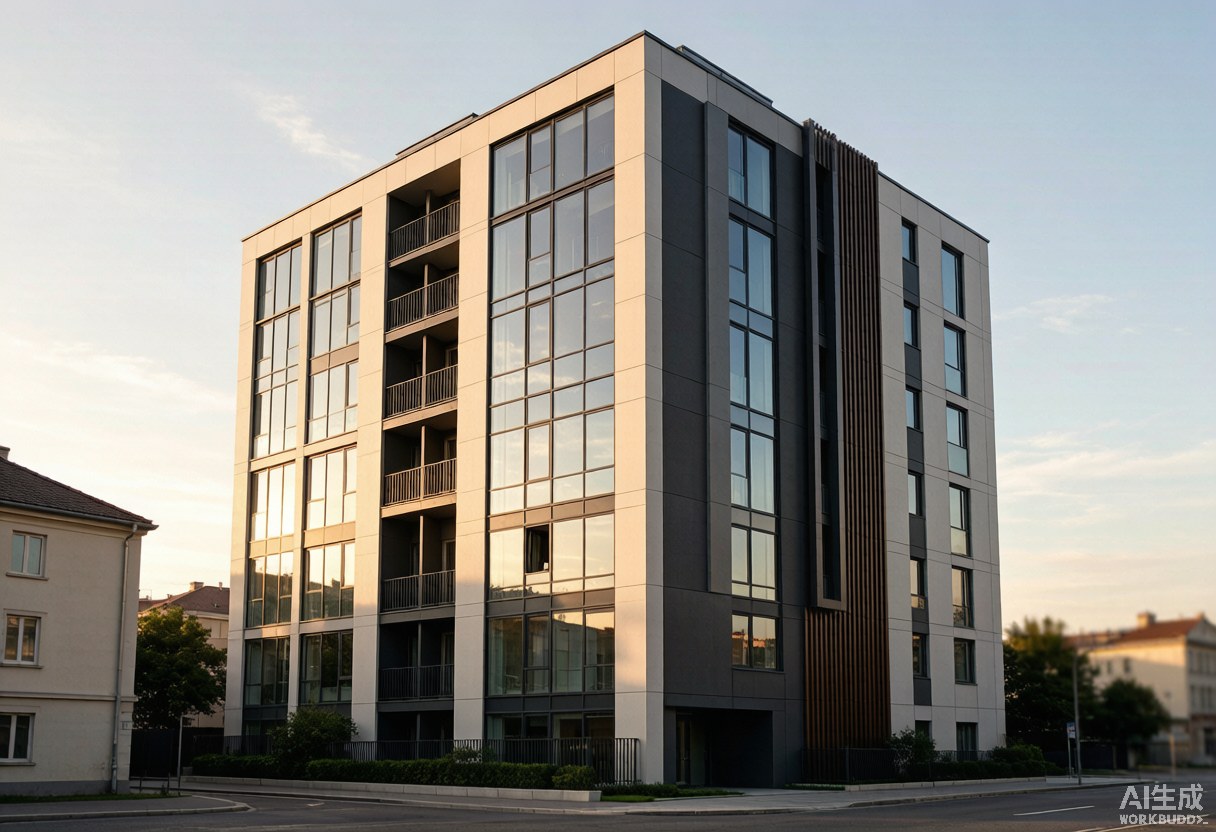
Passive House and Net-Zero Buildings
Passive house certification requires window U-values below 0.8 W per square metre Kelvin for the entire assembly. This demands high-performance thermal break profiles with triple glazing, 34 mm polyamide strips, and five-chamber cross-sections. NA-VIEW manufactures passive house-certified profile systems for European passive house projects.
Selecting a Thermal Break Profile Supplier
Certification and Testing
Verify that profiles have been tested to recognised standards. Key certifications include CE marking (EN 14024 for thermal break profiles), AAMA certification (North America), and GB/T 23443 (China). Ask for test reports demonstrating Uf values, shear strength of the polyamide bond, and thermal cycling durability.
Manufacturing Capabilities
Thermal break profile production requires specialised equipment beyond standard extrusion. NA-VIEW operates dedicated CNC knurling and crimping lines with 72 to 120 tonne crimping capacity. Our 6 extrusion lines produce thermal break profile cross-sections up to 300 mm width with plus or minus 0.5 mm tolerance. We offer 7-day drawing turnaround and 3-day sample prototyping.
Surface Finishing Options
Thermal break profiles can be powder coated, anodised, or wood-grain finished. The polyamide strip is compatible with all standard coating processes. NA-VIEW offers over 200 RAL colours with powder coating and anodising options that meet AAMA 2605 and Qualicoat standards.
Common Questions About Thermal Break Aluminium Profiles
What is the difference between thermal break and non-thermal break aluminium windows?
Thermal break windows have a polyamide insulating strip that separates the interior and exterior aluminium, reducing heat transfer by 50 to 75 percent. Non-thermal break windows are solid aluminium throughout, with U-values of 5.7 to 7.0 W per square metre Kelvin. Thermal break profiles typically achieve U-values of 1.4 to 2.8.
How long do thermal break aluminium profiles last?
The polyamide strip has a service life exceeding 50 years under normal conditions. PA66 with 25 percent glass fibre reinforcement maintains its mechanical and thermal properties through thousands of thermal cycles. The aluminium profiles themselves last 30 to 50 years with proper surface treatment.
What payment terms does NA-VIEW offer for thermal break profiles?
We accept T/T, L/C, and PayPal. Standard terms are 30 percent deposit with balance against B/L copy. For large commercial projects, we offer L/C at sight and progress payment schedules tied to production milestones.
Can thermal break profiles be shipped internationally?
Yes. We export thermal break profiles globally with FOB, CIF, and DDP shipping terms. Profiles are packed in ISPM-15 heat-treated wooden cases with protective film and interleaving paper. Standard production lead time is 25 to 35 days from drawing approval.
What is the minimum order quantity for custom thermal break profiles?
Minimum order quantity depends on profile complexity and cross-section size. For standard thermal break window profiles, MOQ is typically 500 kg. For custom cross-sections requiring new die development, MOQ is 1,000 to 2,000 kg. Contact us with your drawings for a specific quote.
Conclusion
Thermal break aluminium profiles are essential for modern energy-efficient building envelopes. With U-values 50 to 75 percent lower than non-thermal-break profiles, they meet current building code requirements, reduce HVAC energy costs, and prevent condensation problems. As energy codes continue to tighten globally, thermal break technology will become the default rather than the upgrade.
NA-VIEW manufactures thermal break aluminium profiles with 11 years of extrusion experience, 6 production lines, and dedicated CNC crimping equipment. For project enquiries, contact our team with your performance requirements and drawings. We also produce standard aluminium extruded profiles and industrial aluminium profiles for non-thermal applications.
For more technical information, the American Architectural Manufacturers Association (AAMA) publishes voluntary specifications for thermal break performance testing that complement this guide.
CONTACT US


Foshan Naview New Building Materials Co., Ltd.
We are always here offering customers our reliable products and service.
If you want to liaise with us now, please click contact us