

How to Buy Aluminium Alloy Doors and Windows: Step-by-Step Buyer’s Guide
- By:Naview
- Date:2023-12-20
Buying aluminium alloy doors and windows is a bigger decision than most buyers expect. The profile alloy, wall thickness, thermal break design, hardware and the supplier behind the extrusion all determine whether your project gets 10 years of trouble-free service or a stream of warranty calls. This guide walks through the buying process step by step, based on what NA-VIEW’s engineers see every day when working with international buyers in 30+ countries.
Step 1: Check the Alloy and Wall Thickness First
The single most common mistake is choosing a door or window purely on appearance. The profile alloy and wall thickness decide structural strength, wind load resistance and service life. For architectural applications, 6063-T5 or 6063-T6 aluminium alloy is the industry standard because it combines good extrudability with the strength needed for window and door frames.
Wall thickness matters even more. In China, the national standard requires exterior window profiles to have a wall thickness of no less than 1.8 mm. Thinner profiles (1.2-1.4 mm) are common in low-cost products and will deform under wind load or repeated opening cycles. Always ask the supplier to state the wall thickness in the technical drawing, and verify it against the delivered goods.
For a deeper look at how profiles are made and what affects their quality, see our complete guide to the aluminium extrusion process.
Step 2: Decide Between Standard and Thermal Break Profiles
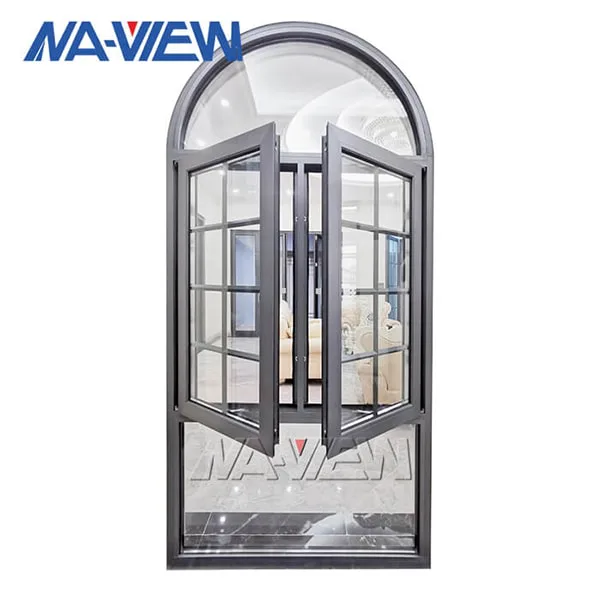
Aluminium doors and windows fall into two broad categories: standard aluminium profiles and thermal break (broken bridge) profiles.
- Standard aluminium profile: the profile is one continuous piece. Heat transfers directly through the metal, so indoor-outdoor temperature difference conducts quickly. Cheaper, but poor insulation.
- Thermal break aluminium profile: a PA66 polyamide strip (usually 14.8-34.8 mm wide) separates the inner and outer aluminium sections. This interrupts the heat path, cuts heat transfer significantly, and improves both sound insulation and condensation resistance.
For residential projects in cold or hot climates, thermal break profiles pay for themselves through lower heating and cooling bills. For interior doors or mild climates, standard profiles may be sufficient. Our thermal break energy efficiency guide explains the performance difference with real numbers.
Step 3: Choose the Right Opening Style
The opening style determines usability, ventilation and safety. Three types dominate the market:
Sliding Windows
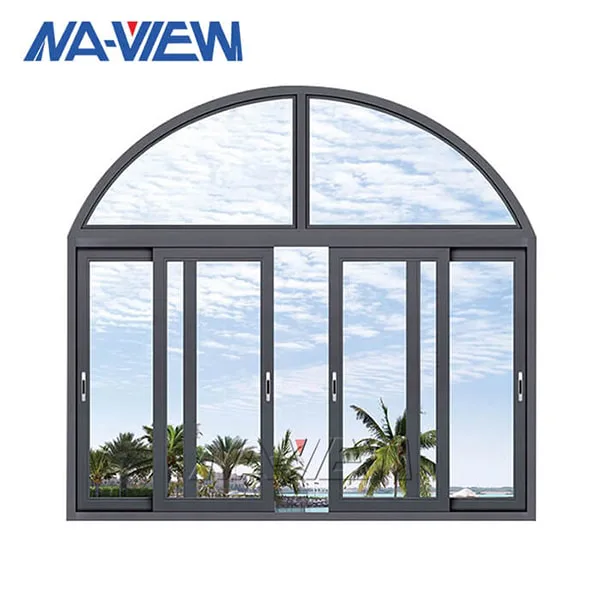
Sliding windows move horizontally on a track. They open in a single plane, take up no extra space, offer large opening area and easy screen installation. The trade-offs: only half the window can open at once, and sealing is weaker against wind-driven rain.
Casement Windows
Casement windows hinge on the side and swing outward or inward. They offer better sealing, sound insulation and a full unobstructed view. The trade-offs: outward-opening casements above the 7th floor are restricted by safety codes in China, and inward-opening versions eat into interior space.
Top-Hung / Hopper Windows
Top-hung windows hinge at the top and open outward at the bottom. They are common for bathrooms and stairwells where full opening is not needed.
Our aluminium door and window profiles guide covers how the profile design changes for each opening style.
Step 4: Select the Surface Finish
The surface finish is not just cosmetic – it is the corrosion protection layer. For exterior doors and windows, three finishes dominate:
- Anodizing: electrochemical process that builds a hard oxide layer. Silver, bronze and black are standard. Excellent for coastal environments.
- Powder coating: electrostatic application of polyester or polyurethane powder, cured into a durable film. Wide colour range (RAL colours), good UV resistance, the most popular choice for exterior frames.
- PVDF (fluorocarbon) coating: the premium option for curtain walls and high-end facades, with 20+ year colour retention.
For a full comparison including cost and durability, read our powder coating vs anodizing guide.
Step 5: Glass, Hardware and Accessories Matter
The profile is only half the system. Insulating glass (double or triple glazing with low-E coating) delivers the actual thermal performance. Hardware – locks, hinges, rollers, handles – determines daily usability and security. Ask the supplier what hardware brand is used; reputable manufacturers fit hardware from established brands and provide spare parts for 10+ years.
Step 6: Verify the Supplier, Not Just the Price
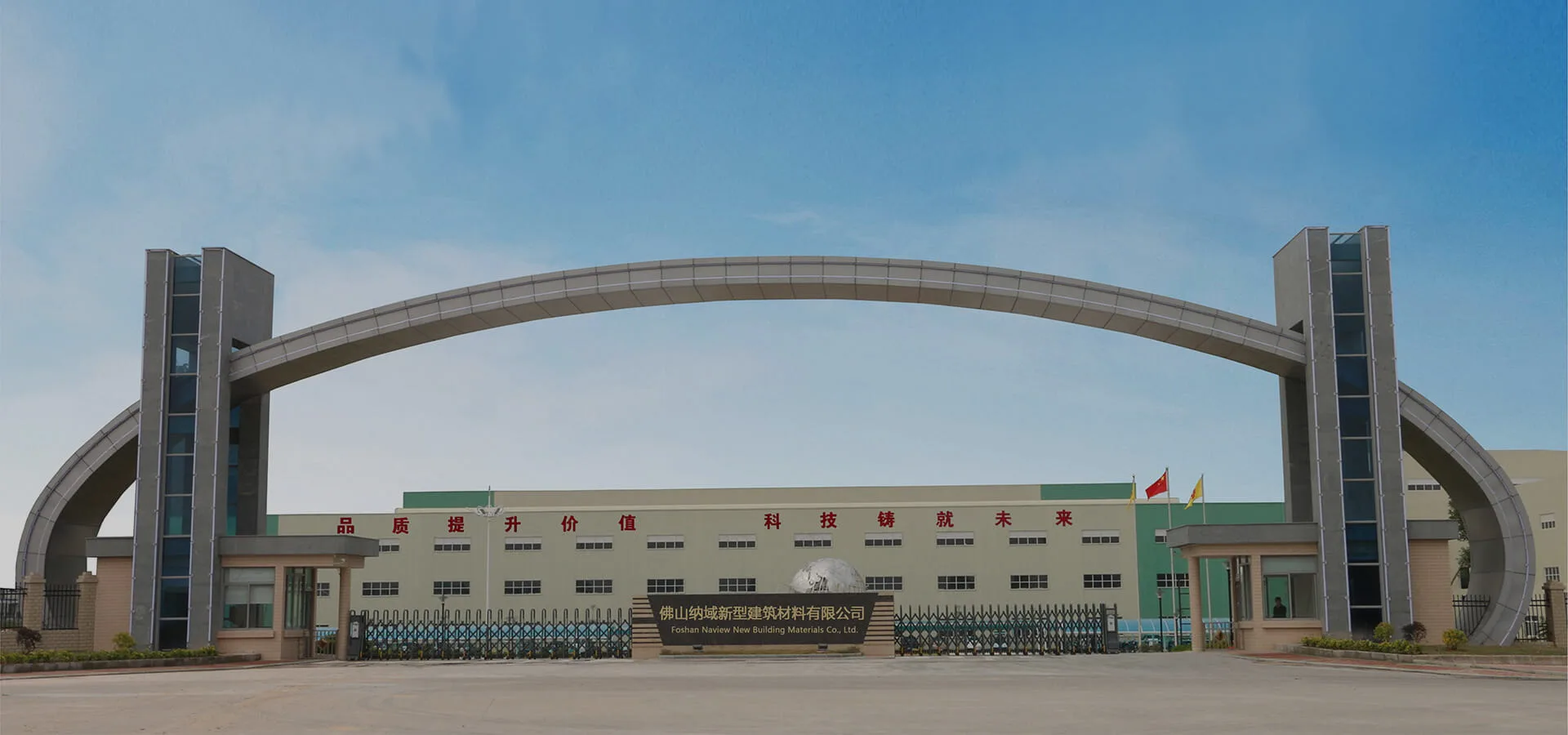
Price per kilogram is the least informative number in the aluminium industry. Before ordering, verify the supplier on four points:
- Production capability: number of extrusion lines, press tonnage range (600T to 3600T), and annual capacity. NA-VIEW runs 6 production lines with annual capacity of 300,000 tonnes.
- Quality system: ISO 9001 certification, in-house chemical analysis, and dimensional inspection. NA-VIEW holds ISO 9001 and controls profile tolerances to ±0.5 mm.
- Experience: years in business and export track record. NA-VIEW has 11 years of extrusion experience and exports to 30+ countries.
- Communication: can they produce drawings within days and answer technical questions directly, or do you get forwarded to a sales rep who does not know the process?
If you plan to audit a factory, our factory audit checklist lists exactly what to inspect.
Step 7: Test with Samples Before Mass Production
Never go straight from quotation to a container order. A proper supplier will provide samples first. NA-VIEW’s standard process: 7 days for drawings, 3 days for samples, free sample for evaluation. Check the sample against your technical drawing – wall thickness, surface finish, straightness and corner fit. Only after the sample passes should tooling and mass production begin.
Step 8: Confirm Logistics and Payment Terms
Clarify delivery terms before signing. Common arrangements are FOB, CIF or DDP, and typical lead time for custom aluminium door and window profiles is 25-35 days after drawing approval. Payment is usually 30% T/T deposit with balance before shipment, or L/C for larger orders. Also confirm packaging – protective film on every profile and reinforced crates for sea freight prevent transit damage that is almost impossible to claim later.
FAQ
What is the minimum order quantity for custom door and window profiles?
MOQ depends on the profile weight and die size. For standard profiles the MOQ is typically 500-1000 kg; for custom dies it starts from 1-2 tonnes. NA-VIEW will confirm the exact MOQ with your drawing.
Can the supplier match international standards such as AAMA or EN?
Yes. Experienced Chinese manufacturers test to AAMA 2605 (PVDF finishes), EN 755 (aluminium tolerances) and EN 14351-1 (windows) when requested. Ask for test reports with the quotation.
How long does tooling (die) production take?
Die machining normally takes 10-15 days for a new custom profile. Samples follow in another 3 days, so you can expect a finished sample roughly 2-3 weeks after drawing approval.
Ready to source aluminium door and window profiles? Send NA-VIEW your drawings or window system requirements, and our engineers will come back with a technical proposal and quotation within 7 days.
CONTACT US


Foshan Naview New Building Materials Co., Ltd.
We are always here offering customers our reliable products and service.
If you want to liaise with us now, please click contact us