

Aluminium vs uPVC Windows: Buyer’s Guide
- By:Naview
- Date:2026-10-22
Nine out of ten quotation requests that reach our desk start the same way. Before price, before colour, the buyer asks: aluminium or uPVC? It is a fair question, and the answer changes with climate, building height, and budget. This article settles the aluminium vs uPVC windows debate the way we settle it on real projects. Numbers first, sales talk last. I run production at NA-VIEW. Our team has 11 years of experience behind 6 production lines. Together they ship more than 500 profiles per day at ±0.5 mm tolerance, under ISO 9001. We export to over 30 countries. Roughly a third of those enquiries open as an aluminium vs uPVC windows question. Both materials build good windows. Neither one wins everywhere. However, one of them usually fits a given project better. The sections below show you how to find out which. Every claim here comes from factory tests, tender feedback, and the occasional expensive lesson. We learned some of them on someone else’s site, so they do not happen on yours.
Why This Comparison Decides So Many Tenders
Window frames carry three jobs at once. They hold the glass square, they seal the building, and they survive whatever the weather does to them for decades. Aluminium and uPVC attack those jobs differently. That is why the aluminium vs uPVC windows argument never dies in specification meetings. Architects lean toward aluminium for slim frames and dark colours. Cost-driven residential developers lean toward uPVC for its low entry price. Meanwhile, contractors care about installation speed and warranty claims, and those numbers point in yet another direction. A comparison only helps when it separates the real differences from the marketing ones. That is what the aluminium vs uPVC windows analysis below sets out to do. First we look at what each material actually is. Then we walk through strength, thermal performance, durability, maintenance, acoustics, cost, and sustainability. Each property gets its own section. Finally, a decision table matches each frame type to the project types where it wins most often. By the end, your aluminium vs uPVC windows decision will rest on evidence rather than habit.
What Each Frame Is Actually Made Of
Aluminium window frames start as extruded billets, usually alloy 6063-T5 for sash and frame duty. The extrusion press pushes heated billets through a die, the profiles age to strength, and fabrication machines them into windows. Powder coating or anodising then protects the surface. Because metal carries loads efficiently, an aluminium section can be slim yet stiff. Our 6063 vs 6061 alloy comparison explains why window profiles almost always take the 6063 route.
uPVC frames, on the other hand, are extruded from unplasticised polyvinyl chloride. The profile is a hollow chamber section reinforced with steel inside the main load-bearing chambers. Extrusion runs at far lower temperatures, and colour choice is limited because dark vinyl absorbs heat and deforms. Both systems are legitimate; they simply solve the same problem with different physics. In an aluminium vs uPVC windows comparison, the material itself explains almost every downstream difference. Metal conducts, so aluminium needs an engineered break. Plastic insulates naturally, so uPVC needs steel to stay stiff. Keep that trade in mind, because every aluminium vs uPVC windows property below flows from it.
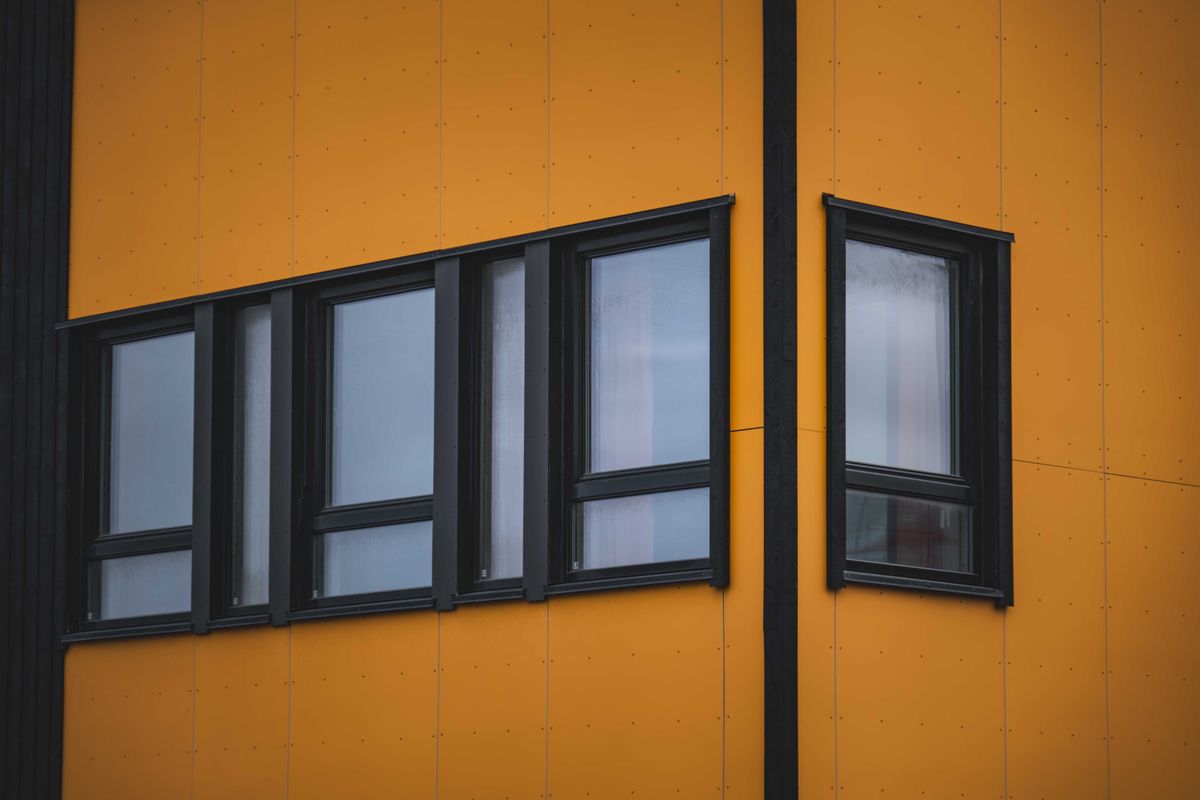
The Aluminium Side of the Debate
Aluminium brings three properties that plastic cannot copy. First, stiffness. Aluminium’s elastic modulus sits near 69 GPa, roughly 65 times higher than uPVC. An aluminium frame therefore resists wind load with a much smaller section. Second, colour freedom. Powder coating bakes any RAL colour onto the profile, including dark greys and blacks that would cook a vinyl frame. Third, size. Large sliding panels and oversized fixed lites almost always specify aluminium. The frame stays slim while carrying heavy glass. On a lake-view villa, the aluminium vs uPVC windows choice is rarely close for exactly that reason. These three advantages explain why aluminium vs uPVC windows quotes diverge so quickly on premium projects.
Inside the uPVC Frame
uPVC answers with its own strengths. Meanwhile, uPVC insulates without any break. A basic vinyl frame already beats a non-thermally-broken aluminium frame on U-value. Cost follows the same logic, since raw vinyl is cheap and extrusion lines run fast. Furthermore, uPVC welds at the corners, which produces a joint with no mechanical fasteners to loosen. In fairness, and the aluminium vs uPVC windows debate deserves fairness, a well-made uPVC window is a good window. The problems show up in specific conditions. In the end, the aluminium vs uPVC windows verdict depends on how many of those conditions your project contains. Steel reinforcement quality, for instance, varies enormously between suppliers. A frame without proper steel in the right chambers sags within a few years.
Strength and Sightlines: Where the Frames Diverge
Frame stiffness decides how much glass a window can carry and how thin the frame can look while carrying it. Wind load on a 2.4 m tall window in a typhoon-prone region can exceed 2,000 Pa. The frame must deflect less than the glass edge can tolerate. Aluminium handles this with ease. uPVC handles it too, but only by growing wider sections and adding steel, which erases the slim-line advantage. The table below puts the material numbers side by side. It forms the backbone of the aluminium vs uPVC windows argument on any engineering-driven tender.
| Property | Aluminium (6063-T5) | uPVC with Steel Insert |
|---|---|---|
| Elastic modulus | ~69 GPa | ~2.8 GPa (PVC shell) |
| Typical frame sightline | 35–60 mm | 60–90 mm |
| Max practical sash width | 2.0–3.0 m+ | ~1.2–1.5 m |
| Colour range | Any RAL, anodised, wood-effect | Mostly white, foils degrade outdoors |
| Weight per m² (typical) | 8–12 kg | 10–14 kg (incl. steel) |
| Profile tolerance | ±0.5 mm per EN 755-9 | Moulded, ±1 mm typical |
Sightlines deserve their own paragraph, because in an aluminium vs uPVC windows showroom they are the first thing buyers notice. A 40 mm aluminium stile beside a 70 mm uPVC stile changes the amount of daylight entering a room more than any glazing upgrade does. Consequently, showrooms display aluminium products with wide glass areas and uPVC products with honest, chunkier frames. Neither approach is dishonest. Each frame type simply reflects what its material does best. Meanwhile, the aluminium vs uPVC windows photos you compare should always be shown at the same scale.
Thermal Performance: Breaks, Chambers, and U-Values
Heat transfer is where the comparison gets technical, so let us keep it plain. Bare aluminium conducts heat about 1,600 times faster than the air gap in a double glazed unit. A window built from unbroken aluminium therefore loses heat through the frame faster than through the glass. uPVC, meanwhile, is a natural insulator, so even a modest vinyl frame slows heat transfer respectably. This single fact is the strongest card uPVC holds in the aluminium vs uPVC windows discussion, and it is real.
Modern aluminium answers that card with a thermal break. Under EN 14024, a polyamide barrier 14–34 mm wide separates the outer metal skin from the inner one. The two skins are then crimped together under controlled force. Add low-E glass with argon fill, and the numbers drop sharply. A thermally broken aluminium window then reaches whole-window U-values of 1.3–1.7 W/m²K tested per EN ISO 10077-2. Our thermal break aluminium windows guide covers the mechanics in detail. The lesson for buyers is specific. Never compare a broken aluminium frame against an unbroken one. Meanwhile, never let a supplier quote centre-pane values as whole-window values.
How the Numbers Compare
| Frame System | Whole-Window U-Value (typical) | Condensation Risk |
|---|---|---|
| uPVC, standard 5-chamber | 1.3–1.8 W/m²K | Low |
| uPVC, premium 6-chamber + triple glazing | 0.9–1.3 W/m²K | Very low |
| Aluminium, no thermal break | 3.5–5.0 W/m²K | High on frame |
| Aluminium, 24 mm polyamide break | 1.3–1.7 W/m²K | Low |
| Aluminium, 34 mm break + triple glazing | 0.9–1.2 W/m²K | Very low |
Read any aluminium vs uPVC windows U-value table carefully and a pattern appears. Once the aluminium frame is properly broken, the two systems converge. The remaining aluminium vs uPVC windows thermal difference at the top end comes down to details. Spacer bars, glazing quality, and installation airtightness matter more than the frame material itself. In hot climates the same logic applies in reverse, because a broken frame also blocks heat from entering. Projects in the Gulf and Southeast Asia specify broken aluminium for that reason. Pair it with the solar-control glazing described in our aluminium double glazed windows guide.
Durability: Sun, Salt, and Twenty Winters
Durability is where material science becomes economics. A window that lasts forty years costs half as much per year as one that lasts twenty. Purchase price never changes that arithmetic. Aluminium has the edge in raw endurance. The metal does not degrade in sunlight. It does not turn brittle in cold, and it does not warp in heat. Powder coating per AAMA 2604 or 2605 carries warranty terms of 10 to 20 years. Anodised finishes on coastal buildings routinely pass 30 years. Our apartment-block clients in humid coastal cities report the same story. Frames still operate smoothly after two decades with nothing more than cleaned drainage slots.
uPVC ages differently. Ultraviolet radiation slowly degrades the polymer surface, and thermal cycling stresses the welded corners. Quality vinyl compounds with high TiO2 content resist this well for 20 to 30 years in moderate climates. However, dark foiled vinyl in intense sun can distort. A frame that loses its steel reinforcement cannot be fixed, only replaced. Honest durability guidance for the aluminium vs uPVC windows decision looks like this. Aluminium lasts longer, especially in coastal, high-UV, or high-rise conditions. uPVC delivers acceptable life at lower cost in moderate inland climates.

Coastal and High-Rise Conditions
Two environments tilt the aluminium vs uPVC windows verdict sharply toward metal. The first is the coast. Salt spray attacks vinyl welds and hardware alike, while marine-grade powder coating on aluminium shrugs it off. We ship C5-class coastal coatings on every seaside project. The second is height. Above the fourth storey, wind loads grow and replacement scaffolding grows expensive. Nobody wants to refit windows on the twelfth floor. High-rise developers therefore pay the aluminium premium once instead of the uPVC replacement twice. Access difficulty, more than material preference, drives most of the high-rise specifications we quote. On balance, coastal and high-rise aluminium vs uPVC windows comparisons end the same way.
Maintenance: The Honest Version
Salespeople on both sides claim their material is maintenance-free, and both claims are false. Aluminium frames need an annual wash with mild detergent, plus drainage slot checks, plus hardware lubrication every year or two. Powder coating that gets scratched should be touched up promptly to prevent galvanic crevice corrosion under the film. None of this is difficult, but none of it is optional near the sea. uPVC frames need similar cleaning and less worry about coating damage. Their moving parts and gaskets, however, age faster in UV. A warped sash cannot be planed back true the way metal can be adjusted. Gasket replacement on both systems is a normal decade-scale task. In practice, maintenance rarely decides the aluminium vs uPVC windows comparison on its own. It only decides the result when the buyer has already chosen neglect. Neither material saves a neglected project.
Acoustics and Security: Quiet and Safe Rooms
Sound reduction comes mostly from the glass and the airtight seal. Both frame types can be quiet when built properly. A laminated acoustic unit inside either frame reaches Rw 38 dB or better. There is one catch: the frame must seal as tightly in year ten as it did on day one. Aluminium frames hold their geometry, so their acoustic rating ages slowly. Vinyl frames rely on compression seals that relax over time. A leaky sash loses sound reduction the same way it loses warmth. Across aluminium vs uPVC windows products, sealing quality separates the quiet from the loud. Security follows a similar pattern. Both systems reach RC2 or EN 1627-class resistance when fitted with multi-point locking and laminated glass. Stiff aluminium sections resist prying with less reinforcement, while uPVC depends on steel staying put inside the chamber. For the aluminium vs uPVC windows decision, treat acoustics and security as tie-breakers. Build quality decides them, not material chemistry.
Cost: Purchase Price vs Lifetime Cost
Money ends most debates. Let us put the aluminium vs uPVC windows question on the table with real numbers. As export planning figures, uPVC windows typically land 20 to 40 percent below thermally broken aluminium equivalents. That is with the same glazing spec on both sides. The gap narrows on large projects and widens on small bespoke orders. It flips entirely when you count decades instead of invoices. Lifetime cost per year is the number that matters. The aluminium vs uPVC windows arithmetic there depends on climate exposure and building lifespan. Our table shows how the totals move for a 50 m² window package.
| Cost Factor | Aluminium (thermally broken) | uPVC |
|---|---|---|
| Supply price (50 m², low-E double glazing) | Baseline (100%) | 60–80% of baseline |
| Expected service life (moderate climate) | 30–40 years | 20–25 years |
| Expected service life (coastal/high-UV) | 25–35 years | 12–18 years |
| Refinish option | Yes, recoat in place | No, replace |
| End-of-life scrap value | Positive (recyclable metal) | None |
| Lifetime cost per year (coastal) | Lower | Higher after replacement cycle |
One more cost line hides in the freight column. Aluminium frames knock down and ship as profile kits. Glazed uPVC units ship bulky and light, which inflates container volume per square metre. For overseas buyers, the aluminium vs uPVC windows landed-cost gap is therefore smaller than the factory-gate gap suggests. Ask any supplier to quote CIF or DDP before comparing prices, because ex-works numbers mislead more than they inform.
Sustainability and End of Life
Green building codes increasingly ask what happens to a window after its last winter. Aluminium answers strongly. The metal recycles indefinitely without losing strength. Remelting consumes about 5 percent of the energy of primary smelting. Scrap holds real resale value. Certification schemes under EN 15804 recognise those recycled-content and recyclability credits in Environmental Product Declarations. uPVC can technically be recycled, yet collection rates lag and the material downgrades with each loop. Furthermore, vinyl production depends on chlorine chemistry that several green building labels penalise. If your project chases LEED, BREEAM, or local green-certification points, the aluminium vs uPVC windows sustainability comparison favours metal. Write that preference directly into the specification. Energy in use still dominates the carbon equation, though. Pair either frame with low-U glazing before optimising the frame material.
Aluminium vs uPVC Windows: Which One Belongs in Which Project
After eleven years of quotes, the pattern is consistent enough to tabulate. Neither material wins every row. That is exactly why the aluminium vs uPVC windows question deserves a project-specific answer instead of brand loyalty. Use the table below as a starting point, then adjust for local labour costs and code requirements. The projects that surprise people most are the small ones. There, uPVC’s low entry price sometimes beats aluminium on pure payback despite its shorter life.

| Project Type | Better Fit | Why |
|---|---|---|
| Coastal villa, large sliding panels | Aluminium | Salt resistance, slim frames, panel size |
| High-rise apartment tower | Aluminium | Wind load, replacement access, fire behaviour |
| Budget inland housing development | uPVC | Lowest installed cost, adequate life |
| Hotel with dark designer frames | Aluminium | Any RAL colour, UV-stable dark finishes |
| Cold-climate passive-leaning home | Either | Broken aluminium or premium uPVC both reach target |
| Renovation with tight budget | uPVC | Fast payback, standard sizes fit openings |
| Schools and public buildings | Aluminium | Lifespan, impact resistance, recyclability credits |
Whichever row your project lands in, the same aluminium vs uPVC windows quality checks apply before you sign. To browse the sub-types behind each row, start with our aluminium casement windows guide and work outward from there.
Quality Checks Before You Sign Anything
Whichever frame wins your comparison, the supplier matters more than the material. We audited a competitor’s failed project last year where the profiles were fine and the windows still leaked. Nobody had machined drainage or compressed the gaskets. Structure your aluminium vs uPVC windows evaluation around the same four checks regardless of brand. First, demand the material certificate, an EN 10204 Type 3.1 for aluminium chemistry or the compound formulation data for vinyl. Second, ask which performance classes the window holds for air, water, and wind load. Look for EN 12207, EN 12208, and EN 12210 results. Those classes must appear in the CE file per EN 14351-1. Third, for Chinese-market or GB-specified projects, confirm testing to GB/T 8478-2020, which grades airtightness, watertightness, wind resistance, and operating force. Fourth, ask for a sample corner cut. You want to see the thermal break, the steel reinforcement, and the glazing bead with your own eyes.
Paperwork That Proves It
Test reports beat promises, every time. A serious supplier sends the EN 14024 break shear and creep reports for aluminium frames without being asked twice. For uPVC, the equivalent is the EN 12608 compound classification. You can verify which standards exist in the CEN-CENELEC standards catalogue before you quote them back to a supplier. Our own extrusion tolerances guide lists the dimensional checks we run on every production lot. Suppliers who resist documentation questions during the aluminium vs uPVC windows quotation stage will resist harder after the deposit clears. Filter early, therefore.
Working With NA-VIEW on Your Window Package
NA-VIEW builds thermally broken aluminium window systems and full door-window packages for export. We quote the aluminium vs uPVC windows trade-off honestly, even when a project genuinely suits vinyl. Sometimes a hybrid specification is the right answer, and we say so. Our plant runs 6 production lines with more than 500 profiles per day, holding ±0.5 mm tolerance under ISO 9001. The engineering team returns drawings within 7 days, samples within 3 days, and sample freight is free for qualified projects. Minimum order quantities start at 20 m² per specification. We accept payment by T/T, L/C, or PayPal for sample orders. Shipping terms cover FOB, CIF, and DDP, and every window ships in EPE-lined, steel-reinforced wooden crates. Standard lead time is 25 to 35 days after drawing approval. Send your opening schedule or bill of quantities. Our engineers will mark up the most economical frame allocation within 24 hours, or request a quote here.
Frequently Asked Questions
Are aluminium windows more expensive than uPVC?
Yes, upfront. Thermally broken aluminium windows typically cost 20 to 40 percent more than uPVC in the same glazing specification. Over a 30-year horizon the gap narrows or reverses. Aluminium lasts longer, can be recoated instead of replaced, and holds scrap value. In an aluminium vs uPVC windows budget comparison, always calculate cost per year of service life, not just purchase price.
Do aluminium windows cause condensation?
Only when the frame lacks a proper thermal break. An unbroken aluminium frame is a cold bridge, so moisture condenses on the frame rails in winter. A polyamide break per EN 14024 lifts the internal surface temperature above the dew point in most climates. uPVC frames condense less because vinyl insulates naturally, though glass-edge condensation depends on the spacer bar in both systems.
How long do aluminium vs uPVC windows last?
Expect 30 to 40 years from a quality aluminium window in a moderate climate. Quality uPVC delivers 20 to 25 years under the same roof. Coastal salt spray and intense UV shorten uPVC life faster than aluminium life. Vinyl in those conditions can drop to 12 to 18 years. Hardware and gaskets need service on both systems regardless of frame material.
Which frame is better for hot climates?
Both work, with different tricks. uPVC insulates against heat transfer but dark vinyl colours deform in extreme sun, so vinyl stays white. Thermally broken aluminium with solar-control low-E glazing blocks heat entering while keeping slim dark frames. That is why Gulf and Southeast Asian projects lean aluminium. Pair either frame in your aluminium vs uPVC windows shortlist with the glazing spec in our double glazed windows guide.
What payment and shipping terms do you offer?
We accept T/T, L/C, and PayPal for sample orders. Shipping terms include FOB, CIF, and DDP depending on your port and project scale. Windows ship in EPE-lined, steel-reinforced wooden crates with corner protectors, and standard lead time runs 25 to 35 days after drawing approval.
What is your minimum order quantity?
MOQ starts at 20 m² per window specification, which suits villa renovations and small developments alike. Larger projects gain better profile utilisation and lower unit prices. Free samples are available for qualified projects, and our team returns drawings within 7 days.
Can I mix aluminium and uPVC in one building?
Yes, and many projects do. A common hybrid puts thermally broken aluminium on facades, sliding doors, and high floors, while uPVC serves sheltered, budget-driven openings. Keep glazing specifications consistent across both so the building performs as one system. Our engineers regularly split orders this way for developers balancing cost and design intent.
The Bottom Line for Buyers
Choose aluminium when the project demands slim sightlines, dark colours, large panels, coastal durability, high-floor access economics, or green-building credits. Choose uPVC when budget rules, openings are standard-sized, the climate is moderate, and the building horizon is 20 years. When a project sits between those poles, price both systems fairly. Compare whole-window U-value, EN class ratings, and landed cost per square metre. Then decide on evidence. That disciplined approach to the aluminium vs uPVC windows decision saves more money than any negotiation tactic ever has.
Ready to price your project? Send NA-VIEW your window schedule today and receive a marked-up quotation, frame recommendations, and U-value calculations within 24 hours. Free samples, 7-day drawings, 3-day samples, export packing included.
CONTACT US


Foshan Naview New Building Materials Co., Ltd.
We are always here offering customers our reliable products and service.
If you want to liaise with us now, please click contact us