

Aluminium Double Glazed Windows: Buyer’s Guide
- By:Naview
- Date:2026-10-19
Most window complaints we hear from overseas buyers trace back to one component: the glass. Frames get all the attention, yet the sealed unit inside the frame decides how a building actually feels. Because of that, aluminium double glazed windows have become the default specification for hotels, apartments, and villas across our export markets. Two panes of glass, a sealed cavity, and the right coating cut heat loss roughly in half compared with single glazing. However, not every double glazed window performs the same. Gas fills get skipped. Spacer bars conduct heat straight through. Coatings get quoted on the wrong surface. In most tenders we price, aluminium double glazed windows sit at the centre of the specification. This article explains how aluminium double glazed windows work, where the specifications go wrong, and how to order them without surprises. The view here is from the factory floor. NA-VIEW has glazed windows for 11 years, and our 6 production lines ship more than 500 profiles per day to over 30 countries under ISO 9001.
Why Double Glazing Decides Window Performance
Glass covers roughly 75–85% of a window’s surface area. Consequently, the glazing unit dominates both heat loss and heat gain. A single 6 mm pane loses heat at about 5.8 W/m²K. Add a second pane with a sealed cavity, and that figure drops to roughly 2.8 W/m²K. Specify a low-E coating with argon fill, and the centre-pane value falls near 1.1 W/m²K. In plain terms, the same window passes less than a fifth of the heat it did before. Heating bills follow, and so does comfort near the glass. That physics is why aluminium double glazed windows dominate new hotel and apartment tenders.
Comfort matters as much as the energy numbers. Single glazing leaves the inner pane cold in winter, so air near the window cools, sinks, and creates draughts even in a sealed room. Double glazing lifts the inner surface temperature, and the draught disappears. Meanwhile, in hot climates the same cavity slows solar heat gain, which cuts air-conditioning load. Buyers in the Gulf, Southeast Asia, and Australia all specify for that reason. For most budgets, aluminium double glazed windows are the first upgrade worth paying for. Aluminium double glazed windows therefore serve two opposite climates with the same construction, tuned through coatings and gas rather than redesign.
What Is an Aluminium Double Glazed Window?
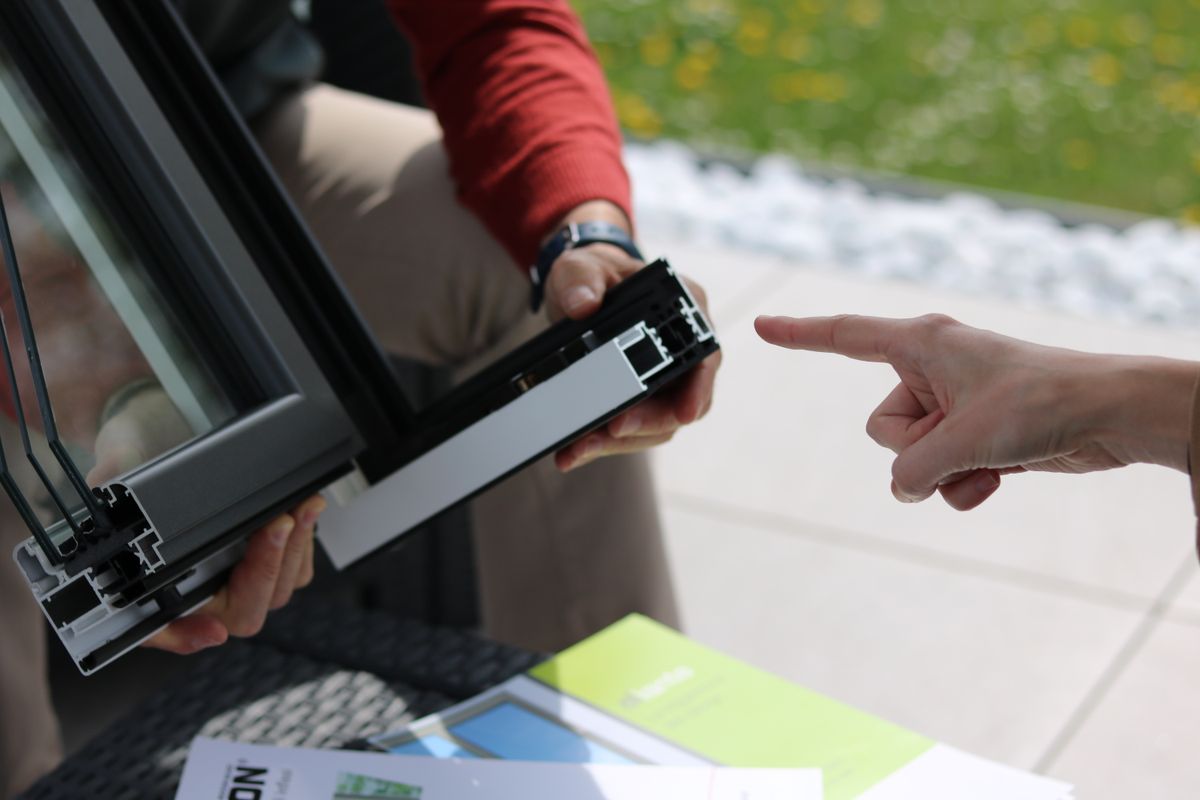
An aluminium double glazed window pairs an extruded aluminium frame with an insulated glass unit, usually shortened to IGU. The frame carries the loads, holds the hardware, and resists corrosion. Meanwhile, the IGU does the thermal work. Two panes of glass are separated by a spacer bar, sealed around the edges, and filled with dry air or argon. Desiccant inside the spacer keeps the cavity moisture-free. Because the unit is factory-sealed, aluminium double glazed windows stay dry and clear for decades when the seal is right.
The aluminium frame brings its own strengths. Extruded 6063-T5 holds tight tolerances of ±0.5 mm or better, so glazing rebates stay square and gaskets compress evenly. Powder coating or anodising protects the frame for decades, even near the coast. Moreover, aluminium carries large glass panes without the bulk that softer materials need. That is why slim sightlines and big fixed lites almost always end up in aluminium. In practice, most aluminium double glazed windows pair 6063-T5 frames with a 24 mm IGU. The trade-off is conductivity. Bare aluminium conducts heat roughly 1,600 times faster than the glass cavity insulates. Therefore, serious thermal windows put a polyamide barrier between the outer and inner frame skins.
The Anatomy of an Insulated Glass Unit
Every IGU has five parts, and each one carries a specification you can check on paper. First, the two panes set the base structure. Next, the cavity width sets the insulation ceiling. Then the spacer holds the panes apart and hides the desiccant. After that, the primary and secondary seals keep moisture out. Finally, the gas inside the cavity shifts the U-value the last few points. Small spec lines like these separate long-lasting aluminium double glazed windows from short-lived ones. The table below lists the spec range we quote daily for aluminium double glazed windows.
| IGU Component | Standard Specification | Upgrade Options |
|---|---|---|
| Outer pane | 5–6 mm clear float, toughened | Low-E coated, tinted, reflective |
| Cavity width | 12 mm | 16–20 mm (see gas limits below) |
| Inner pane | 5–6 mm clear float | Laminated 6.38–11.12 mm for security or acoustics |
| Spacer bar | Aluminium, 16–20 mm | Warm-edge (stainless or polymer), better U-edge |
| Gas fill | Dry air | Argon (U-value −0.2 to −0.3 W/m²K) |
| Seal system | Butyl primary + silicone or polysulphide secondary | Dual-seal per EN 1279 |
| Typical centre-pane U-value | 1.8–2.8 W/m²K (air) | 1.0–1.2 W/m²K (low-E + argon) |
Two details on that table deserve attention. First, cavity width has a sweet spot. Wider cavities insulate better only up to about 16–20 mm with air, or 12–16 mm with argon. Beyond that, convection currents inside the cavity carry heat across, and performance actually drops. Second, the spacer sits at the coldest edge of the unit. A standard aluminium spacer drains heat through the perimeter, which is why condensation frames the glass in winter. Warm-edge spacers fix most of that for a few dollars per window. For aluminium double glazed windows in cold or humid climates, we treat warm-edge spacers as the default rather than the upgrade.
U-Values: The Number That Anchors the Whole Order
The U-value measures how much heat passes through one square metre of glazing for each degree of temperature difference. Lower is better. Most tenders now demand a whole-window U-value, tested per EN ISO 10077-2 or measured per EN 12412-2, instead of a bare centre-pane figure. The difference matters. Centre-pane numbers ignore the frame and the spacer edge, which drag the real value up. When you compare quotations for aluminium double glazed windows, confirm which U-value the supplier is quoting. The comparison below shows why the question matters.
| Glazing Build-Up | Centre-Pane U-Value | Typical Whole-Window U-Value* | Best Use |
|---|---|---|---|
| Single 6 mm clear | ~5.8 W/m²K | 5.0–6.0 W/m²K | Non-conditioned spaces only |
| Double, air fill, clear | ~2.8 W/m²K | 2.6–3.2 W/m²K | Basic code compliance, mild climates |
| Double, low-E, air | ~1.6 W/m²K | 1.8–2.2 W/m²K | Standard residential spec |
| Double, low-E, argon, warm edge | ~1.1 W/m²K | 1.3–1.7 W/m²K | Energy codes, hotels, passive-leaning builds |
| Triple, low-E, argon | ~0.6–0.7 W/m²K | 0.9–1.3 W/m²K | Very cold climates, near-passive projects |
Centre-Pane vs Whole-Window: Read the Label Correctly
*Whole-window values assume a thermally broken aluminium frame; the frame type shifts the result by 0.2–0.5 W/m²K. Under EN 14351-1, the declared value must come from a notified test body — you can browse the CEN-CENELEC standards catalogue for the exact test methods — so ask for the test report, not just the number. North American projects often label the same property through NFRC certification instead. Our thermal break aluminium windows guide covers how the frame half of that equation works.
One warning from real projects. Some suppliers quote a centre-pane 1.1 W/m²K next to a cheap non-thermally-broken frame and call the whole window high-performance. The installed result tests closer to 2.5 W/m²K, and the condensation shows up on the frame rails within the first winter. Specify the whole-window value, the frame barrier type, and the spacer type together. Those three lines on a drawing prevent almost every thermal dispute we have seen in 11 years of exporting aluminium double glazed windows.
Glass Options and What Each One Actually Does
Low-E coating is the most common upgrade, and it earns its place. A hard-coat or soft-coat layer reflects long-wave heat back toward its source while passing visible light. In heating climates, the coating goes on surface 3 so indoor heat stays indoors. By contrast, in cooling climates it goes on surface 2 so solar heat bounces before it enters. Get the surface wrong and the window works against the building. We confirm coating position on every order drawing, and our engineering team checks it against the project’s climate before production starts. Get it wrong and aluminium double glazed windows work against the rooms behind them.
Beyond low-E, three options cover most project needs. Tinted glass cuts glare and solar gain but degrades visible light, so it suits west-facing facades more than living rooms. Laminated glass holds together when broken, which matters for ground-floor security, overhead glazing, and hurricane zones. Acoustic laminates add a damping layer that lifts sound reduction, which we cover in the section below. Meanwhile, reflective coatings deliver the strongest solar rejection but darken rooms and can fall foul of local facade rules. Balance all four against the orientation of each elevation rather than choosing one recipe for every aluminium double glazed window in a building.
Acoustic Performance: Quieter Rooms Without Triple Glazing
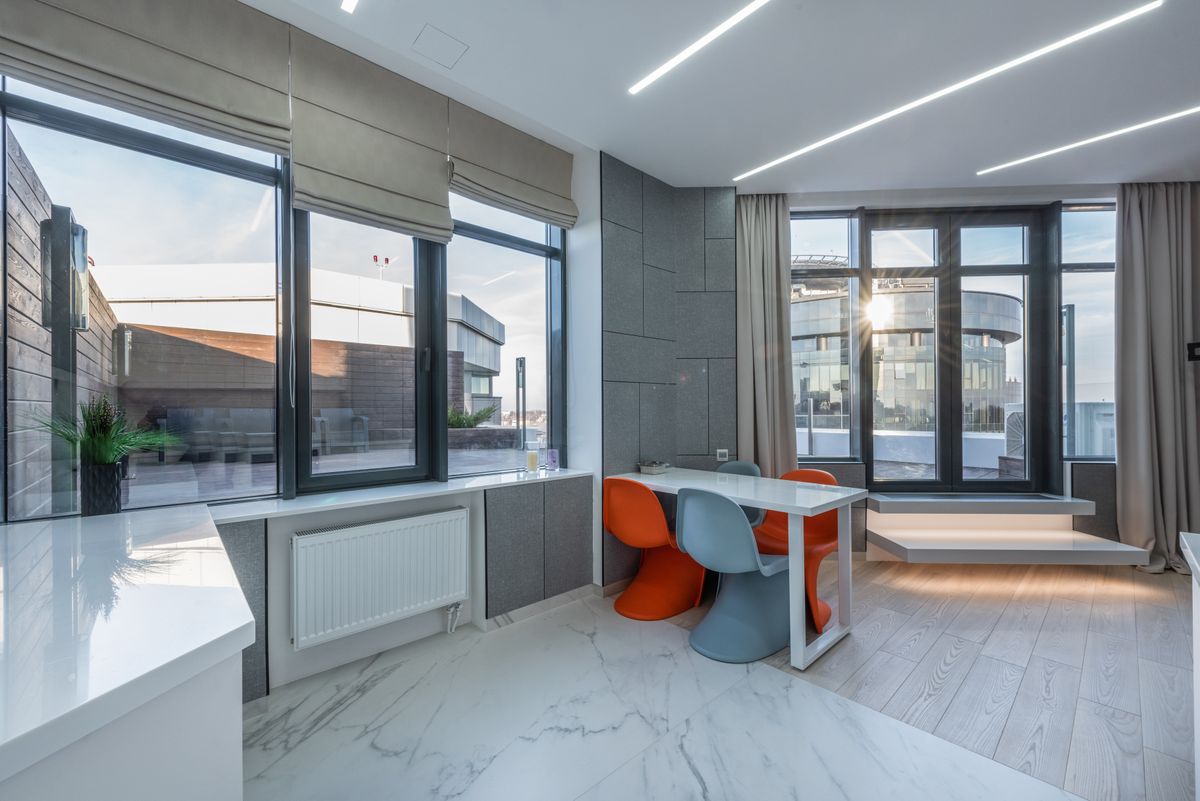
Noise reduction follows different physics than heat control. Mass, damping, and asymmetric pane thickness matter more than cavity width. A standard 6 + 12 + 6 clear double unit reaches about Rw 30 dB. Change to 6 + 16 Argon + 6.38 acoustic laminated, and the same IGU reaches Rw 38–40 dB. For context, 35 dB indoors turns a busy road into a low hum. Airports, hotels beside railways, and city apartments justify the upgrade easily. Notably, acoustic gains cost far less than switching to triple glazing, which makes acoustic aluminium double glazed windows the practical answer for noisy sites.
Two small choices buy extra quiet. First, use different thicknesses on the two panes, because matched panes resonate together at the same frequencies. Second, seal the perimeter properly, since sound leaks through gaps the same way water does. An acoustic IGU behind a leaky sash wastes its rating. Our aluminium double glazed windows are tested for air tightness per EN 12207 alongside sound reduction, so the rating survives installation.
Frame Design: Thermal Breaks, Beads, and Drainage
Thermal breaks are the reason aluminium double glazed windows can meet European energy codes at all. A thermal break per EN 14024 uses polyamide struts 14–34 mm wide to separate the outer aluminium skin from the inner one. Wider struts insulate better, and quality struts are crimped under controlled force so the two skins never separate. Glazing beads then clamp the IGU into the rebate with co-extruded gaskets. Those gaskets do double duty: they block water and they stop the glass from touching metal. Glazing blocks position the unit so loads pass into the frame, not into the seal edge.
Drainage is the least glamorous part and the most common failure point. Every frame section needs weep slots and a pressure-equalised chamber so water that passes the outer gasket can exit. Without drainage, water pools in the rebate, attacks the IGU seal, and blinds the cavity within a few seasons. We machine drainage as standard on aluminium double glazed windows, and we test water tightness per EN 12208 at 450 Pa on our validation frames. Buyers can verify the same routes on any sample by looking for the weep holes in the outer frame and bead.
Alloy, Tolerances, and the Paperwork That Proves It
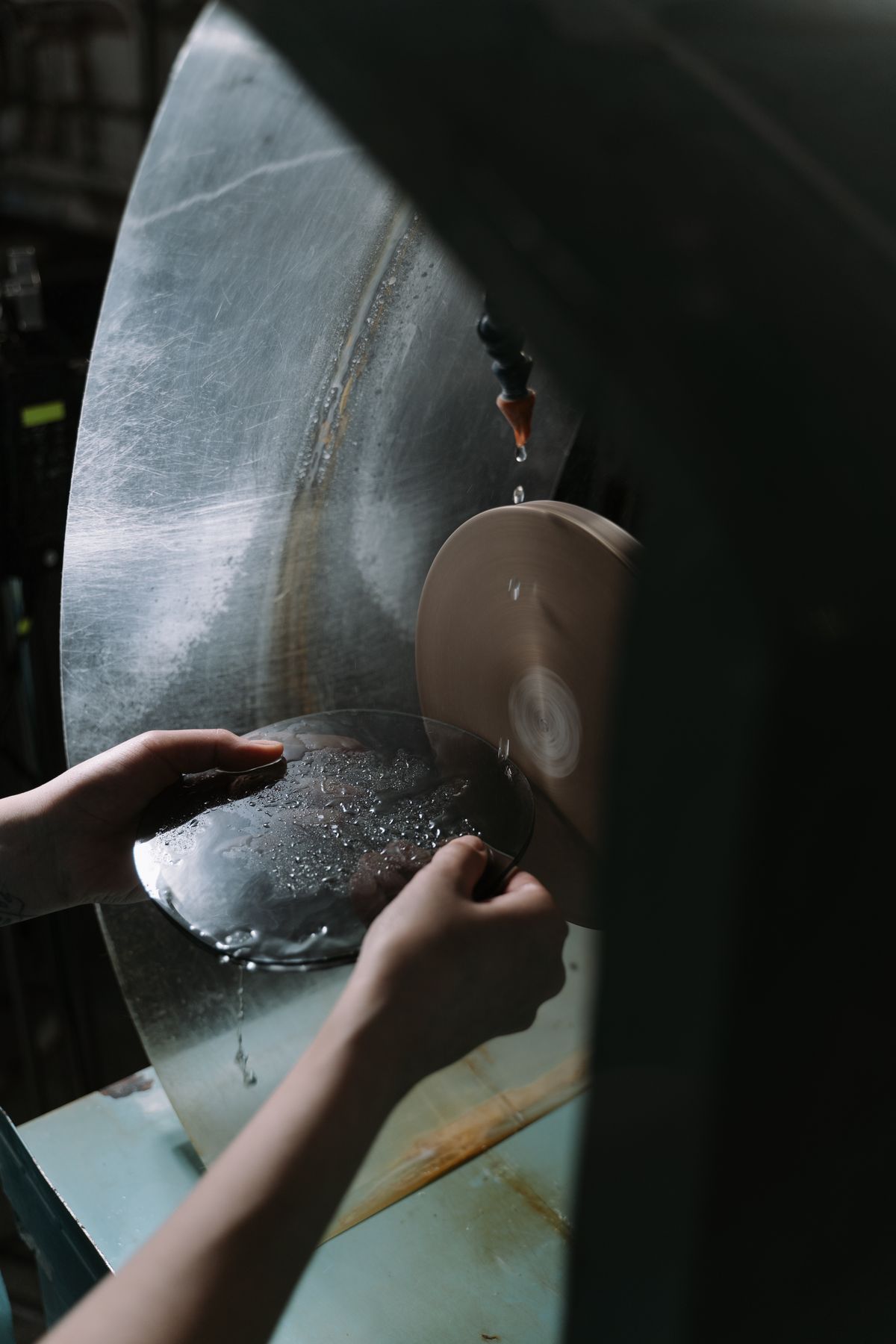
Frame alloy choice is simple for window duty. 6063-T5 extrudes cleanly, takes anodising beautifully, and gives strength far beyond what a window sash needs. By comparison, 6061-T6 appears only on structural members or oversized fixed lites. The metallurgy behind that choice sits in our 6063 vs 6061 aluminium alloy comparison. What separates suppliers is not the alloy number but the discipline around it, because the same alloy builds very different aluminium double glazed windows. Dimensional checks follow EN 755-9 for profile tolerances, and every batch ships with an EN 10204 Type 3.1 material certificate so chemistry is traceable to the billet.
Assembly discipline decides how long aluminium double glazed windows actually last. It shows up in the details a photo cannot fake. Gasket corners get vulcanised or glued, not simply butted. Screw covers seat flush. The IGU sits on setting blocks sized to the pane weight. Additionally, glazing rebate depth matches the IGU thickness so the bead engages fully. None of these steps is expensive. Skipping any of them, however, shortens the life of aluminium double glazed windows from decades to a few seasons. Our production follows ISO 9001 procedures with inspection points at extrusion, glazing, and final packing, which is how we keep the warranty rate low across 30+ export markets.
Quality Tests That Matter Before Shipment
Standards only help when someone actually tests against them. For export orders of aluminium double glazed windows we run four checks on validation samples and audit them per production lot. Air permeability follows EN 12207, water tightness follows EN 12208, and wind load resistance follows EN 12210, with class results declared per EN 14351-1 in the CE marking file. Chinese-market projects follow GB/T 8478-2020, which grades the same three properties plus operable-force limits. Australian buyers often add AS 2047 compliance on top. Instead, the goal is to demand the class rating and the test report that backs it.
| Performance Test | Standard | Typical Class We Ship | What It Protects |
|---|---|---|---|
| Air permeability | EN 12207 / GB/T 8478-2020 | Class 4 | Draughts, dust, energy loss |
| Water tightness | EN 12208 / GB/T 8478-2020 | 4A / 450 Pa | Leaks in driving rain |
| Wind load resistance | EN 12210 / GB/T 8478-2020 | C3–C5 by project | Structural safety in storms |
| Acoustic reduction | EN ISO 10140 | Rw 30–40 dB by spec | Traffic and airport noise |
| IGU durability | EN 1279-2/-3 | Certified units | Fogging, gas retention |
One story makes the case for testing. A distributor once asked us to match a cheaper quote that skipped EN 1279 certification on the IGUs. Two winters later, that competitor’s units fogged across a 40-unit apartment project, and the replacement order came to us at a higher unit price. Certification is cheap insurance. Without it, the buyer pays eventually, with interest.
Cost, MOQ, Lead Time, and Shipping Terms
Price follows the glazing spec more than the frame colour. As a planning number, aluminium double glazed windows with low-E argon units typically run 30–50% above single-glazed equivalents in the same frame system. Triple glazing adds another 25–40% on top, plus deeper frame profiles. Warm-edge spacers and acoustic laminates each add single-digit percentages. Those figures shift with glass thickness and hardware, so treat them as budget anchors rather than quotes for aluminium double glazed windows.
Commercial terms stay simple on our side. MOQ for aluminium double glazed windows starts at 20 m² or roughly 50–100 sashes depending on size mix, which suits both distributors and single-project buyers. Standard lead time runs 25–35 days after drawing approval: 7 days for shop drawings, 3 days for physical samples on request, then production and packing. Payment goes by T/T, L/C, or PayPal for sample orders. Shipping terms cover FOB, CIF, and DDP by project. Every sash travels in EPE foam with corner protection inside steel-reinforced wooden crates, because IGUs crack in transit far more often from bad packing than from bad glass. We pack to survive a port transfer, not just a truck ride.

Installation Notes That Protect the Warranty
A correct installation keeps aluminium double glazed windows within their tested classes, and it starts with the opening. First, the reveal must be square within 3 mm over 2 m, or the sash geometry suffers and gaskets leak. Next, the frame fixes into the opening through the outer frame, never through the bead side, with isolation pads between aluminium and concrete or steel to prevent galvanic corrosion. Perimeter gaps are sealed with backing rod plus neutral-cure silicone, in two stages, so the outer joint sheds water while the inner joint stays vapour-tight. Finally, weep paths must stay clear after pointing. Most site complaints we trace are sealing or clearing errors, not product faults, which is why our packing boxes include installation drawings with these callouts marked.
For distributors, one habit prevents most warranty claims: open and inspect every crate on arrival, photograph anything doubtful, and report within 48 hours. Glass claims handled fast are packing claims. Meanwhile, glass claims handled late become production disputes. Speed protects both sides, and it costs nothing but attention.
How to Specify: A Short Checklist Before You Request a Quote
Buyers who send complete specifications for aluminium double glazed windows get accurate prices in 24 hours. Buyers who send “double glazed aluminium windows, best price” get a quote full of assumptions. Before requesting a quotation for aluminium double glazed windows, confirm six lines. First, the whole-window U-value target and the climate. Second, the IGU build-up: pane thicknesses, cavity, gas, coating position. Third, the frame barrier: thermal break width per EN 14024. Fourth, the acoustic target if any, in Rw. Fifth, the colour and finish system, with AAMA 2604 or 2605 for coastal duty. Sixth, the hardware brand and any market-specific standard such as AS 2047. Six lines of text eliminate a week of back-and-forth.
Send those lines with your opening schedule, and our engineers return a drawing set with exact sections, test classes, and a firm price. The same drawings become the production master, so nothing is lost between quotation and delivery. That single-document workflow is how we keep large export projects on schedule.
Frequently Asked Questions
What U-value should I target for aluminium double glazed windows?
Match the climate. Mild regions reach code with a whole-window value of 2.0–2.8 W/m²K. Temperate zones with heating seasons should target 1.3–1.7 W/m²K, which a low-E argon unit in a thermally broken frame delivers. Very cold or near-passive projects justify triple glazing at 0.9–1.3 W/m²K. Always confirm whether the quoted figure is centre-pane or whole-window before you order aluminium double glazed windows.
How long do aluminium double glazed windows last?
The aluminium frame lasts 30–40 years or more with powder coating or anodising. However, the IGU is the service item: quality dual-sealed units per EN 1279 last 15–25 years before seal replacement becomes likely. Installation quality and drainage design move that range more than brand names do.
What is your MOQ and can I order samples first?
MOQ starts at 20 m², roughly 50–100 sashes depending on the size mix. We encourage sample orders: physical samples ship in 3 days after drawing approval, and sample payment can go through PayPal for speed. Sample cost is credited against the bulk order in most cases.
Which payment methods do you accept?
Standard terms are T/T with 30% deposit and balance against the copy of the bill of lading. L/C at sight is available for orders above USD 50,000. PayPal works for samples and small tooling payments. All terms are confirmed in the proforma invoice before production starts.
How are the windows packed and shipped?
Each sash is wrapped in EPE foam with corner guards, then crated in steel-reinforced wooden cases with interleaving between lites. We ship FOB, CIF, or DDP. Standard production lead time is 25–35 days after drawing approval, and sea freight keeps IGUs safe when crates are kept upright, which we mark on every panel.
Can you match an existing window colour or a custom RAL?
Yes. Powder coating runs to any RAL colour with Qualicoat-compliant chemistry, and anodising follows Qualanod baths for natural, bronze, or black tones. Send a physical colour target or RAL code with the enquiry. Coastal and high-UV projects should specify AAMA 2604 or 2605 rated coatings for the extra weathering margin.
Do aluminium double glazed windows need special maintenance?
Very little. Wash the glass and frames twice a year with neutral detergent, keep weep holes clear, and rinse salt off coastal installations quarterly. Check gaskets annually and re-treat any coating scratches on site with touch-up paint. IGU seal failure shows as fogging between the panes; that is a unit replacement, not a cleaning task.
Get a Factory Quote for Aluminium Double Glazed Windows
Send us your opening schedule, climate, and U-value target, and NA-VIEW returns shop drawings, test classes, and a firm price within 24 hours. Free physical samples ship in 3 days. Our 6 ISO 9001 production lines run at ±0.5 mm precision and export to 30+ countries, so your specification arrives proven, not promised. Request your quote today and compare the sections for yourself.
CONTACT US


Foshan Naview New Building Materials Co., Ltd.
We are always here offering customers our reliable products and service.
If you want to liaise with us now, please click contact us