

Aluminum in Sustainable Construction: Environmental Benefits and Green Building Applications
- By:Naview
- Date:2026-04-13
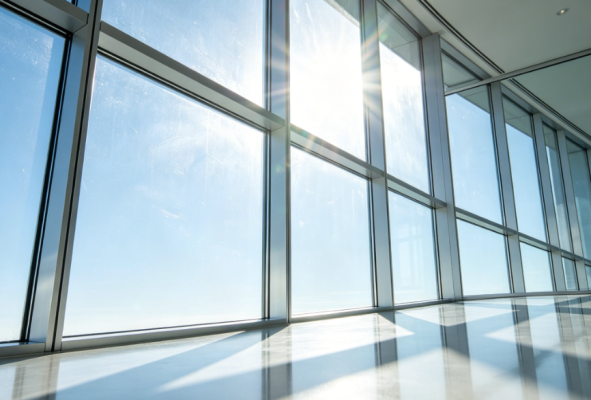
Sustainable Construction Material: Aluminum’s Environmental Benefits
In modern construction, sustainable building materials have become a non-negotiable factor, shaping every stage from material selection and design to long-term operations. As the construction industry accounts for 40% of global energy consumption and 30% of greenhouse gas emissions, choosing eco-friendly materials is key to reducing environmental impact — and aluminum stands out as a top choice for sustainable construction. This guide breaks down aluminum’s sustainability advantages, lifecycle benefits.
Aluminum’s Environmental Advantages: A Full-Lifecycle Perspective
Unlike many construction materials, aluminum delivers sustainability benefits across a building’s entire lifecycle — from manufacturing and transportation to use and end-of-life recycling. Its unique properties address core sustainability challenges in construction, making it a preferred material for eco-conscious projects worldwide.
1. Lightweight Design Reduces Transportation Emissions
Aluminum’s exceptional strength-to-weight ratio is a game-changer for sustainable construction logistics. As a lightweight material, it can be shipped more efficiently than heavier alternatives like steel or concrete — more products fit into each truckload or shipping container, cutting down on transportation-related emissions. Studies show transportation accounts for 5-15% of a product’s total lifecycle emissions, so aluminum’s lightweight advantage directly reduces a project’s carbon footprint.
The automotive industry has long leveraged aluminum’s lightweight benefits to improve fuel efficiency (a 10% weight reduction boosts fuel economy by 6-8%), proving its scalability and impact. For construction, this means lower emissions during material delivery, even for large-scale projects like skyscrapers or commercial buildings.
2. Durability Minimizes Replacement & Maintenance
Aluminum’s natural corrosion resistance ensures a long service life with minimal maintenance — a critical factor for sustainable construction. Aluminum windows, doors, curtain walls, and cladding typically last 30-50 years without replacement, compared to 15-20 years for wood or painted steel products. This extended lifespan reduces the environmental impact of manufacturing, transporting, and installing replacement materials, saving resources over time.
Additionally, aluminum’s durability cuts down on maintenance materials like paints, sealants, and cleaning products — often overlooked in environmental assessments but essential for long-term sustainability. Lifecycle studies confirm that aluminum’s longevity offsets any embodied carbon differences compared to alternative materials.
Aluminum’s Infinite Recyclability: The Circular Economy Advantage
Aluminum is one of the few materials that can be recycled indefinitely without losing quality — a cornerstone of circular economy principles in construction. Unlike materials that degrade with recycling, aluminum retains its strength, workability, and performance through countless cycles, making it a truly sustainable, closed-loop material.
Infinite Recycling: Energy & Emission Savings
Nearly 75% of all aluminum ever produced is still in use today, thanks to robust recycling programs that recover material from beverage cans, automotive parts, building products, and manufacturing scrap. This high recycling rate is driven by aluminum’s inherent value, making collection economically viable even from mixed waste streams.
Recycling aluminum requires just 5% of the energy needed to produce primary aluminum from bauxite ore (via the Hall-Héroult process). Each ton of recycled aluminum saves approximately 9 tons of CO2 emissions — a 95% reduction compared to primary production. Today, the aluminum industry meets 35% of global demand through recycling, a key step toward decarbonization.
Waste Reduction in Construction & Demolition
Aluminum building products minimize waste at every stage. Precision extrusion processes reduce manufacturing scrap, and any off-cuts or defective products are fully recyclable. During demolition, aluminum components are easily recovered and recycled, avoiding landfill waste — a key goal of sustainable construction.
The value of aluminum scrap gives demolition contractors a financial incentive to separate and recover it, ensuring high recovery rates. This alignment of economic and environmental goals makes aluminum a leader in construction waste reduction.
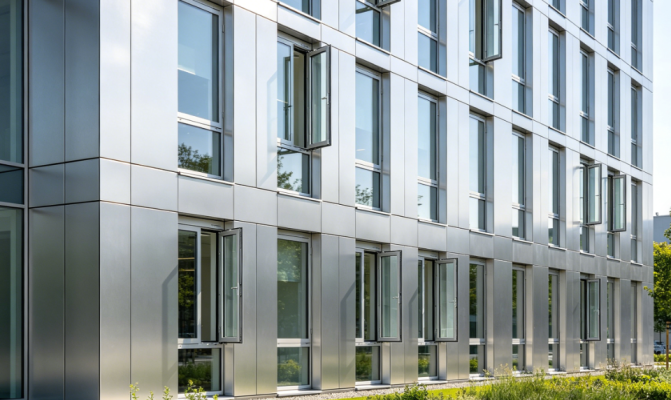
Aluminum & Green Building Certifications (LEED, BREEAM, Green Star)
For projects pursuing green building certifications, aluminum is a strategic choice — it contributes to credits in major rating systems, helping teams meet sustainability goals while achieving certification. Below’s how aluminum supports key certifications:
LEED Certification Credits
LEED (Leadership in Energy and Environmental Design) awards credits for aluminum products with recycled content (both post-consumer and post-industrial). Most aluminum extrusions include 20-30% post-industrial recycled content, maintaining performance while qualifying for credits. Additionally, locally produced aluminum supports regional materials credits, reducing transportation emissions and meeting local sustainability requirements.
BREEAM & Regional Certifications
BREEAM (British Research Establishment Environmental Assessment Method) recognizes aluminum’s durability, recyclability, and lifecycle performance, offering credits for responsible sourcing and recycled content. Regional certifications like Green Star (Australia), CASBEE (Japan), and DGNB (Germany) also acknowledge aluminum’s sustainability benefits, making it a global choice for certified green buildings.
Operational Energy Savings: Aluminum’s Hidden Sustainability Benefit
While embodied carbon is important, operational energy consumption (heating, cooling, lighting) accounts for 10x more of a building’s carbon footprint over its lifetime. Aluminum building products deliver significant operational energy savings, further enhancing their sustainability value.
Thermal Break Windows: Lower HVAC Costs
Thermal break aluminum windows reduce heat transfer, cutting heating and cooling energy consumption by 30-50% compared to single-pane or non-thermal break alternatives. Over their 30-50 year service life, these windows deliver cumulative energy savings that far exceed any embodied carbon differences, making them one of the most sustainable fenestration options.
Daylighting: Improve Occupant Wellbeing & Reduce Lighting Use
Aluminum’s slim window profiles maximize glass area, increasing daylight penetration and reducing the need for artificial lighting. Research shows daylight access improves office productivity by 3-18% and enhances student learning outcomes in educational facilities — adding human-centric sustainability benefits beyond energy savings.
Aluminum’s Carbon Footprint: Progress & Future Goals
While primary aluminum production is energy-intensive, the industry is making significant progress in decarbonization. Primary production typically generates 8-12 tons of CO2e per ton, but this varies by electricity source — hydropower-based production (e.g., Quebec) has carbon intensities below 2 tons CO2e per ton, while coal-based production can exceed 20 tons CO2e per ton.
Initiatives like the Aluminum Stewardship Initiative and industry decarbonization pathways are driving emissions reductions through renewable energy adoption, process efficiency, and technology investments. Increasing recycling rates remains the fastest way to reduce aluminum’s carbon footprint, as recycling infrastructure is already in place and scalable.
Conclusion: Aluminum — The Sustainable Choice for Modern Construction
Aluminum’s unique combination of lightweight design, durability, infinite recyclability, and operational energy savings makes it a standout choice for sustainable construction. It addresses key environmental challenges, supports green building certifications, and delivers long-term value for architects, developers, and property owners.
As the construction industry continues to prioritize sustainability, aluminum will remain an essential material — its ongoing decarbonization and circular economy benefits ensure it will support eco-conscious building projects for decades to come. For sustainable construction materials that balance performance and environmental responsibility, aluminum is the clear choice.
CONTACT US


Foshan Naview New Building Materials Co., Ltd.
We are always here offering customers our reliable products and service.
If you want to liaise with us now, please click contact us